9 Best Home Gym Flooring over Carpet (November 2026)
The best home gym flooring over carpet include the ProsourceFit Weaved Pattern Extra Thick Exercise Puzzle for a small cushioned workout zone, the SUPERJARE 0.56'' Thick 48 Sq Ft Rubber for a modular rubber-top layout, and the AIRHOP Gym Floor Mat for stretching and floor exercise.
On this page (6 sections)
The best home gym flooring over carpet is a connected tile system that stays level under your movements and equipment. For stretching or bodyweight exercise, a broad single mat can be simpler to move and store.
Carpet changes how flooring behaves because it compresses under load. For treadmills, see whether a treadmill mat on carpet is needed.
Before choosing tiles, check the carpet pile, floor space and equipment feet, then test the assembled surface for rocking or separation.
If you're comparing materials for a room without carpet, start with our guide to the best floors for home gyms. For this setup, the goal is a firm surface that works with the carpet underneath.
Our picks at a glance
-
1
 Best for a small cushioned workout zone
ProsourceFit Weaved Pattern Extra Thick Exercise Puzzle
9.7/10 our score
See it on Amazon -
2
 Best for a modular rubber-top layout
SUPERJARE 0.56'' Thick 48 Sq Ft Rubber
9.7/10 our score
See it on Amazon -
3

- 4
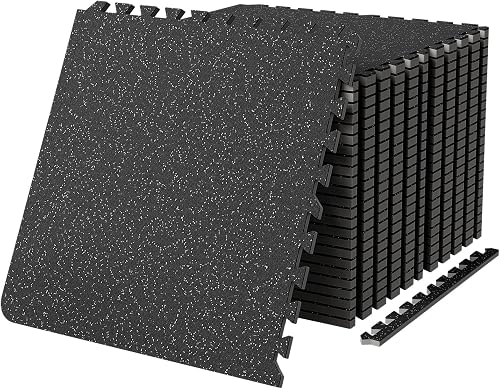 Check it
VEVOR 0.56Inch 100sq.ft Exercise Equipment Mats
Best for a large carpeted area - 5
 Check it
BesWin Large Exercise Mat 8' x 4'
Best for a single broad exercise mat - 6
 Check it
SUPERJARE 1" Extra-Thick Rubber Top Exercise Mat
Best for extra cushioning under a training zone - 7
 Check it
AIRHOP 0.79" Thick Gym Flooring for Home
Best for a large dual-layer setup - 8
 Check it
AIVORO 0.6" Thick Rubber Top Exercise Mats
Best for an expandable workout corner - 9
 Check it
Dalmbox 0.56" Thick Rubber Top 12 Tiles
Best for basic cushioned training
The best home gym flooring over carpet for different setups
A connected tile system is the most adaptable choice for a carpeted training zone, while a single mat is easier to move for floor workouts. Choose by the load you plan to place on the surface and the carpet's softness.
ProsourceFit Weaved Pattern Extra Thick Exercise Puzzle: Best for a small cushioned workout zone
- EVA foam tiles
- 1 in thick
- 24 sq ft coverage
- Interlocking design
Six cushioned tiles cover a small workout area, and the maker describes them as suitable over carpet. Heavy equipment can compress the surface.
Pros
- 1 in option adds cushioning
- Interlocking tiles are portable
- Textured non-skid surface
Cons
- Heavy equipment may compress the surface
- Smaller coverage than the larger tile sets
ProsourceFit's 1 in EVA foam tiles are the clearest fit for carpet among these picks because the maker describes them as protective flooring for use over carpet. The 6-tile set covers 24 sq ft, and border pieces give the connected area a finished edge.
The textured, non-skid surface is intended to provide traction, and the foam adds cushioning for floor exercises. ProsourceFit notes that heavy equipment can compress the surface, so avoid assuming the tiles will create a rigid platform under concentrated loads.
These tiles are portable and can be disassembled when you want to use the room for another purpose. The maker suggests double-sided tape for maximum grip, but carpet fibers and backing may affect how well tape holds.
Pick this set for a small zone where cushioning and removable flooring matter. Check that the tiles stay flat on your carpet before adding a bench, rack or machine.
SUPERJARE 0.56'' Thick 48 Sq Ft Rubber: Best for a modular rubber-top layout
- Rubber top with EVA foam base
- 0.56 in thick
- 12 interlocking tiles
- 48 sq ft coverage
A rubber top and foam base combine grip and cushioning across a 48 sq ft modular area. Check how its thickness and interlocking edges sit on your carpet.
Pros
- Rubber top adds a textured training surface
- 12 tiles cover 48 sq ft
- Detachable borders
Cons
- Carpet compatibility isn't specified
- Foam base may feel different from a rigid floor
SUPERJARE combines an EVA foam base with a rubber top across 12 interlocking tiles. The 0.56 in set covers 48 sq ft, giving you more area than the ProsourceFit set while keeping the surface modular.
The rubber surface is described as textured for grip, while the foam layer cushions impact and vibration. On carpet, that cushioning may add to the carpet's movement, so check the seams and equipment feet after setting up.
This layout suits a workout area that needs a rubber top and a larger connected footprint. Measure the room first and leave enough space to inspect edges and move the tiles if the carpet compresses unevenly.
SUPERJARE doesn't specify carpet use for this model. Treat stability as a setup question: connect all edges, step across the area, then check the equipment under load before a full workout.
AIRHOP Gym Floor Mat: Best for stretching and floor exercise
- EVA foam tiles
- 0.4 in thick
- 18 tiles
- Up to 18 sq ft coverage
Small interlocking foam tiles create a cushioned space for yoga, stretching and other floor exercises. The maker describes them for exercise rather than heavy equipment support.
Pros
- Compact tiles can fit smaller zones
- Textured surface
- Wipes clean with a damp cloth
Cons
- Less coverage than larger tile sets
- Foam may not give heavy equipment a stable base
AIRHOP's 18 small EVA tiles cover up to 18 sq ft and are 0.4 in thick. The compact puzzle pieces can fit a smaller exercise zone and can be separated for cleaning.
The textured surface and cushioned foam suit stretching, yoga and floor exercises. The relatively small tile size gives you more seams across the same area, so make sure the connected pieces remain aligned on carpet.
This isn't the strongest choice for a heavy machine or rack. The product facts describe general exercise use, and the maker doesn't specify use on carpet, so reserve it for lighter activity unless your own stability check says otherwise.
Choose AIRHOP when you need a compact, cushioned surface that can be rearranged. If equipment will remain in one place, compare its feet with the tile layout before settling on the position.
VEVOR 0.56Inch 100sq.ft Exercise Equipment Mats: Best for a large carpeted area
- Rubber top with EVA foam base
- 0.56 in thick
- 25 interlocking tiles
- 100 sq ft coverage
The 25-tile set covers a broad training zone, and the maker says it works on carpet. Its rubber top and foam base add cushioning, so assess the carpet beneath for movement.
Pros
- Large stated coverage
- Interlocking tiles with border pieces
- Maker describes use on carpet
Cons
- Large set takes more effort to reposition
- Cushioned construction may not suit equipment that needs a rigid base
VEVOR's 25 rubber-top tiles cover 100 sq ft and are 0.56 in thick. The maker says this set works on carpet, wood, tile and other floor types, which makes it a direct option for covering a larger carpeted zone.
Each tile measures 25 in square, and the set includes border pieces. The rubber top is described as non-slip, with an EVA foam base for cushioning and vibration reduction.
A large connected area takes more planning than a small mat. Confirm the room dimensions, door swing and equipment positions, then assemble the tiles and check whether the carpet causes any sections to rock.
VEVOR suits a home gym that needs broad coverage and a modular surface. The cushioned construction is still not a rigid subfloor, so test concentrated equipment loads before relying on it for heavy lifting.
BesWin Large Exercise Mat 8' x 4': Best for a single broad exercise mat
- 8 x 4 ft size
- 6 mm thick
- PVC material
- Double-sided anti-slip surface
This one-piece mat gives bodyweight and cardio moves a broad surface without assembling tiles. Its maker says the double-sided surface performs on most floor types, but doesn't specify carpet.
Pros
- Broad 8 x 4 ft exercise area
- Can be used with or without shoes
- Easy to store
Cons
- Carpet use isn't specifically described
- One-piece mat is less modular than tiles
BesWin's 8 x 4 ft mat gives you one broad surface without interlocking separate tiles. At 6 mm thick, it can define a cardio, skipping or bodyweight area, and the maker describes its double-sided surface as suitable for most floor types.
The large size reduces the number of seams across the workout area. It also means you should plan where to roll or store it when the room needs to return to regular use.
BesWin doesn't specifically describe carpet use, so check whether the mat stays in place on your pile. For treadmill setups, compare treadmill mats for carpet.
Its PVC construction and non-slip surfaces may work well for floor exercises, but they don't make a soft carpet firm underneath.
Consider this mat if you want a simple, wide surface for movement rather than a set of tiles under heavy stationary equipment. Test it during the types of exercise you plan to do.
SUPERJARE 1" Extra-Thick Rubber Top Exercise Mat: Best for extra cushioning under a training zone
- Rubber top with EVA foam base
- 1 in thick
- 12 interlocking tiles
- 48 sq ft coverage
The 1 in tiles provide a cushioned surface for a training zone, with interlocking edges for a modular layout. Carpet can add more give, so check stability under your equipment.
Pros
- Thicker than the 0.56 in SUPERJARE set
- Textured rubber surface
- 12 tiles cover 48 sq ft
Cons
- Carpet compatibility isn't specified
- Extra thickness adds height under equipment
SUPERJARE's 1 in rubber-top tiles use an EVA foam base and cover 48 sq ft across 12 pieces. They provide more thickness than the brand's 0.56 in set, with interlocking edges for a modular workout area.
The product is described for high-impact exercise and heavy equipment, but those claims don't account for every carpet. A thick or plush pile underneath can still compress, so the combined layers may feel less stable than the same tiles on a hard floor.
Use the extra thickness when cushioning is a priority and the equipment doesn't need a rigid base. Check clearances around doorways and equipment because the added height changes the floor level.
Carpet use isn't specified for this model. Connect the tiles, walk the perimeter, and check for movement under each equipment contact point before training.
AIRHOP 0.79" Thick Gym Flooring for Home: Best for a large dual-layer setup
- Rubber top with EVA foam base
- 0.79 in thick
- 36 interlocking tiles
- 144 sq ft coverage
Thirty-six tiles cover 144 sq ft, making this the largest stated area here. The cushioned, dual-layer build may compress on carpet, so consider the carpet pile and equipment load.
Pros
- Largest stated coverage in this group
- Interlocking tiles can be expanded or removed
- Waterproof surface
Cons
- Carpet compatibility isn't specified
- Large coverage requires careful edge and fit planning
AIRHOP's set covers 144 sq ft with 36 tiles measuring 24 in square. Each tile is 0.79 in thick and has a rubber top with an EVA foam base, making this the broadest area in the roundup.
The maker describes the tiles for garages, basements and home fitness rooms, but doesn't specify carpet. With a large cushioned surface, plan carefully around doorways and fixed equipment, and inspect the seams after the carpet compresses.
This option fits a large open room where removable sections are useful. It may be excessive for a small corner, and the thickness can raise equipment and change how it sits.
Choose it for coverage when you have room to assemble and inspect the full area. A larger floor system still needs a stable base, so test the carpet before placing heavy equipment across it.
AIVORO 0.6" Thick Rubber Top Exercise Mats: Best for an expandable workout corner
- Recycled rubber top with EVA foam base
- 0.6 in thick
- 12 interlocking tiles
- 48 sq ft coverage
The interlocking 12-tile set can be rearranged as your workout area changes. Its maker describes the surface for everyday home workouts, while carpet compatibility isn't specified.
Pros
- Modular 48 sq ft layout
- Textured rubber surface
- Can be wiped clean
Cons
- Carpet compatibility isn't specified
- Interlocking tiles still need a stable base
AIVORO pairs a recycled rubber top with a high-density EVA foam base in a 12-tile set covering 48 sq ft. The 0.6 in tiles connect by hand and can be rearranged as your workout space changes.
The brand describes the set for everyday home exercise, including cardio, floor workouts and light strength training. It doesn't specifically identify carpet as a supported surface, so check how the interlocking edges behave on your carpet before regular use.
The water-resistant surface can be wiped with a damp cloth. For care advice across rubber surfaces, see how to clean rubber gym flooring.
The set can work for a defined workout corner where you want modular tiles and a textured top, provided the underlying carpet doesn't make it rock.
Avoid treating cushioning as proof of equipment stability. Check the carpet pile and the mat after positioning your dumbbells, bench or bike.
Dalmbox 0.56" Thick Rubber Top 12 Tiles: Best for basic cushioned training
- Rubber top with foam core
- 0.56 in thick
- 12 tiles
- Textured surface
These tiles pair a textured rubber surface with a foam core for everyday workout cushioning. The maker doesn't specify carpet use, so check for rocking or separation after assembly.
Pros
- Interlocking layout
- Textured surface for traction
- Wipes clean
Cons
- Carpet compatibility isn't specified
- Coverage area isn't stated in the product facts here
Dalmbox uses a rubber top over a foam core in 0.56 in interlocking tiles. The 12-piece set is described for everyday workouts, with a textured surface intended to support traction.
The supplied facts don't state the coverage area or carpet compatibility. Measure your intended space and confirm the number of tiles covers the workout zone you need.
A foam core can cushion movement, but it may also flex when placed over soft carpet. Use this set for general training only after checking that the floor feels level and the pieces remain connected.
Dalmbox is a basic option when you want a modular surface and can verify fit before relying on it. Keep it away from loads that make the tiles compress or shift.
How should you choose gym flooring for carpet?
Choose gym flooring for carpet by matching the surface to the activity, carpet pile and equipment load. A connected tile system is easier to shape around a workout zone, while a large single mat is simpler for floor exercises.
Start by checking the carpet. Low, dense pile is generally easier to work over than plush carpet because it gives the flooring less room to sink, but the only reliable check is to place a sample or a small section and test it.
Next, consider what will sit on top. A person doing stretching spreads weight across a broad area, while a treadmill or rack places force through smaller contact points.
Look at thickness and construction together. Foam adds cushioning, and a rubber top can create a textured training surface, but thicker flooring may still compress over a soft carpet base.
If you want modular rubber-top tiles, compare the sizes and coverage in our guide to best rubber gym flooring interlocking tiles. If wood is part of the room plan, our wood flooring for a gym guide covers that surface separately.
How do you keep flooring stable on carpet?
Keep flooring stable by building a flat, connected area and checking it under the movements and loads you plan to use. Stop if the tiles rock, pull apart or slide.
Assemble the tiles on a clean, dry carpet and press the edges together. Walk across the full area in several directions, then repeat with the equipment in place.
A wide mat can help spread contact for floor exercises, but it cannot flatten a lumpy carpet. If the mat shifts, try another location or a different flooring system rather than relying on a quick fix.
Interlocking tiles can separate when the underlying surface moves. Recheck the edges after a few sessions, especially around machines, benches and spots where you step on and off.
For a basement room, use our guide to best flooring for basement gym to consider moisture and room conditions alongside carpet. If the training area is commercial or shared, compare the needs in best commercial gym flooring.
Does flooring over carpet protect floors and reduce noise?
Flooring over carpet can add a protective layer and may soften some impact, but it doesn't guarantee that noise or vibration will disappear. The carpet, flooring, equipment and workout style all affect the result.
Foam and rubber-top systems in this roundup are described as cushioning or vibration reducing. Those are product features, not a promise that neighbors won't hear dropped weights or a running machine.
Use controlled equipment handling and avoid dropping weights on a carpeted flooring system that can flex. A surface that moves under impact may be uncomfortable and can make equipment feel less steady.
For more setup context, read how gym flooring and equipment handling affect noise and stability. If material choice matters to you, see our guide to non toxic gym flooring.
What should you check before training?
Check the surface, seams and equipment position before every new setup. The flooring should lie flat, stay connected and keep equipment from rocking during the movements you plan to do.
Inspect the carpet for uneven spots, loose edges or thick padding. Then check that the tiles or mat cover the full area under your feet and equipment.
Place stationary equipment on the assembled flooring and test it without starting a workout. If the machine rocks or the floor shifts, move it or choose a firmer surface.
Carpet isn't the same under every home gym setup. For lighter exercise, a cushioned mat may be enough; for heavy stationary equipment, prioritize a stable base and follow the equipment maker's placement instructions.
Which home gym flooring over carpet should you choose?
Choose ProsourceFit for a small cushioned zone with explicit carpet use, VEVOR for a larger carpet-compatible tile area, or BesWin for a broad single mat for movement work. For the other rubber-top sets, check stability on your carpet before committing to a full layout.
A carpeted room can be a workable training space when the flooring stays flat and your equipment remains steady. Start with the activity and load, then pick the smallest surface that covers the area you need.
Our top 3 picks at a glance
-
1
Best for a small cushioned workout zone
ProsourceFit Weaved Pattern Extra Thick Exercise Puzzle
9.7/10 our score
See it on Amazon -
2
Best for a modular rubber-top layout
SUPERJARE 0.56'' Thick 48 Sq Ft Rubber
9.7/10 our score
See it on Amazon -
3
Frequently asked questions
Can you put gym flooring directly over carpet?
Yes, some interlocking gym tiles are designed for carpet, but the result depends on carpet pile and how the equipment loads the floor. A thick, soft carpet can let tiles tilt or shift underfoot.
Start with a small area, connect the edges, and check for movement before placing heavy equipment on top.
What type of gym flooring works best over carpet?
Interlocking tiles with a textured top give you a defined training surface, while a broad exercise mat works for floor workouts and cardio. Rubber-top tiles add grip, but cushioned bases can still flex over soft carpet.
Choose by activity and check stability with the equipment in place.
Can a treadmill sit on gym flooring over carpet?
It may, if the flooring and carpet together keep the treadmill level and steady. A soft pile can compress unevenly under concentrated feet, which may cause rocking.
Check the treadmill's placement guidance and test for movement before using it.
For more context, read whether exercise equipment can stand directly on carpet.
Will gym flooring stop noise from reaching another room?
Flooring can help reduce impact and vibration, but it can't guarantee a quiet workout. Carpet, the flooring layers, equipment type and how you handle weights all affect the result.
See how flooring and equipment handling affect noise and stability for setup factors.
Should you use a single mat or interlocking tiles?
Use a single mat for a defined exercise area that's easy to roll or move. Interlocking tiles suit larger or irregular zones and let you expand the covered area.
A single mat can still slide on carpet, so check both sides and the carpet surface before training.


