How to Choose Wood Flooring for a Home Gym
The best wood flooring for a gym is a stable, moisture-resistant surface with a separate protective layer. Compare solid wood, engineered wood, laminate, and wood-look options against your equipment, impact level, and cleaning routine.
On this page (8 sections)
- Which wood flooring is best for a gym?
- What should you check before installing wood flooring for a gym?
- How much protection does wood flooring need?
- Should you use rubber or foam over wood flooring?
- How can wood flooring reduce gym noise?
- Can you install wood flooring over carpet?
- How should you clean and maintain wood gym flooring?
- What is the final choice for wood flooring for a gym?
The best wood flooring for a gym is a stable, moisture-resistant surface protected by mats in every high-load area. That combination matters more than the wood itself once regular training begins.
Compare solid wood, engineered wood, laminate, and wood-look flooring by impact, sweat, noise, and how firmly equipment must sit. A surface that looks calm can still feel lively under a bench or treadmill.
Wood can make a home gym feel warmer and more finished than wall-to-wall rubber. It suits a spare room, bedroom, or basement where you want the room to look intentional between workouts.
It also needs more care around dropped weights, wet shoes, sliding benches, and heavy equipment with small contact points. Those small points concentrate force and can mark a finish quickly.
Think about who will use the space and how. A walker who lifts light dumbbells needs less protection than a lifter who uses a rack and adjustable bench daily.
Consider the daily routine in detail. Sweat from cardio, chalk or dust from lifting, and grit from shoes all reach the floor through different routes.
A protective layer should match each route. Rubber often suits rolling or heavy equipment, while foam can suit lighter floor work where cushioning helps knees and elbows.
Noise also deserves early attention. Wood can carry sound through a house, especially in rooms above living space.
Mats reduce direct contact, but they do not fix rough handling.
Set-up matters as much as material choice. Equipment must sit level, with no rocking on uneven boards or seams.
A stable base supports better form and safer movement.
Height is another daily concern. A new floor layer plus a mat can raise a machine and reduce headroom under a pull-up bar or rack member.
Measure the equipment footprint and the space around it before you buy flooring. Leave room for approach, stepping on, and setting weights down without reaching across the surface.
If you're comparing all surface types first, start with our guide to the best floors for a home gym. Use that broader view to decide where wood fits and where another material works better.
Then choose the wood surface that fits the room and add protection where the workout creates the most stress. Plan for cleaning, lifting heavy items, and checking trapped moisture from the start.
A thoughtful setup keeps the warm look of wood without asking the wood to do every job. Protection, stability, and routine care do the heavy lifting in a home gym.
Which wood flooring is best for a gym?
Engineered wood is usually the most balanced wood option for a home gym, because its layered construction can be more stable than solid wood when room conditions change. The best choice still depends on moisture, impact, budget, and whether you want real wood or only a wood appearance.
| Flooring type | Best fit | Main concern in a gym |
|---|---|---|
| Solid hardwood | Dry rooms with careful, low-impact workouts | Scratches, dents, moisture, and movement |
| Engineered wood | Finished rooms with moderate equipment use | Surface can still dent or scratch |
| Laminate | Budget-friendly wood appearance | Moisture damage and less forgiving seams |
| Wood-look vinyl | Rooms where moisture resistance matters | Heavy equipment can mark soft surfaces |
| Wood-look tile | Moisture-prone rooms with rigid equipment | Hard impact and dropped weights |
Solid hardwood gives you a real wood surface that can often be refinished, but that does not make it weight-proof. A dropped dumbbell can dent the finish or board, and repeated sliding can leave marks.
Engineered wood has a real wood wear layer over a layered core. That structure can make it a better fit for a finished basement, spare room, or bedroom gym where you want wood underfoot without using solid boards.
Laminate and vinyl can create a wood look without using a solid wood floor. Check the wear layer, seam protection, subfloor requirements, and care instructions before placing cardio equipment or a rack on top.
What should you check before installing wood flooring for a gym?
Check moisture, subfloor flatness, clearance, and equipment loads before choosing wood flooring for a gym. A beautiful surface cannot compensate for a damp slab, a soft subfloor, or equipment that rocks after installation.
Start with moisture. Basements, garages, and rooms above crawl spaces can expose flooring to changes that affect wood products.
Use the flooring maker's moisture guidance and address leaks or dampness before installation.
Next, inspect the subfloor. It should be clean, dry, and flat enough for the selected flooring system.
Uneven areas can make benches, racks, treadmills, and storage units feel unstable.
Measure the room around the equipment, not only around the flooring. A rack needs safe approach space, a treadmill needs a clear operating zone, and a lifting area needs room to set weights down without striking the floor.
Consider door swing and vertical clearance too. A new floor or mat can raise the equipment height and change how much space remains under a pull-up bar or rack crossmember.
See how gym flooring reduces usable rack height before finalizing the buildup.
How much protection does wood flooring need?
Wood flooring needs a separate protective layer under equipment that can roll, slide, sweat, or drop weight. Use the smallest protection zone that safely covers the equipment footprint and its movement area, then expand it for lifting or high-impact work.
A treadmill mat can catch moisture and reduce direct contact between the machine and the floor. A larger rubber area works better under a rack, bench, or free-weight station where loads are spread across several contact points.
Foam tiles can help with light workouts, stretching, bodyweight training, and general floor protection. They are less suited to repeated concentrated loads if the equipment can compress or shift the foam.
For advice on safer material choices, read how to choose non-toxic gym flooring. The right surface should also be easy to clean because sweat and water are common causes of trouble around wood floors.
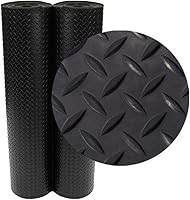
The Rubber-Cal Diamond-Plate Rubber Flooring Roll has a raised diamond pattern and a rectangular 84 x 48 in surface. Its 0.12 in thickness gives you a thin protective layer where you need coverage without building up the whole room.
Rubber-Cal describes the material as resistant to common liquids, and the care instructions allow hand washing with household or commercial cleaning products or a mop or broom. That makes general cleanup easier around cardio equipment and utility areas.
The roll format suits a single machine or a planned strip beside a lifting station. Measure the equipment footprint first, then check whether 4 x 7 ft covers the machine, the user standing area, and any space needed for movement.
It is a better match for defined zones than for a full-room puzzle layout. The diamond pattern also gives the area a clear industrial look, so consider how it will work with your chosen gym flooring colors.
Should you use rubber or foam over wood flooring?
Choose rubber for heavier or rolling equipment, and choose foam for lighter workouts where cushioning and easy reconfiguration matter more. Neither material removes the need to check floor flatness, equipment stability, and the total height added above the wood.
Rubber is dense and better suited to treadmill areas, racks, benches, and utility zones. It can also make equipment contact feel more direct than thick soft foam.
Foam is lighter and easier to rearrange. It can be useful for mobility work, stretching, bodyweight exercises, and a temporary home gym where you may remove the flooring later.
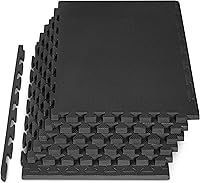
The bemaxx Gym Mats Set covers about 18 sq ft and uses interlocking pieces with edge pieces for a finished border. The EVA foam has an anti-slip surface and is described as cushioned, lightweight, shock absorbing, washable, and waterproof.
That layout works well when you want a small, removable zone for yoga, stretching, bodyweight work, or lighter home-gym equipment. The puzzle design also lets you take the area apart and change the arrangement.
The trade-off is softness under concentrated loads. Place feet and equipment carefully, check for rocking, and avoid assuming that cushioning equals support for every rack or bench.
The ProSource Play Mat uses interlocking foam panels and border pieces to create a square 48 x 48 in area. Its intended use is an indoor play surface, so it is most relevant to a home gym as a light-duty option for stretching, floor exercises, or a family exercise area.
The soft textured foam is described as free of toxic phthalates and water-resistant. The pieces can be assembled, separated for storage, and cleaned, which helps if the workout area also needs to serve another purpose.
Its multicolor design is less suited to a quiet wood-and-neutral room than a black or anthracite surface. It also should not be treated as a substitute for a dense lifting platform under dropped weights.
How can wood flooring reduce gym noise?
Wood flooring can make impact noise more noticeable than a thick protective surface, especially when weights, benches, or equipment contact the floor directly. Mats help reduce direct contact, but handling technique and equipment setup still affect noise and movement.
Set weights down instead of dropping them. Keep plates, dumbbells, and handles from striking the floor, and check that benches and racks sit level on the chosen protection.
Use a larger mat when the equipment can move during use. A small mat under only the front feet may leave the rear feet or the user's stepping area exposed.
For the interaction between surface choice, equipment handling, and stability, read how gym flooring and equipment handling affect noise and stability.
A wood floor can also transmit vibration through the building. If sound travels to a room below, address the impact source first, then consider a denser underlayment or a dedicated lifting platform suited to the equipment.
Can you install wood flooring over carpet?
Do not assume wood flooring or gym mats can go directly over every carpet. Pile, padding, and firmness vary too much for a single rule.
Thick or plush carpet can let flooring and equipment shift during use. That movement can make a bench feel unsteady and a treadmill feel less secure at start and stop.
Low-pile carpet may behave differently depending on the product and subfloor. Even then, the carpet company, flooring company, and equipment maker may each give different guidance.
Measure the carpet pile and check the flooring instructions before installation. Note the pad as well, since padding often controls how much the surface compresses.
You may need to remove the carpet, correct the subfloor, or use a stable surface designed for the room. Removal is often the cleanest path when the carpet is thick or uneven.
A firm subfloor gives wood flooring a predictable base. It also helps racks, benches, and storage units sit level instead of settling into soft spots.
If carpet stays in place, test the exact spot first. Place the equipment there, step on and off, and check for rocking, sliding, or sinking at each foot.
Pay close attention to rocking equipment, trapped moisture, and the total height added below the machine.
A floating wood floor over an unstable base can feel springy. Movement at the joints can also develop over time as the layers compress and settle unevenly.
A mat over carpet can shift when a treadmill or bench starts and stops. The carpet fibers and pad may grip in one place while giving way in another.
Moisture deserves special care over carpet. Sweat, spills, and wet shoes can be trapped where airflow is limited, which is a risk for wood and for the carpet below.
Check baseboards, corners, and exterior walls for dampness. Odor, stains, or a musty smell can signal a problem that new flooring should not cover.
If the existing carpet must stay, compare the options in our guide to the best home gym flooring over carpet. That guide helps you weigh stability, moisture, and height before you commit.
Consider whether the room must return to its old use later. A removable mat may suit a rental or spare room better than a floor built over carpet.
Choose the setup that keeps equipment steady and the floor dry. In most cases, a firm, flat base matters more than adding another soft layer on top.
How should you clean and maintain wood gym flooring?
Clean sweat and water quickly, use the flooring maker's approved method, and lift equipment instead of dragging it. Routine care matters more in a gym because moisture and grit arrive with shoes, towels, bottles, and mats.
Sweep or vacuum loose grit before it scratches the finish. Use only the cleaner and dampness level approved for the floor, and avoid leaving wet mats in place for long periods.
Lift one edge of a mat during routine cleaning so you can check for trapped moisture or debris. Let both the floor and the mat dry before covering the area again.
Use furniture glides or lifting help when moving a bench or storage unit. Dragging concentrated weight can mark the surface even when the equipment itself is not especially heavy.
Keep a towel or absorbent cloth near cardio equipment and water bottles. A small spill is easier to manage before it reaches a seam or edge.
What is the final choice for wood flooring for a gym?
Pick engineered wood for a stable real-wood appearance, laminate or wood-look vinyl for a practical finish, and solid hardwood only when the room is dry and the workout is controlled. The right pick depends on moisture, impact, and how the room will be used.
Add rubber under cardio and strength equipment, and use foam where cushioning and easy removal matter more than heavy-load support. That split helps each material handle the job it suits best.
Start with the room itself. A dry, temperature-stable spare room gives wood a better chance than a damp basement or a garage with wide swings in humidity.
Next, match the floor to the equipment. A treadmill needs a flat, stable zone with room for the user to mount and dismount safely.
A rack needs level feet and clear space around each side.
Free weights need a landing area where mistakes do not reach the wood. Even careful lifters can set a dumbbell down hard, especially during the last set of a long session.
Choose the Rubber-Cal roll for a defined treadmill or utility zone. Its long rectangular shape works well when one machine and its movement area need clear coverage.
Choose the bemaxx tiles for a small, flexible workout area with cushioned EVA foam. The interlocking pieces suit stretching, mobility work, and bodyweight training that may move to another room.
Consider the ProSource mat for light indoor floor exercises where its play-mat design fits the room. Its soft foam and border pieces suit gentle work, not heavy lifting or dropped weights.
Measure the subfloor, equipment footprint, movement zone, and added height before installation. Those four measurements prevent most surprises after the floor and mats are in place.
Check door swing, ceiling clearance, and ventilation while you measure. A raised surface can affect how a door closes or how much room remains above a tall machine.
Plan the care routine at the same time. Sweep grit before it scratches, wipe sweat promptly, and lift mats to check for trapped moisture during regular cleaning.
Lift heavy equipment instead of dragging it across the surface. Use help for benches, racks, and storage units, since concentrated weight can mark wood even at low speed.
Keep towels, water, and cleaning supplies within reach of the workout area. Quick cleanup protects seams and edges where moisture can cause the most trouble.
That decision will protect the wood surface and help the gym feel stable during everyday use. Choose the floor for the room, the mat for the load, and the routine for long-term care.
Frequently asked questions
Is wood flooring good for a home gym?
Wood flooring can work in a home gym for walking, cycling, mobility work, and moderate strength training when it has a protective layer. It is less forgiving than rubber or foam under dropped weights, so use equipment mats, avoid dragging heavy items, and clean sweat or water promptly.
What is the best wood flooring for a gym?
Engineered wood is often the practical choice when you want a wood appearance with better dimensional stability than solid wood. Laminate or wood-look vinyl may suit higher-moisture rooms, while solid wood can work when the room stays dry and the surface receives careful protection.
Can you put a treadmill on wood flooring?
You can put a treadmill on wood flooring if the floor is level and a suitable mat protects it from movement, moisture, and concentrated loads. Measure the treadmill footprint, leave the required operating space, and check the floor for squeaks or flex before setup.
How do you protect wood flooring under gym equipment?
Use a mat sized for the equipment and its movement zone, keep the surface flat, and clean sweat or spills quickly. Rubber rolls suit larger or heavier areas, while interlocking foam tiles can cover flexible layouts where cushioning and easy removal matter.