8 Best Flooring for Basement Gyms (November 2026)
The best basement gym flooring include the ProsourceFit Weaved Pattern Extra Thick Exercise Puzzle for cushioned basement workouts, the SUPERJARE 0.56'' Thick 48 Sq Ft Rubber for mixed basement workouts, and the AIRHOP Gym Floor Mat for small basement exercise zones.
On this page (10 sections)
- The best flooring for basement gym setups
- How should you choose gym flooring for a basement?
- What thickness works under basement gym equipment?
- How can you reduce moisture and noise under basement gym flooring?
- How do you clean and maintain basement gym tiles?
- Our verdict on the best flooring for basement gym spaces
- What is the best flooring for basement gym concrete?
- Is rubber or EVA better for a basement gym?
- How thick should basement gym flooring be?
- How do I prepare a basement floor for gym tiles?
The best flooring for basement gym spaces is thick rubber-top tile over a dry concrete subfloor. Choose 1-inch flooring for heavy lifting and repeated impact, or EVA puzzle mats when cushion, portability and easy removal matter more.
Basement flooring needs to handle more than exercise. Concrete can feel hard underfoot, moisture can damage a covered floor, and every added inch changes the height of racks, benches and other equipment.
We compared rubber-top and EVA options by thickness, coverage, surface grip, cushioning, moisture-related features and how well each layout suits a basement workout zone. Our score weighs specs, features and buyer feedback against what you're shopping for.
For a broader overview, start with our guide to the best floors for home gym. If your basement will hold a full commercial-style setup, our guide to best commercial gym flooring covers larger coverage and heavier-use planning.
Our picks at a glance
-
1
 Best for cushioned basement workouts
ProsourceFit Weaved Pattern Extra Thick Exercise Puzzle
9.7/10 our score
See it on Amazon -
2
 Best for mixed basement workouts
SUPERJARE 0.56'' Thick 48 Sq Ft Rubber
9.7/10 our score
See it on Amazon -
3

- 4
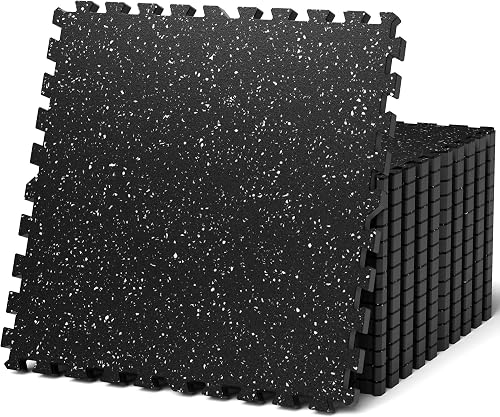 Check it
AIRHOP 0.79in Thick 48 Sq Ft Exercise
Best for heavy basement equipment - 5
 Check it
SUPERJARE 1" Extra-Thick Rubber Top Exercise Mat
Best for heavy lifting and impact - 6
 Check it
PRAISUN 0.56" Rubber Top Gym Flooring
Best for a balanced training room - 7
 Check it
Sivan Fitness 1/2" Thick Rubber Top High-Density
Best for flexible indoor layouts - 8
 Check it
LIUKANGZE 0.56in Thick 96 Sq Ft Gym
Best for covering a large basement
The best flooring for basement gym setups
The best basement gym flooring depends on equipment weight, workout impact and the condition of the concrete. The top two picks balance protection and coverage, while the other choices solve specific needs such as small spaces, extra thickness or wall-to-wall coverage.
| Product | Best for | Material | Thickness | Coverage | Our score |
|---|---|---|---|---|---|
| ProsourceFit Weaved Pattern Extra Thick Exercise Puzzle | cushioned basement workouts | EVA foam | 1 inch | 24 sq ft | 9.7 |
| SUPERJARE 0.56'' Thick 48 Sq Ft Rubber | mixed basement workouts | EVA and rubber | 0.56 inch | 48 sq ft | 9.7 |
| AIRHOP Gym Floor Mat | small basement exercise zones | EVA foam | 0.4 inch | 18 sq ft | 9.6 |
| AIRHOP 0.79in Thick 48 Sq Ft Exercise | heavy basement equipment | EVA and rubber | 0.79 inch | 48 sq ft | 9.5 |
| SUPERJARE 1" Extra-Thick Rubber Top Exercise Mat | heavy lifting and impact | EVA and rubber | 1 inch | 48 sq ft | 9.0 |
| PRAISUN 0.56" Rubber Top Gym Flooring | a balanced training room | EVA and rubber | 0.56 inch | 48 sq ft | 8.8 |
| Sivan Fitness 1/2" Thick Rubber Top High-Density | flexible indoor layouts | Rubber-top EVA foam | 1/2 inch | 48 sq ft | 8.7 |
| LIUKANGZE 0.56in Thick 96 Sq Ft Gym | covering a large basement | EVA and rubber | 0.56 inch | 96 sq ft | 7.9 |
ProsourceFit Weaved Pattern Extra Thick Exercise Puzzle: Best for cushioned basement workouts
- 1-inch EVA foam
- 24 sq ft
- 6 interlocking tiles
- 12 end borders
The 1-inch EVA foam gives basement workouts a cushioned surface with noise reduction and water-resistant construction. Six tiles cover 24 sq ft, so it works best for a focused training area.
Pros
- Thick EVA cushion
- No toxic phthalates
- Easy to disassemble
Cons
- Only 24 sq ft per set
- Surface compression may occur under heavy equipment
The ProsourceFit puzzle mat is the strongest choice when cushion and easy movement matter more than rubber-top durability. Its 1-inch EVA foam gives a soft surface for floor exercises, stretching and lighter equipment.
Six 24-inch tiles cover 24 sq ft, and 12 end borders give the finished area a clean edge. That coverage suits a focused bench, mat or bodyweight zone, and it also works as a defined area inside a larger basement gym.
The interlocking pieces are lightweight and can be taken apart if the layout changes or the space needs another use. Double-sided tape can add floor grip when a zone needs more resistance to sliding during lateral movement.
The textured surface is water-resistant, noise-reducing and non-skid for barefoot work and light training. ProsourceFit also identifies the EVA as free of toxic phthalates.
Heavy equipment can cause surface compression, so place a more rigid rubber-top option under concentrated loads. For daily care, a soft cloth with warm water and mild soap, followed by air drying, keeps the surface clean without harsh scrubbing.
SUPERJARE 0.56'' Thick 48 Sq Ft Rubber: Best for mixed basement workouts
- EVA foam base
- EPDM rubber top
- 0.56-inch thickness
- 48 sq ft
This dual-layer option combines a rubber top with an EVA base for grip, cushioning and impact control. Twelve interlocking tiles cover 48 sq ft for benches, treadmills and general strength work.
Pros
- Rubber traction surface
- 48 sq ft coverage
- Waterproof feature
Cons
- Thinner than the 1-inch options
- Foam base may feel softer under heavy loads
SUPERJARE is a practical pick for a mixed-use basement gym with strength work, cardio equipment and floor exercises. Its 0.56-inch construction combines a high-density EVA base with an EPDM rubber top for grip and cushion in one layout.
Twelve 24-inch tiles cover 48 sq ft, giving more working area than the ProsourceFit set. The rubber surface is designed for traction during movements such as landmine presses, while the foam layer adds cushioning and helps reduce vibration on concrete.
The interlocking edges make the set easy to expand or detach when equipment moves or a new station is added. Each tile also has detachable borders, so you can form a neat square or rectangle around benches, racks and cardio machines.
At 0.56 inch, it adds less height than the 0.79-inch and 1-inch choices. That makes it easier to fit below doors and under equipment, but it offers less thickness for repeated heavy drops.
The waterproof surface suits routine basement cleaning with a damp cloth. It suits garages, family fitness rooms and playrooms as well, provided the concrete below is dry and level before installation.
AIRHOP Gym Floor Mat: Best for small basement exercise zones
- 0.4-inch EVA foam
- 18 interlocking tiles
- 18 sq ft
- 12.6-inch tiles
The compact 18-tile set suits stretching, yoga, Pilates and bodyweight work in a smaller basement area. Its EVA foam construction adds cushioning, sound absorption and waterproof performance.
Pros
- Compact coverage
- Water-resistant EVA foam
- Tiles can be separated for cleaning
Cons
- Less coverage per set
- Thinner than the leading picks
AIRHOP's compact foam tiles suit a small basement exercise zone for yoga, Pilates, stretching, cardio and bodyweight work. The set includes 18 EVA tiles measuring about 12.6 inches by 12.6 inches and covering 18 sq ft in total.
The 0.4-inch thickness keeps the floor height change modest for most rooms. That helps when the workout area sits near a door or when you want a removable surface that does not noticeably raise the floor.
The foam is described as high-density EVA with waterproof performance, sound absorption and shock reduction for comfort on concrete. The textured surface is intended to resist dirt, sweat and wear, and the tiles can be separated for a deeper clean.
This is not the first choice under a loaded rack or heavy weight equipment. It makes more sense when comfort and coverage for open-floor exercise matter more than concentrated load support.
The smaller tile size also makes shaping the layout easier around columns or irregular walls. Wiping with a damp cloth and mild soap is enough for routine care, and air drying helps prevent moisture from staying under the foam.
AIRHOP 0.79in Thick 48 Sq Ft Exercise: Best for heavy basement equipment
- 0.79-inch thickness
- Rubber top
- High-density EVA foam
- 48 sq ft
The 0.79-inch dual-layer tiles offer a thicker base for benches, treadmills, kettlebells and other heavy workout equipment. Twelve 24-inch tiles cover a rectangular 48 sq ft area.
Pros
- Thick dual-layer construction
- Rubber top for traction
- Waterproof cleaning surface
Cons
- Heavier than foam-only tiles
- The added height can affect low-clearance equipment
The 0.79-inch AIRHOP is the best fit for a heavy basement equipment zone that needs more thickness than standard 0.56-inch tiles. Its rubber top and high-density EVA foam base combine traction with cushioning for equipment use.
The 12 tiles measure 24 inches by 24 inches and cover 48 sq ft. AIRHOP identifies the flooring for basements, benches, treadmills, kettlebells, yoga and other workout uses, so it can cover a main lifting area plus a nearby floor-work section.
The larger interlocking locks help keep the tiles connected during movement, while the tiles can be detached or linked as your layout changes. The waterproof surface can be wiped with a damp cloth for routine cleaning after training.
Measure doors, rack feet and low equipment before choosing 0.79-inch flooring. Added thickness can change the working height of a rack, which is why our guide to how gym flooring and equipment handling affect noise and stability is useful before installation.
The added height is a real trade-off in low basements, so check clearance at the lowest ceiling point first. A dry test layout also shows whether borders will finish neatly against walls and columns.
SUPERJARE 1" Extra-Thick Rubber Top Exercise Mat: Best for heavy lifting and impact
- 1-inch thickness
- EPDM rubber top
- EVA foam base
- 48 sq ft
This 1-inch dual-layer flooring is suited to heavy lifting, jumping and repeated impact. The rubber surface adds traction while the EVA base provides cushioning and helps reduce workout noise.
Pros
- Thickest rubber-top option
- 48 sq ft coverage
- Interlocking borders
Cons
- Adds a full inch to floor height
- May be more than light workouts need
SUPERJARE's 1-inch rubber-top mat is the best choice here for heavy lifting and repeated impact. It uses a high-density EVA foam base with an EPDM rubber top and covers 48 sq ft with 12 tiles.
The extra thickness adds cushioning under heavy equipment and jumping workouts on concrete. The matte rubber surface is designed for traction during squats, deadlifts and other strength movements where foot placement matters.
The tiles interlock and include detachable borders, allowing a square or rectangular arrangement around a rack or bench area. The surface also helps protect the floor from scratches, dents and repeated equipment pressure.
The trade-off is height. A full inch can affect door swing, rack clearance and the position of benches, so measure before you commit to a layout.
Read our guide to how gym flooring reduces usable rack height before placing a rack on top. The thicker surface suits home gyms, apartments and shared spaces, but it may be more than light workouts need.
PRAISUN 0.56" Rubber Top Gym Flooring: Best for a balanced training room
- 0.56-inch thickness
- EPDM rubber surface
- EVA foam core
- 48 sq ft
PRAISUN gives a basement gym a middle thickness with a rubber surface and EVA core. The 12-tile set suits strength training, HIIT, yoga and equipment such as benches and treadmills.
Pros
- Balanced thickness
- Rubber traction surface
- Detachable borders
Cons
- Not as thick as 1-inch flooring
- Hand-wash care instructions
PRAISUN offers a middle-ground floor for a balanced training room. Its 0.56-inch tiles use an EVA foam core and EPDM rubber surface, giving you a rubber traction layer without the full height of 1-inch flooring.
The 12 tiles measure 24 inches by 24 inches and cover 48 sq ft. The layout suits home gyms, garages, fitness rooms and play areas, so it can cover a mixed basement where one section is used for exercise and another for general movement.
The interlocking design supports quick assembly, and detachable borders help create a finished edge around equipment. The flooring is described for HIIT, yoga, weightlifting, treadmills, kettlebells and benches, which covers most routine training styles.
Choose it when you want balanced coverage and thickness for everyday use. Choose a thicker option if heavy drops are a regular part of your training.
The mid thickness also makes it easier to keep door and rack clearance workable in a low basement. Hand wash care is listed for this set, so follow that method rather than soaking the tiles.
Sivan Fitness 1/2" Thick Rubber Top High-Density: Best for flexible indoor layouts
- Rubber-top EVA foam
- 12 interlocking tiles
- 24-inch tiles
- Indoor and outdoor use
The 12-tile Sivan set works when you want a rubber-top floor that can expand or fit a defined area. Detachable edge pieces let each tile serve as a corner, border or center tile.
Pros
- Flexible tile arrangement
- 48 sq ft set
- Suitable for basement use
Cons
- Thinner cushion than 1-inch flooring
- Thickness details vary between the title and specs
Sivan Fitness is a useful choice for a flexible indoor layout that may need to expand or change. The set has 12 interlocking tiles with a rubber top and EVA foam construction for a cushioned training surface.
Each tile measures 24 inches by 24 inches, and the product is designed for basement, home gym and other indoor spaces. Detachable edge pieces let each tile serve as a corner, border or center tile, which helps finish edges without waste.
That arrangement helps when the basement has columns, door openings or a workout area that does not form a perfect rectangle. Multiple packs can also be combined for broader coverage, and individual tiles can be moved if a station is relocated.
The product title describes 1/2-inch flooring, while the specifications include both 0.5-inch and 0.3-inch thickness references. Check the exact thickness before ordering if rack clearance or door clearance is tight.
The flexible layout suits a space that is still being planned in stages. It is less suited when you need the extra cushion and impact depth of a full 1-inch floor for heavy lifting.
LIUKANGZE 0.56in Thick 96 Sq Ft Gym: Best for covering a large basement
- 0.56-inch thickness
- Rubber top
- EVA foam
- 96 sq ft
The 24-tile LIUKANGZE set covers twice the area of the 48 sq ft options. It fits a larger basement gym with benches, cardio equipment and open workout space.
Pros
- Largest coverage here
- Rubber and EVA layers
- Waterproof surface
Cons
- Lower score for less detailed product information
- Large pack needs more installation space
LIUKANGZE is the best option for a large basement gym floor because the 24-tile set covers 96 sq ft. Its 0.56-inch tiles use a rubber top with EVA foam underneath for grip and cushion.
Each tile measures 2 feet by 2 feet, and the set includes 48 borders. That coverage can accommodate a larger open workout area with a bench, treadmill, kettlebells and space for floor exercises without splitting the room into small zones.
The interlocking tiles are designed to resist separation during use. The waterproof surface can be wiped with a damp cloth, which helps with routine cleaning in a basement workout room.
The larger pack requires more planning before installation. Lay out the room, confirm the coverage, and account for support columns, doors and any areas where moisture has appeared before covering the concrete.
The scale also suits a basement that doubles as a playroom or general activity area. Because the tiles are 0.56 inch thick, the height change stays moderate, but door clearance still needs checking across the full span.
How should you choose gym flooring for a basement?
Choose basement gym flooring by checking moisture first, then matching thickness and surface type to your equipment. A dry concrete floor can support rubber-top tiles, while a damp slab needs the water problem addressed before any flooring is installed.
For heavy lifting, the 1-inch SUPERJARE or 0.79-inch AIRHOP gives more thickness than the 0.56-inch options. For mixed workouts, the 0.56-inch SUPERJARE or PRAISUN balances coverage, grip and reduced height.
EVA-only flooring is easier to move and more cushioned for floor exercise. Rubber-top flooring gives a firmer training surface and better suits benches, treadmills and repeated equipment use.
Use the best commercial gym flooring guide if you are covering most of the basement or setting up several training stations.
What thickness works under basement gym equipment?
A thickness of about 1 inch works best when the basement gym includes heavy lifting, jumping or repeated impact. A 0.56-inch tile can suit mixed equipment and general training when you need to limit added floor height.
The 0.79-inch AIRHOP sits between those choices. It offers more cushion than standard 0.56-inch mats while adding less height than a full 1-inch tile.
Measure the clearance under doors, racks and equipment before installation. Flooring thickness changes the position of your feet and the usable height of a rack, so a thicker floor is not automatically better for every room.
How can you reduce moisture and noise under basement gym flooring?
Reduce moisture risk by fixing leaks, checking the concrete and keeping the floor dry before covering it. Reduce noise by using cushioned flooring, controlling equipment movement and avoiding uncontrolled drops.
Foam layers in the ProsourceFit, SUPERJARE, AIRHOP, PRAISUN, Sivan and LIUKANGZE options can add cushioning. Rubber-top designs also give a more stable surface for equipment and strength work.
Flooring helps, but it cannot remove every vibration path through concrete and walls. Use controlled lifts, place equipment fully on the tiles and keep a clear inspection path near basement walls.
For a color and room-planning decision, see our guide to gym flooring colors. For material concerns, compare the advice in how to choose non-toxic gym flooring.
How do you clean and maintain basement gym tiles?
Clean gym tiles with the care method suited to the surface, usually a damp cloth and mild soap. Dry the area fully and inspect tile edges regularly so trapped moisture does not remain under the flooring.
AIRHOP, SUPERJARE and LIUKANGZE specify wiping with a damp cloth. ProsourceFit gives warm water and household or dish soap as a cleaning approach, with mild laundry detergent for tougher stains.
PRAISUN and Sivan identify hand washing in their care instructions. Avoid flooding the basement floor during cleaning, especially when the concrete has a history of moisture.
Our verdict on the best flooring for basement gym spaces
The ProsourceFit 1-inch EVA puzzle mat is the best choice for a cushioned, removable workout area. Choose the SUPERJARE 0.56-inch rubber-top set for mixed basement training, the AIRHOP 0.79-inch set for heavier equipment, or the 1-inch SUPERJARE for repeated impact.
Pick LIUKANGZE when you need 96 sq ft of coverage in one set. Pick PRAISUN when you want a balanced 48 sq ft rubber-top layout, and pick Sivan when a flexible shape around columns and door openings matters more.
Pick the smaller AIRHOP foam set for a compact stretching or yoga zone where height and weight stay low. Match the material to the load first, because EVA-only tiles suit comfort while rubber-top tiles suit equipment.
Before any choice, confirm that the concrete is dry and that the added thickness will not reduce rack, doorway or equipment clearance. Measure the lowest ceiling point, door swing and rack height before you order.
A dry test layout will also show whether borders finish cleanly and whether the coverage reaches the equipment you plan to use. That short check can prevent gaps, wasted tiles and a floor that feels too high in daily training.
What is the best flooring for basement gym concrete?
The best flooring for basement gym concrete is rubber-top tile over a dry, level and clean surface. A rubber and EVA option such as the 0.79-inch AIRHOP or 1-inch SUPERJARE adds traction, cushioning and impact control for equipment use.
Check for moisture before covering the slab. Fix water problems first so the floor beneath the tiles does not stay damp and damage the flooring over time.
Concrete is hard and cold, so the flooring layer is what makes standing, lifting and floor exercises more comfortable. A rubber top helps shoes and equipment grip, while the foam base softens impact that would otherwise travel straight into the slab.
Level the surface before installation and remove grit, old paint flakes or raised patches that could press into the tiles. Small defects are easier to correct now than after the floor is locked together.
Also check the room height and door clearance before choosing thickness. A 1-inch floor protects better under heavy loads, but it can change how a rack, bench or treadmill sits in the room.
For lighter exercise, thinner EVA tiles can still work well on concrete. The key is still a dry slab, because trapped moisture is a problem under any covering.
Is rubber or EVA better for a basement gym?
Rubber-top EVA flooring is the most balanced choice for a basement gym because the rubber surface supports traction while the EVA layer adds cushioning. EVA-only tiles are lighter and softer, but heavy equipment can compress them over time.
Choose rubber-top flooring for benches, cardio equipment and strength training. Choose EVA-only flooring for stretching, yoga and bodyweight work where comfort underfoot matters most.
The rubber layer also resists scuffs, scratches and repeated equipment movement better than a plain foam surface. That makes it a better fit for a basement where a rack, treadmill or kettlebell will stay in one place for months.
EVA-only tiles have their own strengths in a basement setting. They are lighter to carry down stairs, easier to rearrange and often feel softer for kneeling and floor exercises.
Noise is another factor to weigh. The foam in both types can soften impact, but a firmer rubber-top surface usually keeps equipment more stable during training.
For most basement gyms, the dual-layer approach gives the widest range of use. Reserve EVA-only tiles for zones where you want easy removal and a softer feel rather than support under heavy loads.
How thick should basement gym flooring be?
Choose about 1 inch for heavy lifting, repeated impact or equipment that needs more cushioning. Around 0.56 inch suits mixed training with benches and cardio equipment, while 0.4 to 0.5 inch can work for yoga, stretching and bodyweight exercise.
Measure door and rack clearance before choosing thicker tiles. Added height can change how equipment fits in the room and how your feet sit during a lift.
Thickness affects more than protection. A thicker floor feels more cushioned for jumping and floor work, but it can also make a bench or rack sit higher than planned.
In a low basement, even a half inch can matter at the top of a rack or under a door. Measure from the concrete to the lowest point above the equipment before you decide.
Match the thickness to the heaviest thing that will use the floor. Light stretching needs less depth than repeated kettlebell work or loaded lifting.
If you are unsure, start with the zone that sees the most impact and plan the rest of the room around it. That keeps the thickest tiles where they help most and avoids adding height everywhere.
How do I prepare a basement floor for gym tiles?
Clean and dry the concrete, then check for visible moisture, low spots and cracks before installing tiles. Fix water problems first, let the floor dry, and leave enough clearance for doors, racks and equipment after adding the flooring thickness.
Lay out the tiles before locking them together. This helps you plan around basement columns, walls and equipment zones.
Start by sweeping and mopping the slab, then let it dry fully before any tile goes down. Even a small amount of trapped moisture can become a problem once the surface is covered.
Walk the room and mark low spots, cracks and areas where water has pooled in the past. Those marks show where the concrete needs attention before flooring hides it from view.
Next, measure the space and plan the tile pattern on paper or with tape on the floor. This shows where borders will fall and whether columns or doorways will interrupt the layout.
Finally, check clearance with the planned thickness added. Open and close each door, test rack height and confirm that benches and cardio equipment still fit with room to use them safely.
Our top 3 picks at a glance
-
1
Best for cushioned basement workouts
ProsourceFit Weaved Pattern Extra Thick Exercise Puzzle
9.7/10 our score
See it on Amazon -
2
Best for mixed basement workouts
SUPERJARE 0.56'' Thick 48 Sq Ft Rubber
9.7/10 our score
See it on Amazon -
3
Frequently asked questions
What is the best flooring for basement gym concrete?
The best flooring for basement gym concrete is rubber-top tile over a dry, level and clean surface. A rubber and EVA option such as the 0.79-inch AIRHOP or 1-inch SUPERJARE adds traction, cushioning and impact control.
Check for moisture before covering the slab.
Is rubber or EVA better for a basement gym?
Rubber-top EVA flooring is the most balanced choice for a basement gym because the rubber surface supports traction while the EVA layer adds cushioning. EVA-only tiles are lighter and softer, but heavy equipment can compress them over time.
How thick should basement gym flooring be?
Choose about 1 inch for heavy lifting, repeated impact or equipment that needs more cushioning. Around 0.56 inch suits mixed training with benches and cardio equipment, while 0.4 to 0.5 inch can work for yoga, stretching and bodyweight exercise.
How do I prepare a basement floor for gym tiles?
Clean and dry the concrete, then check for visible moisture, low spots and cracks before installing tiles. Fix water problems first, let the floor dry, and leave enough clearance for doors, racks and equipment after adding the flooring thickness.


