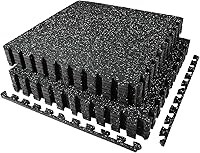
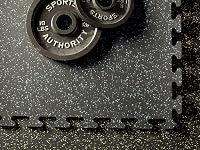
9 Best EVA Foam Interlocking Tiles (November 2026)
The best EVA foam interlocking gym tiles include the bemaxx Gym Mats Set for small exercise zones, the ProsourceFit Weaved Pattern Extra Thick Exercise Puzzle for extra cushioning, and the ProSource Play Mat for a colorful exercise corner.
On this page (4 sections)
The best EVA foam interlocking tiles for most home gyms are the bemaxx Gym Mats Set, with smaller pieces that can shape a cushioned zone for floor exercises. For more coverage, choose ProsourceFit’s 1 in tiles or Nazhura’s 48 sq ft set; for rubber over foam, consider AIRHOP.
EVA foam works best under your body and lighter gear. It gives you a softer floor for stretching, yoga and core exercises, while heavier equipment can leave dents or compress the foam.
If your room combines cardio gear, floor work and weights, match each area to its load. Our guide to the best floors for home gym compares broader flooring choices, while the best rubber gym flooring interlocking tiles focus on denser tile options.
Our picks at a glance
-
1

-
2
 Best for extra cushioning
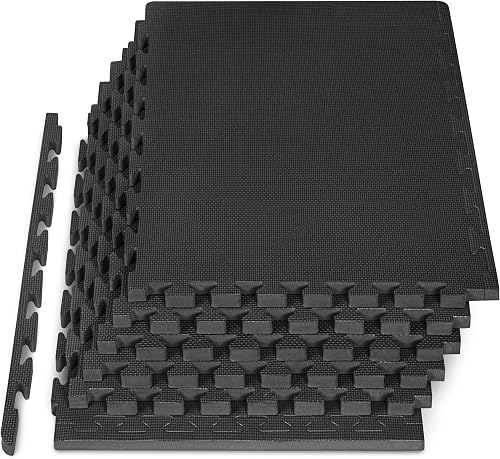
ProsourceFit Weaved Pattern Extra Thick Exercise Puzzle
9.7/10 our score
See it on Amazon -
3

- 4
 Check it
ProsourceFit Exercise Puzzle Mat 1/2-inch
Best for everyday floor workouts - 5
 Check it
AIRHOP 0.79in Thick 48 Sq Ft Exercise
Best for wide rubber-top coverage - 6
 Check it
Nazhura 12 Pack 48 sqft Home Gym
Best for simple large-area coverage - 7
 Best for a small soft play zoneCheck it
- 8
 Check it
BalanceFrom Foam Floor Tiles for Kids
Best for a family exercise corner - 9
 Check it
AIRHOP 0.56in Thick 24 Sq Ft Exercise
Best for compact rubber-top coverage
Which EVA foam interlocking tiles fit each home gym?
The best pick depends on how much floor you need to cover and whether you value smaller pieces, extra cushion or a rubber top. These nine options are ordered by score, with foam play mats included only as light-use choices.
bemaxx Gym Mats Set: Best for small exercise zones
- 18 tiles, each 12.6 x 12.6 in
- 0.4 in thick
- About 18 sq ft total coverage
- EVA foam
Smaller tiles let you shape a cushioned zone around a mat or light equipment. The set includes edge pieces for a finished border.
Pros
- Flexible small-tile layout
- Water-resistant and easy to wipe clean
- Includes edge pieces
Cons
- Less coverage than the larger tile sets
- Foam is intended for cushioned flooring, not heavy lifting
The bemaxx Gym Mats Set fits a compact exercise zone where small tiles make the layout easier to shape. It includes 18 pieces measuring 12.6 x 12.6 in, each 0.4 in thick, plus edge pieces.
That smaller format can be useful around a bench or beside a cardio machine when you don't need a broad continuous surface. The set covers about 18 sq ft, so measure the footprint of your planned area before deciding whether one set is enough.
The EVA surface is described as cushioned and slip resistant, and the tiles can be wiped with a damp cloth. This is a better fit for floor exercise and light gear than a rack or a place where weights may be dropped.
For those drops, consider weight drop pads instead of foam tiles.
Choose it for a flexible small zone with a finished border. If your plan centers on heavier equipment, compare rubber tiles before buying.
ProsourceFit Weaved Pattern Extra Thick Exercise Puzzle: Best for extra cushioning
- Six 24 x 24 in tiles
- 1 in thick
- 24 sq ft coverage
- Textured EVA foam
The 1 in thickness gives floor exercises a more cushioned surface. Six tiles cover 24 sq ft, with 12 end borders included.
Pros
- Thick foam surface
- Portable interlocking pieces
- Water-resistant and noise-reducing design
Cons
- Foam may compress under heavy equipment
- Double-sided tape may be needed for maximum floor grip
ProsourceFit’s extra-thick puzzle mat gives you 1 in of EVA foam beneath a textured surface. Six 24 x 24 in tiles cover 24 sq ft, with 12 end borders for a finished edge.
The thicker cushion makes it a strong option for floor work where hands, knees or hips contact the ground. Its pieces are also lightweight and can be taken apart to move or store.
ProsourceFit notes that heavy equipment may compress the surface, so don't treat extra thickness as a substitute for a firmer platform under a rack. The brand suggests double-sided tape for maximum floor grip.
Choose this set when cushioning is the main priority and the planned use is light enough for foam. For dense flooring under weights, look at interlocking rubber tiles for a garage floor.
ProSource Play Mat: Best for a colorful exercise corner
- 16 tiles measuring 12 x 12 in
- 3/8 in thick
- 16 sq ft assembled area
- Multicolor EVA foam
This multicolor play mat can make a soft exercise corner where a small coverage area is enough. The puzzle pieces can be taken apart for storage.
Pros
- Small tiles work in compact areas
- Textured surface
- Water-resistant
Cons
- Designed and colored as a kids’ play mat
- Coverage is limited to 16 sq ft
The ProSource Play Mat is a colorful option for a small exercise corner that also serves as a family play area. Its 16 pieces cover a 4 x 4 ft area when assembled, and the product description specifies 3/8 in thick EVA foam.
The smaller 12 x 12 in pieces can be pulled apart for storage or used to cover a limited floor section. Its bright colors and child-focused design make it less suited to a gym that needs a plain, subdued look.
For home workouts, keep the use to stretching, yoga or other bodyweight movements. The soft surface isn't a heavy-equipment platform, and the product is primarily designed as a kids’ play mat.
ProsourceFit Exercise Puzzle Mat 1/2-inch: Best for everyday floor workouts
- Six 24 x 24 in tiles
- 1/2 in thick
- 24 sq ft coverage
- High-density EVA foam
The half-inch foam surface suits push-ups, crunches and yoga movements. The six-tile set includes end borders for a clean edge.
Pros
- 24 sq ft from six tiles
- Lightweight and easy to assemble
- Water-resistant and noise-reducing
Cons
- Foam may compress under heavy objects
- Best results are on flat, hard surfaces
ProsourceFit’s half-inch puzzle mat balances a broad tile format with moderate cushioning. Six 24 x 24 in pieces cover 24 sq ft, and end borders help create a clean edge.
The non-skid, water-resistant design works for indoor exercise areas on flat, hard surfaces. The foam is easy to assemble and disassemble, which helps if you want to store the tiles between workouts.
ProsourceFit says the foam may compress slightly under heavy objects. Keep it for floor exercises and lighter equipment, or use a different surface where a rack or concentrated load will stay in one place.
This is the practical middle ground if you want larger pieces without moving to a 1 in tile. Compare the room footprint with the set’s 4 x 6 ft coverage.
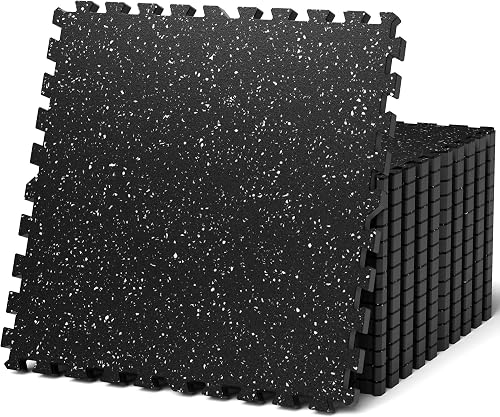
AIRHOP 0.79in Thick 48 Sq Ft Exercise: Best for wide rubber-top coverage
- 12 tiles measuring 24 x 24 in
- 0.79 in thick
- 48 sq ft coverage
- Rubber top with EVA foam bottom
Rubber tops over EVA foam provide a different surface from plain foam tiles. Twelve pieces cover 48 sq ft for a larger workout area.
Pros
- Large stated coverage
- Rubber and EVA layers
- Wipes clean with a damp cloth
Cons
- Heavier than the smaller foam sets
- The foam base still differs from dedicated rubber flooring
AIRHOP’s 0.79 in set pairs a rubber top with a high-density EVA foam base. Twelve 24 x 24 in pieces cover 48 sq ft, making this the largest coverage among the top five picks.
That layered construction gives you a different surface from plain foam while retaining a cushioned base. AIRHOP describes the tiles as suitable for home gym uses including benches, treadmills and kettlebells, but confirm that the floor and equipment setup meet your needs.
The large footprint suits a dedicated exercise area. If you only need a small patch, six tiles may be more practical than buying a full set.
Nazhura 12 Pack 48 sqft Home Gym: Best for simple large-area coverage
- 12 tiles measuring 24 x 24 in
- 1/2 in thick
- 48 sq ft stated coverage
- Textured EVA foam
Twelve half-inch tiles provide a broad foam surface with a textured finish. The puzzle edges make the layout easy to change.
Pros
- 48 sq ft stated coverage
- Interlocking layout
- Water-resistant surface
Cons
- Package details describe different tile counts in places
- Foam can be less suited to heavy equipment than rubber flooring
Nazhura offers 12 textured EVA tiles measuring 24 x 24 x 0.5 in, with 48 sq ft of stated coverage. The format is useful when you want to cover a larger area using fewer, wider pieces.
The interlocking edges let you connect or separate the tiles without tools. The surface is described as water-resistant and cushioned, so it can suit floor exercise or light equipment in a home gym.
There are differences in the package descriptions: some details refer to 12 tiles and 48 sq ft, while other text mentions six tiles and 24 sq ft. Confirm the set size you are choosing before you plan the room layout.
Choose this for broad foam coverage if the set variant matches the area you need. For garage gym setups exposed to outdoor conditions, see our guide to best interlocking rubber tiles outdoor.
MioTetto Baby Play Mat: Best for a small soft play zone
- 12.4 x 12.4 in tiles
- 0.4 in thick
- EVA foam
- Multiple set sizes
Designed for play areas, this soft tile set can also define a small, low-impact floor exercise space. Its small pieces suit layouts that need to fit around other room uses.
Pros
- Small tiles allow flexible layouts
- Waterproof surface
- Wipes clean
Cons
- Designed for babies and kids
- No home gym coverage total is specified for every set
MioTetto’s play mat is made for babies and kids, but its soft 0.4 in EVA foam tiles can define a small, low-impact exercise zone. The pieces measure 12.4 x 12.4 in, and the set can be configured by adding or removing tiles.
A waterproof surface that wipes clean may be useful in a room shared with family play. The product is designed around playpens and crawling, so use it for stretching or bodyweight work rather than heavy machines.
Set sizes vary, from 9-piece to 36-piece options. Check the pack size and coverage you need before planning an area around a particular room dimension.
BalanceFrom Foam Floor Tiles for Kids: Best for a family exercise corner
- 12 x 12 in tiles
- 0.4 in thick
- 36 sq ft stated coverage
- EVA foam
The 36 sq ft set can cover a family play area or a light exercise corner. Its small tiles are easy to lift and rearrange.
Pros
- Broad stated coverage
- Lightweight and portable
- Moisture-resistant surface wipes clean
Cons
- Designed primarily as a kids’ play mat
- Thin foam is for light activity rather than heavy equipment
BalanceFrom’s foam floor tiles provide 36 sq ft of stated coverage in a family-oriented set. The 12 x 12 in pieces are 0.4 in thick and made from EVA foam.
The lightweight tiles can be lifted and rearranged to create a play area or exercise corner. Their moisture-resistant surface wipes clean, which can help in a shared room where the floor sees more than one use.
This is a light-duty choice for stretching, mobility work or bodyweight exercise. The 0.4 in foam isn't the right base for heavy equipment that concentrates its load in small spots.
AIRHOP 0.56in Thick 24 Sq Ft Exercise: Best for compact rubber-top coverage
- Six tiles measuring 24 x 24 in
- 0.56 in thick
- 24 sq ft coverage
- Rubber top with EVA foam bottom
This smaller rubber-top set uses six tiles over 24 sq ft. It suits a compact area where you want a layered surface.
Pros
- Rubber top with EVA foam base
- Interlocking tiles detach for rearranging
- Damp-cloth care
Cons
- Less coverage than the 48 sq ft AIRHOP set
- Heavier than plain foam tiles
The compact AIRHOP set combines a rubber top and EVA foam base in six tiles measuring 24 x 24 in. Its 24 sq ft coverage is half the area of the 12-tile AIRHOP set.
This layout may fit a smaller workout zone where you want a layered surface. AIRHOP describes the tiles as suitable for equipment and workouts, but the EVA base still has different behavior from a solid rubber tile.
Use the size to plan around a bench or a limited floor area. The tiles wipe clean with a damp cloth and can be detached for storage or layout changes.
How we compared EVA foam floor tiles
We compared the stated material, thickness, tile size, coverage and intended use for each set. We gave more weight to home gym fit, clear coverage details and useful layout options, while treating children’s play mats as light-duty choices.
Our score weighs specs, features and buyer feedback against what you're shopping for. We did not treat foam thickness alone as proof that a tile can support heavy equipment without compression.
| Product | Best for | Tile size | Thickness | Coverage | Our score |
|---|---|---|---|---|---|
| bemaxx Gym Mats Set | small exercise zones | 12.6 x 12.6 in | 0.4 in | About 18 sq ft | 9.7 |
| ProsourceFit Weaved Pattern Extra Thick Exercise Puzzle | extra cushioning | 24 x 24 in | 1 in | 24 sq ft | 9.7 |
| ProSource Play Mat | a colorful exercise corner | 12 x 12 in | 3/8 in | 16 sq ft | 9.6 |
| ProsourceFit Exercise Puzzle Mat 1/2-inch | everyday floor workouts | 24 x 24 in | 1/2 in | 24 sq ft | 9.5 |
| AIRHOP 0.79in Thick 48 Sq Ft Exercise | wide rubber-top coverage | 24 x 24 in | 0.79 in | 48 sq ft | 9.5 |
| Nazhura 12 Pack 48 sqft Home Gym | simple large-area coverage | 24 x 24 in | 1/2 in | 48 sq ft | 9.4 |
| MioTetto Baby Play Mat | a small soft play zone | 12.4 x 12.4 in | 0.4 in | 8.9 | |
| BalanceFrom Foam Floor Tiles for Kids | a family exercise corner | 12 x 12 in | 0.4 in | 36 sq ft | 8.7 |
| AIRHOP 0.56in Thick 24 Sq Ft Exercise | compact rubber-top coverage | 24 x 24 in | 0.56 in | 24 sq ft | 8.4 |
What should you check before buying foam gym tiles?
Measure the exercise zone first, then compare the total coverage and piece size. A set with smaller tiles can fit around furniture more easily, while 24 in square pieces cover space with fewer connections.
How thick should EVA foam tiles be for home workouts?
For floor exercises, 0.4 to 1 in tiles provide cushioning, with thicker foam offering more padding under hands and knees. The right thickness depends on the movements you do and how firm you want the floor to feel.
Thickness doesn't tell you how well a tile handles a rack or concentrated load. If heavy equipment will stay on the floor, consider rubber or a stable platform instead.
Can EVA foam tiles support gym equipment?
EVA foam can work under lighter equipment, but heavy objects may compress it. ProsourceFit specifically notes that its 1 in puzzle mat may compress under heavy equipment.
Use rubber flooring for racks, heavy weights and repeated drops, and follow the equipment maker’s floor guidance. You can compare best interlocking rubber tiles for garage floor for options aimed at denser gym flooring.
Do interlocking foam tiles stay in place?
Interlocking edges connect the pieces, but how firmly they stay put can depend on the floor and setup. ProsourceFit recommends double-sided tape for maximum grip on its extra-thick tiles.
Start on a flat, clean floor and check the seams after assembly. Avoid placing a tile edge where it can catch a foot during exercise.
Are foam tiles a good choice for a garage gym?
Foam tiles can work in a garage for stretching, bodyweight exercise and light gear, provided the floor is flat and the room stays dry. For heavier equipment, a rubber surface is a more suitable place to start.
If you need flooring that can handle different loads, compare our best flooring for home gyms guide with the rubber tile options.
Which EVA foam gym tiles should you choose?
Choose bemaxx for a small, flexible floor exercise zone, ProsourceFit’s 1 in tiles when extra cushion matters, and Nazhura when you need broad EVA coverage. Pick a rubber-top AIRHOP set if you want a layered surface, and reserve plain foam for floor work and lighter equipment.
Our top 3 picks at a glance
-
1
-
2
Best for extra cushioning
ProsourceFit Weaved Pattern Extra Thick Exercise Puzzle
9.7/10 our score
See it on Amazon -
3
Frequently asked questions
Are EVA foam tiles good for home gyms?
EVA foam tiles work well for floor exercises and lighter equipment because they add a cushioned surface and can help reduce noise. They can compress under heavy equipment, so check the intended use and choose a firmer rubber surface for racks, heavy weights or repeated drops.
A flat, stable floor also helps interlocking tiles stay in place.
How thick should home gym foam tiles be?
For floor exercises, 0.4 to 1 in tiles offer a cushioned layer, with thicker foam adding more padding under knees and hands. Thickness alone doesn't tell you how well a tile handles heavy equipment, so consider the material and the load too.
Leave room for transitions where the tile edge meets the bare floor.
Can you put weight equipment on EVA foam tiles?
Light equipment can sit on EVA foam, but heavy objects may compress the surface. ProsourceFit notes that its extra-thick puzzle mat can compress under heavy equipment.
For a rack, barbell work or repeated weight drops, compare rubber flooring options and follow the equipment maker’s floor requirements.
How do you choose between foam and rubber gym tiles?
Choose foam for cushioned floor exercise, stretching and lighter equipment. Rubber tiles are a better place to start when equipment is heavy or you expect repeated impact.
Compare our best rubber gym flooring interlocking tiles for heavier-duty options, and check the tile thickness and surface material before planning a mixed-use room.