7 Best Interlocking Rubber Tiles for Garage Floors (November 2026)
The best interlocking rubber tiles for garage gym floors include the American Floor Mats Fit-Lock 3/8 Inch Heavy for a fitted lifting zone, the AIRHOP 0.56in Thick 48 Sq Ft Exercise for a thicker dual-layer floor, and the BASELAYER Performance Series Interlocking Floor Tiles for firm TPE under weights.
On this page (6 sections)
- How we picked interlocking rubber tiles for garage floors
- Compare garage gym flooring tiles by material and coverage
- The best interlocking rubber tiles for garage gyms
- What should you check before covering a garage floor?
- How can floor tiles affect noise and stability?
- Which interlocking rubber tiles should you choose?
The American Floor Mats Fit-Lock 3/8 Inch Heavy is the best interlocking rubber tile choice for most garage gyms that need a defined lifting zone. Its 24 x 24 in tiles cover 4 sq ft each, and corner tiles help finish the edges; AIRHOP is a thicker dual-layer option for broader coverage.
A garage floor needs to handle the equipment you use and fit the room around it. Measure the available area, account for door clearance and decide whether you want a firm rubber surface, a cushioned layer or drainage for a wet utility zone.
For a wider overview of surface types and tradeoffs, see our guide to best floors for home gym. If your main priority is rubber tile options across different rooms, compare best rubber gym flooring interlocking tiles.
Our picks at a glance
-
1
 Best for a fitted lifting zone
American Floor Mats Fit-Lock 3/8 Inch Heavy
9.6/10 our score
See it on Amazon -
2
 Best for a thicker dual-layer floor
AIRHOP 0.56in Thick 48 Sq Ft Exercise
9.6/10 our score
See it on Amazon -
3
 Best for firm TPE under weights
BASELAYER Performance Series Interlocking Floor Tiles
9.4/10 our score
See it on Amazon
- 4
 Check it
IncStores 8mm Strong Rubber Tiles
Best for a low-profile rubber surface - 5
 Check it
VersaTex Garage Floor 18 x 18 inch
Best for broad garage coverage - 6
 Check it
GrytFit Interlocking Rubber Floor Tiles
Best for solid rubber puzzle tiles - 7
 Check it
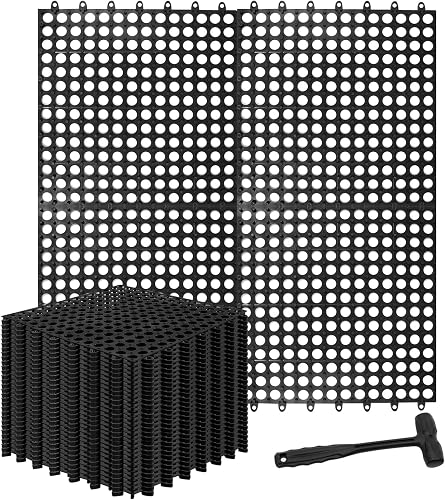
GRETJOB 30 Pack Drainage Interlocking Tiles
Best for wet utility zones
How we picked interlocking rubber tiles for garage floors
We compared tile material, thickness, pack coverage, tile dimensions and features that affect layout. The scores weigh those details against the needs of a garage workout floor, including weight support, floor coverage and fit around equipment.
Our score weighs specs, features and buyer feedback against what you’re shopping for. We favored products with clearly stated dimensions and a defined use for gym, garage or equipment flooring, while noting when a tile’s drainage or foam construction changes where it fits best.
Compare garage gym flooring tiles by material and coverage
The best choice depends on how much floor you need to cover and what will sit on top. Check the full area and tile height before deciding, especially if you have a rack, machine or door close to the flooring edge.
| Product | Best for | Material | Tile size | Thickness | Our score |
|---|---|---|---|---|---|
| American Floor Mats Fit-Lock 3/8 Inch Heavy | a fitted lifting zone | Rubber | 24 x 24 in | 3/8 in | 9.6 |
| AIRHOP 0.56in Thick 48 Sq Ft Exercise | a thicker dual-layer floor | Rubber and EVA | 24 x 24 in | 9.6 | |
| BASELAYER Performance Series Interlocking Floor Tiles | firm TPE under weights | TPE | 19 x 19 in | 9.4 | |
| IncStores 8mm Strong Rubber Tiles | a low-profile rubber surface | Recycled SBR rubber and EPDM flecks | 23 x 23 in | 8 mm | 9.2 |
| VersaTex Garage Floor 18 x 18 inch | broad garage coverage | Rubber | 18 x 18 in | 9.0 | |
| GrytFit Interlocking Rubber Floor Tiles | solid rubber puzzle tiles | Rubber | 22.5 x 22.5 in | 8.7 | |
| GRETJOB 30 Pack Drainage Interlocking Tiles | wet utility zones | TPE | 12 x 12 in | 8.4 |
The best interlocking rubber tiles for garage gyms
These picks suit different garage layouts, from a compact lifting zone to a broad equipment floor. Compare the coverage and surface construction before choosing a pack.
American Floor Mats Fit-Lock 3/8 Inch Heavy: Best for a fitted lifting zone
- 3/8 in thick
- 24 x 24 in rubber tiles
- 4 sq ft per tile
- Corner tiles included
Four 2 x 2 ft tiles cover a 4 x 4 ft area. Center, border and corner options help create a finished edge for a defined garage gym zone.
Pros
- 4 sq ft per tile
- Interlocking system needs no adhesive
- Corner tiles included
Cons
- 4-tile set covers a limited area
- Additional tile types may be needed for a larger floor
American Floor Mats Fit-Lock suits a defined workout zone where you want 2 x 2 ft tiles and a finished perimeter. Each tile covers 4 sq ft, so four tiles make a 4 x 4 ft area before allowing for any layout adjustments.
The 3/8 in rubber surface is designed to absorb shock and impact from heavy weights and equipment. That can help protect both the floor and the equipment, though the tile does not replace safe lifting practices or a stable rack setup.
Fit-Lock uses a smooth interlocking system and does not require adhesive. Center, border and corner tiles let you extend the floor or finish the edge, and this particular set contains four corner tiles.
Choose it for a compact station that may grow over time. Before ordering extra tiles, plan which edge pieces your final shape needs.
AIRHOP 0.56in Thick 48 Sq Ft Exercise: Best for a thicker dual-layer floor
- 0.56 in thick
- Rubber top and high-density EVA foam bottom
- 12 tiles cover 48 sq ft
- 24 x 24 in tiles
The 12-tile kit covers an 8 x 6 ft area with a rubber top over an EVA foam bottom. Its larger stated coverage suits buyers flooring more than a small lifting station.
Pros
- 48 sq ft per kit
- Two-layer construction
- Tiles detach and link for layout changes
Cons
- Foam layer differs from solid rubber tiles
- Check the floor height before placing equipment
AIRHOP covers 48 sq ft with 12 tiles measuring 24 x 24 in. Its 0.56 in dual-layer construction combines a textured rubber top with a high-density EVA foam base.
That layered design gives you a different feel from solid rubber tiles. AIRHOP describes the surface as non-slip and says the foam base helps minimize noise and vibration; consider the softer base when deciding whether it suits a heavy rack or your specific equipment.
The tiles can be assembled, detached and linked to adjust the floor area. A damp cloth is the stated care method, and the material is described as waterproof.
Choose AIRHOP if you want one kit to cover a larger workout area with extra cushioning. Compare the total floor height with your garage door, thresholds and equipment feet before setting it up.
BASELAYER Performance Series Interlocking Floor Tiles: Best for firm TPE under weights
- 1/2 in thick TPE
- 12 tiles cover 30 sq ft
- 19 x 19 in tiles
- Cord channels underneath
These 1/2 in TPE tiles have a firmer cushioned surface intended for heavy weights and high-impact training. Edges and corners are sold separately.
Pros
- Firm density for heavy weights
- Underside cord channels
- Interlocking system designed for a flush fit
Cons
- Edges and corners cost extra
- Each tile is smaller than a 24 x 24 in tile
BASELAYER’s Performance Series uses 1/2 in TPE tiles with a firmer density for heavy weights and high-impact training. Twelve tiles measure 19 x 19 in and cover 30 sq ft.
The material is thermoplastic elastomer, described as rubber-like rather than foam. Its underside cord channels can keep electrical cords out of sight, while the interlocking tabs are designed for a flush fit with minimal gaps.
Edges and corners are sold separately. That matters if you want a smooth transition around the perimeter, so include those pieces in your layout plan instead of counting only the central tiles.
Choose this option for a firm surface and cord management under the tiles. The smaller 19 in tile dimensions also mean a different seam pattern than a floor made from 24 in squares.
IncStores 8mm Strong Rubber Tiles: Best for a low-profile rubber surface
- 8mm thick
- 23 x 23 in tiles
- Recycled rubber with EPDM flecks
- Center, border and corner tiles
The 8 mm rubber tiles offer a lower profile than thicker cushioned options. Center, border and corner pieces support a more even edge-to-edge layout.
Pros
- Low-profile tile thickness
- Dedicated border and corner pieces
- Waterproof protection
Cons
- Tile size is 23 x 23 in
- Plan the kit quantity around the area to cover
IncStores 8mm Strong Rubber Tiles suit buyers who want a lower-profile rubber surface with dedicated center, border and corner pieces. Each tile measures 23 x 23 in and is made from recycled SBR rubber with colored EPDM flecks.
At 8 mm thick, these tiles sit lower than the 3/8 in, 1/2 in and 0.56 in picks. That can simplify transitions around a gym area, but the thinner profile gives less material between the equipment and concrete.
IncStores describes the tiles as waterproof and slip resistant, with a smooth surface intended to let equipment move freely. The kit options use separate pieces for the center and perimeter, which can help create a more finished edge.
Choose it for general garage gym flooring when a dense rubber surface and lower height matter. Confirm the kit size and pieces needed for your measured area.
VersaTex Garage Floor 18 x 18 inch: Best for broad garage coverage
- 24 tiles cover 54 sq ft
- 18 x 18 in rubber tiles
- 0.125 in thick
- No adhesive required
A 24-tile pack covers 54 sq ft, making this a broad, thin floor option. The tiles interlock without glue or tape and can be repositioned.
Pros
- 54 sq ft per pack
- Waterproof and non-porous
- Can be cut to size
Cons
- 0.125 in thickness offers less cushioning than thicker picks
- Smaller tiles mean more seams
VersaTex offers 54 sq ft per 24-tile pack, making it the broadest stated coverage among these picks. Each rubber tile measures 18 x 18 in and is 0.125 in thick.
This thin tile system is intended for garages, utility rooms and home gyms. The tiles are described as waterproof and non-porous, and they interlock without adhesive or tape so you can reposition the layout.
The low profile is useful for floor protection where you don't need much cushioning beneath weights. For dropped loads or a rack with concentrated feet, compare its thickness with a thicker tile before choosing it.
VersaTex can be cut to size with a sharp utility knife or saw. Plan for more seams because its tiles are smaller than the 24 x 24 in options.
GrytFit Interlocking Rubber Floor Tiles: Best for solid rubber puzzle tiles
- 1/2 in thick
- 22.5 x 22.5 in tiles
- 4-pack covers about 14 sq ft
- Recycled rubber
The 1/2 in tiles are solid rubber from edge to edge, with a 4-pack covering about 14 sq ft. Their puzzle edges suit a small area under a rack or equipment.
Pros
- Solid rubber construction
- Interlocking design needs no adhesive
- Slip-resistant surface
Cons
- 4-pack covers a smaller area
- Hand wash care instructions
GrytFit’s 22.5 x 22.5 in tiles are 1/2 in thick solid rubber. A four-pack covers about 14 sq ft, which works for a small rack area or a section beneath equipment.
The puzzle-edge design connects the tiles without adhesive. GrytFit describes them as made from recycled rubber, slip resistant and moisture tolerant, with use listed for home gyms and garages.
The surface is a firm rubber option rather than a foam core. If you plan to cover a large garage, calculate how many packs you need and compare that total with larger coverage kits.
Choose GrytFit for a smaller area where solid rubber construction and 1/2 in thickness are priorities. Its care instructions say hand wash only.
GRETJOB 30 Pack Drainage Interlocking Tiles: Best for wet utility zones
- 30 TPE tiles
- 12 x 12 in tiles
- Raised feet and drainage holes
- Plastic hammer included
The small tiles have holes and raised feet to let water drain through, a useful setup for wet utility areas. The open design is less suited to a smooth surface beneath weights.
Pros
- Drainage holes and raised feet
- Snaps together by hand
- Plastic hammer included
Cons
- Open surface is not a solid workout floor
- Each tile is only 12 x 12 in
GRETJOB is the pick for a wet utility area, not a continuous weightlifting floor. Its 12 x 12 in TPE tiles have drainage holes and raised feet so water can pass through.
The pack includes 30 tiles and a plastic hammer. The pieces snap together by hand, and the maker describes them as suitable for several indoor and outdoor areas, including garages and gyms.
The open holes are helpful where water needs to drain, but they leave an uneven surface that isn't suited to placing a bench or rack. Keep this type of tile in a separate zone for wet shoes, cleaning or utility use.
Choose GRETJOB when drainage matters more than a solid platform. For weights and machines, use a closed surface with stated dimensions and thickness.
What should you check before covering a garage floor?
Measure the workout zone before buying tiles, then compare the pack coverage with the full area. Include room for edge pieces, cuts, door movement and the equipment footprint.
Concrete can feel cool or damp, so check for moisture before laying a floor over it. Rubber materials can also interact with some finishes; read our notes on whether rubber gym mats can discolor the floor beneath them.
Tile height matters near garage doors and thresholds. A thicker surface can add cushioning, but it may create a raised edge or affect equipment leveling, so test the planned footprint with your machine or rack dimensions.
For a floor exposed to weather, look at our guide to best interlocking rubber tiles outdoor. If you want more softness for bodyweight work, compare these with best eva foam interlocking tiles.
How can floor tiles affect noise and stability?
Floor tiles can add a layer between equipment and concrete, but the material and thickness affect how the setup feels. A dense rubber tile and a rubber-over-foam tile are different surfaces, so match them to the load and movement in your gym.
Keep a rack on a level, firm area and make sure every tile joint is fully connected. Flooring can reduce direct contact with concrete, but noise also depends on how weights are set down and how equipment is handled; see how gym flooring and equipment handling affect noise and stability.
Drainage tiles solve a different problem from lifting tiles. Use holes and raised feet where water needs to pass through, and choose a closed, even surface beneath equipment.
Which interlocking rubber tiles should you choose?
Choose Fit-Lock for a compact, finished lifting zone with 2 x 2 ft rubber tiles, or AIRHOP for 48 sq ft of thicker dual-layer flooring. BASELAYER fits buyers who want firm TPE under weights, while VersaTex is a thin option for broader protective coverage.
For small equipment zones, GrytFit offers 1/2 in solid rubber tiles and IncStores has a lower 8 mm profile. Choose GRETJOB only where drainage is the main need, then plan your floor area around the tile coverage and equipment footprint.
Our top 3 picks at a glance
-
1
Best for a fitted lifting zone
American Floor Mats Fit-Lock 3/8 Inch Heavy
9.6/10 our score
See it on Amazon -
2
Best for a thicker dual-layer floor
AIRHOP 0.56in Thick 48 Sq Ft Exercise
9.6/10 our score
See it on Amazon -
3
Best for firm TPE under weights
BASELAYER Performance Series Interlocking Floor Tiles
9.4/10 our score
See it on Amazon
Frequently asked questions
What thickness is best for interlocking rubber tiles in a garage gym?
Choose thickness based on your equipment and workout area. A 3/8 in or 1/2 in tile gives more material under weights than a thin 0.125 in tile, while a low-profile option can work for machines or general floor protection.
Also check whether the added height affects doors, thresholds or equipment stability.
Can interlocking rubber tiles go on a concrete garage floor?
Yes, these modular tiles are intended to create a workout surface over a hard floor, and several picks are designed for garage use. Sweep and dry the concrete first, then follow the tile maker's installation and care instructions.
Check the floor for damp spots before covering it.
Are rubber tiles or EVA foam tiles better for a garage gym?
Rubber tiles generally make more sense under weights and heavy equipment because they provide a denser surface. EVA foam can add cushioning, and AIRHOP combines a rubber top with an EVA foam base.
Compare the material and thickness with your lifting style and equipment.
How do I calculate how many garage gym tiles I need?
Measure the length and width of the area, then multiply them to get square feet. Divide that area by the coverage stated for one pack, and round up to a whole pack.
Allow extra for cuts, irregular corners and any border pieces the tile system needs.
Do interlocking garage floor tiles need adhesive?
Many interlocking gym tiles are designed to stay together without adhesive. Fit-Lock and VersaTex say their systems need no adhesive, while other tile designs use locking tabs or puzzle edges.
Check the specific installation instructions, especially if you plan to cut tiles or cover a large area.


