6 Best Interlocking Rubber Tiles Outdoor (November 2026)
The best outdoor interlocking rubber tiles include the wiiiw 18 Pack Modular Interlocking Floor Mat for wet outdoor workout areas, the FengWu 12 Pack 12'' x 12'' Interlocking for adjustable wet-area layouts, and the GrytFit Interlocking Rubber Floor Tiles for racks and free weights outdoors.
On this page (3 sections)
The best interlocking rubber tiles outdoor are the wiiiw 18 Pack Modular Interlocking Floor Mat tiles for covered or wet workout areas that need drainage and easy storage.
They suit people who train in a garage opening, on a covered patio, or where hoses and rain are a normal part of the routine. Choose GrytFit for weight equipment, or Playsafer for a larger decorative outdoor surface.
Outdoor home gym flooring has two jobs. It must give your feet and equipment a stable base, and it must handle rain, splash water, dirt and changing conditions.
Those jobs can pull in different directions. A surface that is soft and open underfoot may not feel firm under a rack, while a solid surface may hold water where you need it to drain away.
Drainage tiles help water pass below the walking surface, while solid rubber tiles give a firmer base under racks and free weights. Neither type is better in every space, because the right choice depends on the floor below and the work you plan to do on top.
Think about who will use the space most often. A person doing mobility work, stretching and light dumbbell training has different needs from someone setting up a squat rack and a bench for regular lifting.
Water exposure matters just as much as equipment. Rain falling straight onto the tiles, runoff from a roof edge, and water carried in from a pool or hose can all change how a floor feels underfoot.
Coverage is the next practical question. Small tiles can follow an odd shape and fit around posts, while larger tiles reduce the number of seams across the main training area.
It also helps to think about storage from the start. Some outdoor spaces are used for training on some days and for cars, bikes or gatherings on others, so a floor that can be moved may be more useful than a permanent one.
Before choosing, compare your surface, equipment and coverage needs with our guide to the best floors for home gym.
If you want a broader indoor comparison, see the best rubber gym flooring interlocking tiles.
Measure the full area you want to train in, including the space where you walk, set down weights and change position. Plan the route water will take after it lands on the tiles, because the base and surrounding slope decide whether it leaves quickly or pools where you stand.
Keep cleaning in mind as well. Outdoor tiles collect grit, leaves and dust, and a design that is hard to lift or rinse may become less pleasant to use over time.
A balanced choice will suit the way you actually train. Start with water, load and coverage, then let those three needs narrow the field.
Our picks at a glance
-
1
 Best for wet outdoor workout areas
wiiiw 18 Pack Modular Interlocking Floor Mat
9.6/10 our score
See it on Amazon -
2
 Best for adjustable wet-area layouts
FengWu 12 Pack 12'' x 12'' Interlocking
9.3/10 our score
See it on Amazon -
3
 Best for racks and free weights outdoors
GrytFit Interlocking Rubber Floor Tiles
9.3/10 our score
See it on Amazon
- 4
 Check it
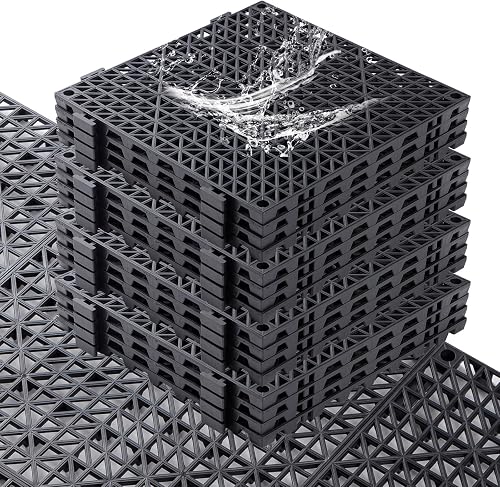
WENQUIT 12PCS Interlocking Drainage Mat
Best for low-maintenance drainage - 5
 Check it
LISHINE 12 Pack Interlocking Floor Tiles 11.8"
Best for raised airflow underfoot - 6
 Check it
Playsafer Brick Rubber Interlocking Tiles
Best for a finished patio gym surface
The best interlocking rubber tiles outdoor for different uses
The best outdoor interlocking rubber tile depends on whether you need drainage, solid support, flexible sizing or broad coverage. Our score weighs specs, features and buyer feedback against the needs of an outdoor home workout surface.
Drainage suits spaces where water must pass through, while solid rubber suits spaces where equipment rests in one place. Flexible sizing suits an irregular patio or deck, and broad coverage suits a larger permanent training area.
This section explains those differences in plain terms without repeating the product details that follow. It also flags the limits of each approach, such as the extra seams that come with small tiles.
Use it to decide which need matters most in your space before you compare individual packs. A tile that drains well but feels soft may be wrong for heavy lifting, and a solid tile may be wrong for a wet corner.
wiiiw 18 Pack Modular Interlocking Floor Mat: Best for wet outdoor workout areas
- 18 tiles
- 12 x 12 x 0.4 in
- Rubber
- Drainage holes
- 8 reinforced locks on each side
Drainage holes, textured grooves and reinforced locks suit outdoor workout areas where water needs to pass below the surface. The tiles can also be rolled for transport or storage.
Pros
- 18-tile pack
- Drainage design
- Reelable for storage
Cons
- Small 12 in tiles create more seams
- Not a solid surface for small dropped weights
The wiiiw is the strongest all-around choice for a wet or partly exposed workout zone. Its 18 rubber tiles measure 12 x 12 x 0.4 in, giving you more individual pieces than the other small drainage packs here.
Drainage holes and anti-slip grooves let water move through the surface. That makes this design useful near a pool, on a deck or in a garage where water may reach the workout area.
Each tile has 8 sets of reinforced locks on each side. You can join the pieces by hand, then roll the assembled mat for transport or storage when the space needs to change.
The smaller tiles make it easier to shape an irregular area, but they also create more seams. Use it for bodyweight training, stretching, mobility work and equipment that does not involve repeated heavy drops.
Choose it for a wet outdoor workout surface with flexible storage needs. For a permanent barbell platform, the solid GrytFit tiles provide a more suitable material choice.
FengWu 12 Pack 12'' x 12'' Interlocking: Best for adjustable wet-area layouts
- 12 tiles
- About 12 x 12 x 0.47 in
- PVC
- Weatherproof and UV resistant
- Can be trimmed
These weatherproof, UV-resistant tiles fit outdoor wet areas and can be trimmed for custom layouts. Their drainage design helps water move away from the walking surface.
Pros
- Weatherproof and UV resistant
- Can be trimmed
- No tools or glue needed
Cons
- Smaller pack than the wiiiw
- PVC construction is softer than solid rubber options
FengWu is a good fit when outdoor exposure and custom sizing matter. The 12 tiles measure about 12 x 12 x 0.47 in, and the PVC construction is described as weatherproof and UV resistant.
The drainage design helps water move below the tiles, while the interlocking layout can be assembled or taken apart without tools or glue. You can also trim the tiles for a custom shape around posts, corners or other obstacles.
Its softer feel suits walking, stretching and workout areas where you want a non-slip surface underfoot. The 12-tile pack covers less area than the Playsafer pack, so measure the complete training zone before you decide how many packs you need.
FengWu is not the first choice for a dropped barbell. The drainage structure and PVC material make it better for wet-area access and light home workout use than for repeated impact.
Choose it when UV resistance, drainage and cut-to-fit installation are your main needs.
GrytFit Interlocking Rubber Floor Tiles: Best for racks and free weights outdoors
- 4 tiles
- 22.5 x 22.5 x 0.5 in
- 100% rubber
- About 14 sq ft
- Edge pieces included
Solid 100% rubber construction is the strongest match here for outdoor racks, cardio machines and free weights. The 4-pack covers about 14 sq ft and includes edge pieces.
Pros
- Solid rubber construction
- Larger tiles
- Designed for gym equipment
Cons
- Only 4 tiles per pack
- No drainage holes stated
GrytFit is the best match here for outdoor racks, cardio machines and free weights because its tiles are 100% rubber and 0.5 in thick. The solid construction is designed around equipment support rather than water drainage.
Each 4-pack contains four 22.5 x 22.5 in tiles and covers about 14 sq ft. The larger tile size means fewer joints across the same area than 12 in drainage tiles, which can make equipment placement easier.
The interlocking design has a flush finish, and edge pieces are included. The tiles are made from recycled rubber and are described as moisture-tolerant and slip-resistant for indoor, garage and outdoor training zones.
There is no drainage-hole feature stated for this model. Use it on a base where standing water is not expected, and plan the surface so rain can leave the area instead of collecting below the tiles.
Choose GrytFit when equipment stability and solid rubber matter more than drainage. It is also the clearest fit for a compact rack or lifting zone.
WENQUIT 12PCS Interlocking Drainage Mat: Best for low-maintenance drainage
- 12 tiles
- 12 x 12 in
- Rubber
- Drainage holes
- Can be trimmed
The WENQUIT uses a latticed, non-slip surface and drainage holes for patios, decks, garages and other damp workout spaces. The tiles can be hand-spliced and trimmed.
Pros
- Drainage holes
- Can be trimmed
- Hose-cleanable
Cons
- Smaller 12 in tiles create more seams
- No thickness stated
WENQUIT suits outdoor areas where water flow and simple cleaning are more important than a solid lifting surface. Its 12 black rubber tiles measure 12 x 12 in and use a latticed pattern with drainage holes.
The tiles can be joined by hand and trimmed to fit a custom area. That helps when your workout space includes a deck edge, patio corner or other shape that does not fit a simple rectangle.
A hose can remove dirt and debris, while a brush and soap can handle deeper cleaning. The drainage design also helps keep the walking surface above water in patios, pool areas and other damp zones.
The product data describes the material as rubber and also describes PVC material in the product description. Because of that difference, confirm the material details if the exact composition affects your choice.
Choose WENQUIT for a hose-cleanable drainage surface around light workout equipment, mobility work or outdoor shower-style areas.
LISHINE 12 Pack Interlocking Floor Tiles 11.8": Best for raised airflow underfoot
- 12 tiles
- 11.8 x 11.8 x 0.59 in
- Thickened PVC
- Hollow drainage design
- Can be cut
The hollow base raises the tiles above the floor for drainage and airflow. Its 0.59 in thickness and cut-to-fit design suit patios, yards, balconies and damp workout zones.
Pros
- Thickened PVC
- Raised drainage design
- Can be cut to fit
Cons
- PVC is not solid rubber
- Smaller tiles mean more joints
LISHINE is built around raised airflow and drainage. Its 12 thickened PVC tiles measure 11.8 x 11.8 x 0.59 in, with a hollow design that leaves space for water and air below the surface.
The tiles connect by hand and can be cut with a sharp knife for a closer fit. That makes them useful around planters, posts, deck edges and other obstacles in a backyard workout area.
The 0.59 in thickness gives the pack a taller profile than several other drainage options here. Check door thresholds and transitions before installing it beside an indoor room or on a raised deck.
LISHINE works well for stretching, bodyweight sessions and walking areas where wet feet are common. Thickened PVC is not the same as solid rubber, so choose GrytFit if your main concern is support under heavy equipment.
Choose it for raised drainage and airflow where a thicker, cut-to-fit PVC tile works for your layout.
Playsafer Brick Rubber Interlocking Tiles: Best for a finished patio gym surface
- 20 tiles
- 15.5 x 15.5 x 0.62 in
- Recycled rubber
- Brick pattern
- 35.4 sq ft
The Playsafer pack covers 35.4 sq ft with 20 brick-pattern rubber tiles. Its hidden interlock and weatherproof construction suit a permanent patio, deck or rooftop workout area.
Pros
- Largest stated coverage
- Weatherproof rubber
- Brick pattern
Cons
- Not designed around drainage holes
- The title and dimensions give different tile sizes
Playsafer is the strongest choice for a larger, more finished outdoor gym surface. Its pack has 20 recycled rubber tiles covering 35.4 sq ft, with a brick pattern and a hidden interlock system.
The tiles are designed for indoor and outdoor use and described as weatherproof. Their 15.5 x 15.5 in size creates fewer joints than the 12 in drainage options, which can give a patio or deck workout area a cleaner visual layout.
The product title states 16 x 16 in tiles, while the dimensions state 15.5 x 15.5 in. Measure the installation area with the stated coverage in mind, and confirm the exact size before ordering if the fit is tight.
The 0.62 in rubber tiles offer a more substantial surface than thin wet-area mats. They are a better match for a permanent outdoor space, but the data does not state drainage holes, so the base still needs a way to shed rain.
Choose Playsafer when coverage, weather use and a brick pattern matter more than open drainage.
How should you choose outdoor interlocking rubber tiles?
Choose outdoor interlocking rubber tiles by water exposure first, then by equipment load and total coverage. A drainage tile is useful where rain or splash water is expected, while solid rubber is better under a rack or free-weight zone.
For a wider flooring comparison, read our guide to the best flooring for basement gym. The same questions apply outdoors: how much moisture reaches the surface, how firm must it feel, and how easy will it be to clean?
Drainage or solid rubber?
Drainage tiles have holes or a hollow base that lets water pass below the walking surface. The wiiiw, FengWu, WENQUIT and LISHINE options use drainage designs.
Solid rubber tiles have fewer openings and may feel more stable under heavy equipment. GrytFit is the clearest solid-rubber gym choice here, while Playsafer gives broader rubber coverage for a permanent patio or deck surface.
How much coverage do you need?
Measure the complete training zone, then include the footprint of the rack, bench, bike, dumbbells and walking paths. Do not measure only the area directly under one machine.
Small 12 in tiles make irregular layouts easier, but they create more seams. Larger tiles cover the floor with fewer joints, while the Playsafer pack gives the largest stated coverage at 35.4 sq ft.
The guide on how to measure a room for home gym equipment can help you plan clearance before you order.
Is the base ready for outdoor tiles?
Sweep away stones, sharp debris and loose dirt before joining the tiles. The base should be firm and reasonably level so the interlocking edges meet cleanly.
A drainage tile cannot fix a base that holds standing water. Plan where rain will go, especially on a deck, patio or rooftop, and check the surface after heavy weather.
How do you clean and store the tiles?
Hose down drainage tiles to remove surface dirt, then use a brush and soap when deeper cleaning is needed. A gentle rinse first lifts loose grit, and a scrub after that helps with marks that have dried onto the surface.
WENQUIT, FengWu and wiiiw all describe water-based cleaning or hose cleaning. That makes them practical for patios, decks and garage areas where dirt and water arrive together through normal outdoor use.
Start cleaning at one edge and work toward the other, so dirty water does not spread across a clean area. Rinse the brush as you go, because grit held in the bristles can scratch or leave film behind.
Let the tiles drain fully before you walk on them again. Drainage holes and hollow bases help, but a short wait still gives the surface time to dry and grip.
Solid rubber tiles need a calmer approach. Wipe them with a damp cloth for routine care, and deal with spills soon so they do not sit in the texture for too long.
Check the care note for the exact tile you choose before you use soap, brushes or a pressure washer. Some materials and finishes respond better to light cleaning than to strong scrubbing or high pressure.
Lift or separate tiles from time to time when the design allows it, so dirt and moisture do not remain below the surface. This step is especially useful after storms, when grit can collect under edges and seams.
Use the chance to inspect the base as well. Sweep away stones and sharp debris, and look for damp patches that suggest water is not leaving the area as it should.
If you move the workout area seasonally, choose a design that can be separated or rolled. The wiiiw is described as reelable, while FengWu can be assembled or disassembled for storage and transport.
That flexibility suits people who clear the floor for other uses or store the mat during poor weather. It also helps when you need to dry the base or clean beneath the tiles.
Roll or stack tiles with clean surfaces together where possible, and keep them away from sharp edges that could cut the locks. Between seasons, a quick rinse and a check for damage will make the next setup faster.
For a material comparison before choosing a layout, see how rolled rubber and interlocking gym tiles differ.
You can also review whether rubber gym mats can discolor the floor beneath them before placing tiles on a finished surface. Finished wood, tile or coated concrete may need extra care when a mat stays in place for long periods.
A short cleaning routine done often usually beats a deep clean done rarely. It keeps the surface safe underfoot, protects the locks and edges, and makes the outdoor gym easier to enjoy.
Which outdoor interlocking rubber tiles should you choose?
Choose the wiiiw 18 Pack for a wet workout area that needs drainage, many small pieces and easy storage. It fits a covered patio, a garage with an open door, or a deck where water is part of everyday use.
Choose GrytFit for racks, cardio equipment and free weights where solid rubber support matters most. A firm and stable surface is the main reason to pick this style, especially when equipment stays in place.
Pick FengWu when weather exposure and trim-to-fit installation are priorities. Its weatherproof and UV resistant design suits an area that must cope with sun as well as rain through the seasons.
Choose WENQUIT or LISHINE for drainage-focused layouts. WENQUIT suits hose cleaning and a latticed surface, while LISHINE suits a layout where raised airflow and a thicker profile are useful.
Select Playsafer when you want the broadest stated coverage and a more finished brick pattern. It suits a patio or deck where the training area is also part of the wider outdoor space.
Measure the base, plan water flow and match the tile to the equipment before ordering. Those three checks matter more than choosing the thickest tile alone, because thickness does not fix poor drainage or an unstable base.
Think about the shape of the area as well. A regular rectangle is simple to cover, while posts, steps and deck edges may need tiles that can be trimmed or arranged in smaller pieces.
Consider how often you will move the floor. A seasonal setup needs a design that separates or rolls without trouble, while a permanent area can focus more on coverage and a consistent look.
Leave room for the parts of training that happen off the main surface. You may set down a phone, a water bottle, a chalk bowl or a pair of shoes, and that space should not crowd the workout itself.
Check transitions at doors and steps before you buy. A thicker tile can catch a toe or rub against a door frame, so a quick test with a sample height in mind can save adjustments later.
Match the cleaning method to your routine. If you will hose the floor often, a drainage design is a sensible fit, and if you prefer a quick wipe, a solid surface may suit you better.
Also think about noise and neighbours. Rubber can soften footfall and reduce sharp sounds, which matters on a deck or patio where sound carries more easily than it does indoors.
Verifying the exact tile size before ordering is worth the time. A small difference in width can change how the edges meet, how many tiles you need, and whether a border sits evenly.
When those checks point in the same direction, the choice becomes clearer. You can then pick the tile that fits your water, load, space and storage needs, and set it up with confidence for regular use.
Our top 3 picks at a glance
-
1
Best for wet outdoor workout areas
wiiiw 18 Pack Modular Interlocking Floor Mat
9.6/10 our score
See it on Amazon -
2
Best for adjustable wet-area layouts
FengWu 12 Pack 12'' x 12'' Interlocking
9.3/10 our score
See it on Amazon -
3
Best for racks and free weights outdoors
GrytFit Interlocking Rubber Floor Tiles
9.3/10 our score
See it on Amazon
Frequently asked questions
What are the best interlocking rubber tiles outdoor?
The best interlocking rubber tiles outdoor depend on the surface and training load. wiiiw and WENQUIT suit wet areas because they have drainage holes, while GrytFit is the better match for racks and free weights because it uses 100% rubber tiles that are 0.5 in thick.
Check drainage, coverage and equipment weight before choosing.
Can you use interlocking rubber tiles outside?
Yes, but choose tiles described for outdoor use and match the material to the conditions. FengWu is described as weatherproof and UV resistant, while Playsafer is described as weatherproof and made for indoor or outdoor use.
Place the tiles on a firm, reasonably level base and inspect the seams after heavy weather.
Are drainage tiles good for an outdoor home gym?
Drainage tiles work well for outdoor areas where rain, pool water or cleaning water must pass below the surface. The wiiiw, FengWu, WENQUIT and LISHINE tiles all use drainage designs.
They are less suitable than solid rubber tiles for repeated drops from heavy weights.
How do you prepare a surface for outdoor gym tiles?
Sweep the base, remove sharp debris and check that the area is firm and reasonably level. Measure the full workout zone before ordering, then leave room for the equipment footprint and walking clearance.
For help with measurements, see how to measure a room for home gym equipment.
How do you clean outdoor interlocking rubber tiles?
Rinse drainage tiles with a hose and use a brush with soap for deeper cleaning. Wipe solid rubber pavers with a damp cloth, following the care direction for the tile you choose.
Lift or separate tiles from time to time when the design allows it, so dirt and moisture do not remain below the surface.


