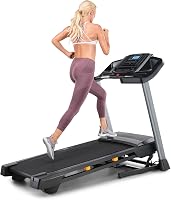
Walking Pad vs Treadmill: Which Should You Choose? (November 2026)
Choose a walking pad for compact, lower-speed walking and a treadmill for handrails, a larger belt and faster workouts. Your available floor space and the speeds you want to use should guide the choice.
On this page (9 sections)
- Walking pad vs treadmill: what is the main difference?
- Which should you choose for your workout?
- Which machine gives you more support?
- How much space does each one need?
- Do walking pads and treadmills have the same belt space?
- Do incline and preset programs matter?
- Which is easier to store after a workout?
- What should you check before buying?
- Which option fits your home workout plan?
Choose a walking pad for compact, lower-speed walking and a treadmill for handrails, a larger belt and faster workouts. The walking pad vs treadmill choice depends on your room, the pace you want and how much support you prefer.
A walking pad can be easier to tuck away, while a folding treadmill may offer a higher top speed or a more substantial frame. Some models blur the line: walking pads with handles can still reach jogging speeds.
Compare the exact dimensions and controls, then consider whether you'll walk, jog or run. For a broader overview of styles and features, see our walking pad and treadmill buying guide.


Walking pad vs treadmill: what is the main difference?
A walking pad usually prioritizes compact storage and walking, while a treadmill often prioritizes speed, belt space and support. These are common design patterns, not strict categories.
A low-profile walking pad may slide beneath a desk or bed when you finish. A treadmill with a handlebar or upright console needs more room around the frame, although folding models can reduce storage space.
The names alone don't tell you what a machine can do. The Yagud walking pad reaches 3.8 mph, while the WELLFIT folding treadmill reaches 6.2 mph and has a 10% manual incline.
The LONTEK also pairs a walking-pad shape with a 6.2 mph maximum speed, handrails and manual incline options. Compare the listed features of each model rather than relying on the label.
Which should you choose for your workout?
Choose by your usual pace and workout plan: a slower walking routine can suit a compact pad, while jogging or incline work calls for a machine with those features. See how to run on a treadmill if running is part of your plan.
Don't buy extra speed if you won't use it.
Is a walking pad enough for daily steps?
A walking pad may be enough if you want steady walking while watching a show or working at a standing desk. Look for a speed range that matches your comfortable pace and a control you can reach without stepping off.
The Yagud's stated range is 0.6–3.8 mph, with a remote and an LED display for speed, distance, time and calories. Its top speed makes it a more focused choice for walking than for faster sessions.
A walking pad isn't automatically desk-ready just because it's compact. Check the height beneath your desk, your stride space and whether the controls are easy to reach.
Is a treadmill better for jogging or running?
A treadmill with a higher speed ceiling and handrails can suit faster sessions better. The WELLFIT reaches 6.2 mph and has handlebar controls, while its manual incline adjusts up to 10%.
The LONTEK also reaches 6.2 mph and offers flat, 10% and 15% incline setups. Those options can add variety to walking, but you need to change the incline by hand.
A 6.2 mph maximum doesn't mean every user or workout will feel comfortable at that speed. Follow the manual and choose a belt with enough usable space for your stride.
Which machine gives you more support?
A handlebar or handrail gives you something to hold, but it doesn't replace choosing a pace and setup you can control. If you want that support, confirm the machine includes a rail and that its controls are reachable.
The Yagud includes a handle bar and a remote. The WELLFIT has a handlebar panel, remote and app controls, while the LONTEK and Pcrignbm also list handrails or a handlebar.
A rail can affect storage as much as exercise. It may take extra room when raised, even if the deck folds or the base is slim.
If a handrail is a deciding feature, browse our guide to the best walking pad with a handrail. Check the exact frame design and storage position before choosing.
Support also depends on the belt and frame. The WELLFIT has a 36 x 16 in belt, while the LONTEK and Pcrignbm belts are 37.4 x 15 in and 39 x 15 in, respectively.
How much space does each one need?
Measure both the workout footprint and the stored footprint before buying. A machine that fits under a bed may still need a clear area around it while you walk.
The Yagud folds to 47.2 x 19.6 x 4.6 in and has transportation wheels. The WELLFIT folds to 49.21 x 21.25 x 6.1 in and also has built-in wheels.
The LONTEK measures 46.9 x 22.6 x 4.4 in, while the Pcrignbm folds to 45.08 x 21.85 x 5.2 in and weighs 55 lb. Dimensions don't show how easy a machine will be to lift or steer around a tight corner.
Mark the storage area with tape and measure doorways, bed clearance and turns along the route. If moving weight matters, compare our best lightweight walking pads guide for options chosen around portability.
Do walking pads and treadmills have the same belt space?
No, belt dimensions vary by model, so compare width and length against your stride. A longer or wider surface can feel less restrictive, especially at faster paces.
The WELLFIT's belt is 36 x 16 in. The LONTEK's is 37.4 x 15 in, and the Pcrignbm's is 39 x 15 in.
Those figures aren't a ranking of comfort. Your height, stride and intended pace all affect how much space you want, so consider the belt dimensions alongside the machine's speed range.
Stand in your normal walking position and think about whether you tend to drift toward either side. If you're unsure, choose a surface that gives you room to move without forcing a narrow stride.
Do incline and preset programs matter?
Incline matters if you want hill-style walking; preset programs matter if you prefer guided pace changes. Neither feature is necessary for a simple, steady walk.
The LONTEK has flat, 10% and 15% manual incline options. The WELLFIT has a 10% manual incline, while the Pcrignbm includes 12 preset programs and 3 countdown modes.
Manual incline requires you to set the machine before walking. A preset program can vary the workout, but check how the controls work and whether you can change the pace comfortably.
If you want simple, repeatable walking, spend more time comparing the belt, speed range and storage dimensions. Features add value only when they suit how you plan to exercise.
Which is easier to store after a workout?
A low-profile pad may be easiest to slide away, while a folding treadmill can suit storage against a wall or in a corner. The frame and your ability to move it matter as much as the folded dimensions.
Look for wheels if you'll move the machine often. Also consider whether you can grip and steer it safely, and whether the storage area leaves room to retrieve it without moving other furniture.
The WELLFIT and Pcrignbm fold, and the LONTEK is described as slim and suitable for upright storage against a wall. Check the manufacturer's instructions for the correct storage position and any setup steps.
If you need a model that combines walking-pad proportions with rails, compare the options in our best lightweight walking pads guide. It can help narrow the field by portability, but your room measurements still decide what fits.
What should you check before buying?
Confirm the speed, belt size, weight capacity, controls and storage dimensions for the exact model. These details affect day-to-day fit more than the product name.
Check the capacity against the intended user, and leave a margin rather than choosing right at the stated limit. The Yagud and Pcrignbm list 220 lb capacities, while the WELLFIT and LONTEK list 350 lb.
Compare the included controls and display. A remote is useful only if you can keep it nearby, while handlebar buttons can be easier to reach during a walk.
Read the manual for setup, maintenance and safety directions. Make sure your floor is suitable, the power cord can reach safely and the machine can be stored without blocking an exit or walkway.
Which option fits your home workout plan?
Pick a walking pad if your main goal is convenient walking and compact storage; pick a treadmill if you want higher speeds, handrail support or a wider set of workout features. A hybrid model can work when you want both, provided it fits your room.
For a compact, slower-walking setup, the Yagud combines a 3.8 mph top speed, remote and low folded height. For faster pacing and a manual incline, the WELLFIT reaches 6.2 mph and folds with wheels.
The LONTEK adds three manual incline options, while the Pcrignbm offers handrails and preset programs. Compare a walking pad versus vibration plate if you're deciding between walking and a different kind of low-impact home equipment.
For other compact cardio choices, our comparisons cover an under-desk stepper versus elliptical and whether a mini stepper works under a desk. If you want a conventional treadmill review, read our NordicTrack T Series 5 treadmill review.
A higher-intensity cardio plan may call for different equipment, such as an air bike HIIT workout. Choose the machine that fits the routine you'll actually follow and the space you can keep clear.
Frequently asked questions
Is a walking pad the same as a treadmill?
A walking pad is a compact treadmill designed mainly for walking, while many treadmills have handrails, a larger belt or higher speed for jogging and running. Features vary by model, so compare the exact speed range, belt size, support and storage needs before choosing.
Can you run on a walking pad?
Some walking pads reach speeds suitable for light jogging, but others top out at a walking pace. For example, the Yagud reaches 3.8 mph, while the LONTEK and WELLFIT reach 6.2 mph.
Check the model's manual and intended use before attempting faster workouts.
Do walking pads have handrails?
Some do and some don't. The Yagud, WELLFIT, LONTEK and Pcrignbm models here include a handlebar or handrails, but walking pads as a category can also be low-profile units without them.
Check the frame style and control placement that suit your balance and room.
Which takes up less space, a walking pad or treadmill?
A compact walking pad often takes less room, especially if it can slide under a bed or desk. Foldable treadmills can also store vertically or in a corner, but their handles and larger belts may need more clearance.
Measure both the workout area and storage route.
Can you use a walking pad under a desk?
A low-profile walking pad can fit under some standing desks, but check its height and the clearance beneath the desk first. Keep enough room for a natural stride, and avoid walking while seated or using a desk setup that restricts your movement.