Is a Rowing Machine a Full Body Workout?
Yes, a rowing machine can provide a full body workout. Each stroke combines leg drive, a hip hinge, and an upper-body pull, although your legs do most of the work.
On this page (9 sections)
- How does a rowing machine create a full body workout?
- Which muscles does rowing work?
- Is a rowing machine a good full body workout for beginners?
- How long should a rowing full body workout last?
- What rowing form makes the workout more effective?
- What equipment can support a home full body routine?
- How do you care for cardio equipment?
- So, is a rowing machine a full body workout?
- FAQ
Yes, a rowing machine can provide a full body workout because each stroke uses your legs, hips, back, arms, and core. The legs create most of the power, while your upper body and midsection help transfer that force through the handle.
Rowing is also easy to adjust for different goals. You can use short intervals for hard cardio, longer steady rows for endurance, or low-resistance technique work while you learn the movement.
How does a rowing machine create a full body workout?
A rowing machine creates a full body workout through the repeated sequence of catch, drive, finish, and recovery. The movement is not just an arm pull, so good form matters.
At the catch, your knees are bent, your shins are near vertical, and your torso leans slightly forward from the hips. Your arms stay long as you hold the handle.
During the drive, push through your feet first. Then open your hips and pull the handle toward your lower ribs.
This order lets your legs and hips contribute before your arms finish the stroke.
The recovery reverses the sequence. Extend your arms, lean your torso forward, then bend your knees as the handle moves toward the front again.
For a closer look at pacing and technique, see our guide to rowing machine cardio. If you're still comparing the overall benefits, is a rowing machine good exercise covers the main reasons people use one at home.
Which muscles does rowing work?
Rowing works the quadriceps, hamstrings, glutes, back, shoulders, arms, and core. The exact effort depends on resistance, stroke rate, workout length, and your technique.
Does rowing work your legs?
Yes, your legs do much of the work during the drive. Your quadriceps help straighten your knees, while your glutes and hamstrings help extend your hips as you move toward the finish.
That makes rowing different from an exercise that relies mainly on the arms. If you rush the slide or bend your knees before your arms clear, you reduce the space needed for a strong leg drive.
Does rowing work your back and arms?
Yes, rowing uses your upper back, rear shoulders, biceps, and forearms. These muscles help control the handle and complete the pull after your legs and hips have started the movement.
Keep your shoulders relaxed and your wrists level. Pull the handle toward your lower ribs instead of your neck, and avoid leaning backward too far at the finish.
Does rowing work your core?
Yes, your core helps keep your torso stable as your legs and arms move. Your abdominal and lower-back muscles transfer force between the lower and upper body.
Core work during rowing is mostly about control and posture. A rowing machine does not replace every type of core exercise, but a steady stroke challenges your trunk throughout the workout.
Is a rowing machine a good full body workout for beginners?
A rowing machine can be a good full body workout for beginners if you start with short, controlled sessions and learn the stroke before increasing effort. You don't need a high resistance setting to make the exercise useful.
Begin with a few minutes of easy rowing. Focus on the order of movement, smooth breathing, and keeping the handle path consistent.
Use a moderate stroke rate that lets you stay in control. If your back rounds, your shoulders rise, or your knees move into the handle path, reduce the pace and review your setup.
Your feet should feel secure without being painfully tight. Adjust the foot straps so the strap crosses the widest part of your foot and your heels can move naturally during the stroke.
How long should a rowing full body workout last?
A rowing full body workout can last 10 to 30 minutes, depending on your fitness level and the intensity. The best duration is one that lets you keep steady form from the first stroke to the last.
For a simple beginner session, row easily for 5 minutes, then alternate 1 minute of moderate rowing with 1 minute of easy rowing for several rounds. Finish with a few easy minutes.
For endurance, row at a pace where you can maintain a repeatable rhythm. For harder intervals, keep the work periods short enough that your technique does not fall apart.
Don't judge the workout only by the number on the monitor. Stroke quality, breathing, and how consistently you can train matter too.
Can rowing replace other cardio equipment?
Rowing can cover both cardio and resistance-based movement, but it doesn't need to replace every other form of exercise. Different machines change the loading pattern and may suit different spaces or preferences.
A walking pad treadmill can suit people who want simple walking sessions or a machine that supports desk-based movement. An elliptical can provide another low-impact cardio option, and our guide to elliptical machine workouts explains how to structure those sessions.
A rowing machine may be the better fit if you want one repeated movement that combines leg drive with an upper-body pull. Check the machine's length, seat travel, and clearance before placing it in a small room.
What rowing form makes the workout more effective?
The most effective rowing form uses legs first, hips second, and arms last on the drive. On the recovery, reverse that order by sending the arms away, leaning forward, and then bending the knees.
Keep your back in a neutral position rather than rounding through the stroke. Your torso should move from the hips, not collapse from the waist.
Avoid pulling early with your arms. Starting with the arms can make the stroke feel tiring without letting your stronger leg muscles contribute fully.
Don't increase resistance to compensate for poor form. A heavy setting may make the handle feel harder to move, but it doesn't automatically create a better full body workout.
If you use a Matrix machine, our guide to matrix rowing machine how to use can help you review the basic controls and movement sequence.
What equipment can support a home full body routine?
A rowing machine is useful for combined cardio, but some people add simple equipment for variety. Choose additions based on the movement you want, not just the amount of equipment you can fit.
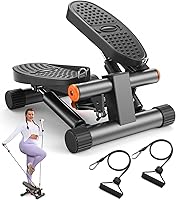
The Sunny Health & Fitness Mini Stair Stepper suits people who want compact home cardio with added upper-body work. It has a 15.7 x 12.4 in footprint, weighs 15.2 lb, arrives fully assembled, supports up to 300 lb, and includes 2 resistance bands.
Its adjustable step height changes the stepping range, while dual hydraulic cylinders provide controlled stepping. The built-in LCD monitor tracks time, step count, steps per minute, estimated calories, and scan mode.
Choose it if storage space is limited and you want a short cardio option with band work. It doesn't reproduce the seated leg drive and upper-body pull of rowing, so treat it as a separate movement pattern.
A treadmill can suit people who prefer walking, jogging, or running. The NordicTrack T Series Treadmills for Home include models named T5, T6.5s, T7, T10, and T16, while the T6.5S provides speeds up to 10 MPH and incline from 0–10%.
The T6.5S has a 55 in deck length, a 20 in deck width, a 5 in LCD display, and a folded size of 78.5 x 35.5 x 14.5 in. Its KeyFlex cushioning and folding frame may suit a home gym where walking or running is also part of the plan.
The treadmill works with iFIT features that require an iFIT Train Membership. Check the room's floor space, power access, and clearance before choosing a treadmill for home use.
How do you care for cardio equipment?
Care depends on the equipment, but regular checks can help you notice loose parts, unusual noise, belt movement, or changes in resistance. Follow each machine's instructions for cleaning, storage, and maintenance.
For treadmills and walking pads, belt lubrication may be part of the maintenance routine when the equipment's instructions call for it. The Noosa Life Treadmill Belt Lubricant is a 120 ml, 4 oz tube of 100% silicone oil with a flexible applicator tube.
Noosa Life describes it for treadmill belts, including walking pads, folding running machines, and standard residential treadmills. The product is made in the USA and has a 1-count tube.
Use only a lubricant and method that suit your treadmill's instructions. Don't assume every belt needs the same maintenance schedule, and don't apply oil to a rowing machine unless its manufacturer specifically allows it.
So, is a rowing machine a full body workout?
Yes, a rowing machine is a full body workout when you use the complete stroke. Your legs and hips drive the movement, your back and arms finish the pull, and your core helps keep the body connected and controlled.
Pick rowing if you want one cardio movement that trains several major muscle groups together. Start with manageable sessions, learn the stroke order, and increase time or intensity only while your form remains steady.
Add a stepper for compact band-assisted cardio, or a treadmill if walking and running matter more to your routine. For safety around larger strength equipment, see how does a squat stand differ from a full cage before planning the rest of your home gym.
FAQ
Is rowing a full body workout?
Yes, rowing uses the legs, hips, back, arms, and core in one repeated movement. The legs create much of the power, while the hips and upper body transfer and finish the stroke.
The workout becomes more balanced when you use the full sequence instead of pulling mainly with your arms.
What muscles does a rowing machine work most?
A rowing machine works the quadriceps, hamstrings, glutes, upper back, shoulders, biceps, forearms, and core. Your legs and hips usually create the largest part of the drive.
Resistance, pace, stroke length, and form all change how demanding each muscle group feels.
Is rowing better than walking for a full body workout?
Rowing usually involves more muscle groups in one movement because it combines leg drive with an upper-body pull. Walking is simpler and may be easier to use for longer, lower-intensity sessions.
Choose rowing for combined movement, or walking when steady steps and easy access matter more.
Can you row every day?
You may be able to row every day if the sessions are easy, your form stays controlled, and your body recovers well. Hard intervals and long sessions need more recovery than gentle technique work.
Reduce the effort if you develop persistent pain, unusual fatigue, or worsening form.