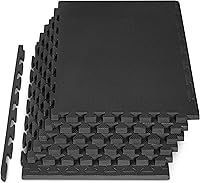
Can You Put a Power Rack on Top of Mats?
Yes, you can put a power rack on mats if they stay firm, level, and stable under the rack's feet. Soft or uneven mats can let the rack shift or tilt, and they can complicate anchoring.
On this page (8 sections)
- Can you put a power rack on top of mats?
- How does mat firmness affect rack stability?
- Can you anchor a rack through mats?
- When is a power rack platform a better choice?
- Which mats suit a rack area?
- How can mats reduce noise without making the rack unstable?
- How do you set up a rack over mats safely?
- What is the safest choice for a power rack on mats?
Yes, you can put a power rack on top of mats if the flooring stays firm, level, and stable under the rack's feet. Soft or uneven mats can compress, make the rack rock, or complicate anchoring.
Check the rack after setup and before lifting. If a foot sinks, a tile shifts, or the rack moves when you push it, change the floor setup before using it.
Can you put a power rack on top of mats?
Yes, when the mat supports the rack evenly without shifting or compressing too much. A mat can protect the floor and reduce some noise, but it doesn't make an unstable surface safe.
Place the rack on a flat part of the floor. Set every foot fully on the same stable surface, not partly on a tile edge or over a gap.
Then check for rocking by pressing each upright gently.
The rack's feet concentrate its weight in small areas. A cushioned layer that feels comfortable underfoot may still compress unevenly under those points.
For background on how gym flooring and equipment handling affect noise and stability, consider both the floor surface and how you use the rack.
How does mat firmness affect rack stability?
Firmness matters because a mat that compresses unevenly can leave the rack tilted or wobbly. The mat's material and construction can matter as much as its stated thickness.
Foam-backed tiles may cushion the floor, but the soft layer can give under a heavy, concentrated load. Rubber surfaces can add grip, but a rubber top doesn't tell you how the base will behave under each rack foot.
Check whether the mat stays flat where the rack will sit. Watch for curling edges, loose seams, dips in the floor, or a change in height between the mat and bare floor.
Our guide to what gym mat thickness changes explains why thickness alone isn't a reliable measure of firmness.
What should you check before loading the rack?
Check level, contact, and movement before putting weight on the rack. Inspect all feet and seams, then gently push the rack from more than one side.
If a foot doesn't touch the floor firmly, don't fix the gap by wedging in a soft scrap of mat. Reposition the rack or use a stable platform that the rack maker allows.
Recheck after loading plates or changing the rack setup.
Stop if the tiles separate or the rack shifts as you move around it. A stable setup should remain steady during normal use, not just look level while empty.
Can you anchor a rack through mats?
Only anchor the rack as its maker instructs, into a suitable floor surface. Mats can sit between the rack and the structural floor, so they shouldn't be treated as a secure anchor point.
Before drilling or fastening, check the rack manual and identify what's beneath the flooring. The right method depends on the rack and the floor construction.
Don't drill through a mat and assume the connection is sound without confirming the anchor type, depth, and floor requirements.
Some racks are designed to be anchored, while others have different setup guidance. See how power racks and their safety systems work for context on the rack's structure and safety parts.
If you can't verify a secure connection, ask the rack maker or a qualified installer. Keep the rack's safety instructions in view when you decide where and how to place it.
When is a power rack platform a better choice?
A platform can help when you need a firmer, more even base for the rack. If you are building one, compare wood for a deadlift platform.
It can also define a workout area and separate rack feet from softer flooring.
A platform must sit flat and support the full rack footprint. Make sure it doesn't rock, create a trip edge, or block required anchors.
The rack should remain fully supported, with all feet on the platform.
For help choosing a suitable base, read how to choose a platform for a power rack. A platform is not a substitute for checking your floor or following the rack maker's setup instructions.
Which mats suit a rack area?
Choose a mat based on its construction and how it behaves beneath the rack, not thickness alone. For more flooring choices, see gym flooring for weightlifting.
The following options combine a rubber surface with foam, so confirm that the rack stays steady before loading it.
The SUPERJARE tiles have a 0.56 in rubber top over a high-density EVA foam base. Follow rubber gym flooring cleaning guidance for routine care.
Their interlocking design can cover 48 sq ft, but check for compression and shifting beneath the rack feet.
AIRHOP's 0.56 in tiles also pair a textured rubber top with an EVA foam base. The 6-tile set covers 24 sq ft, and its interlocking edges are designed to stay joined during use.
Neither foam-backed option should be assumed suitable just because it is described as heavy duty. Check the actual fit and stability in your setup, and follow the rack's anchoring requirements.
Do crash pads belong under a power rack?
Crash pads are for cushioning dropped weights, not for supporting rack feet. Keep them where you lower or drop weights, and don't place them under the rack unless the rack maker specifically allows it.
The SEWD pads are described as foam pads with PVC leather covers that can reduce noise, vibration, and rebound from dropped weights. Their dimensions are 20.5 x 20.5 x 10.8 in per package, so plan for the space they take up around the lifting area.
For more options, see best weight drop pads. If you're deciding between rack styles, compare a power rack and a half rack before settling on a footprint.
How can mats reduce noise without making the rack unstable?
Use cushioning to manage floor contact and dropped-weight noise while keeping the rack on a firm, even base. For a cardio setup on wood, compare treadmill mats for hardwood floors.
These are separate jobs: a mat can protect the floor, but it doesn't replace stable placement or safe lifting practices.
Avoid assuming that a mat under the rack will control every sound. The rack may transmit vibration into the floor, while dropped weights create a different impact.
If barbell drops are part of your training, use pads intended for that purpose and follow safe lifting practices.
Mat needs also vary by equipment. For cardio equipment on carpet, compare treadmill mats for carpet.
Our guide on whether treadmills need a mat covers a different kind of floor contact and vibration.
How do you set up a rack over mats safely?
Use a firm, level area, check every rack foot, and follow the rack maker's anchoring instructions. Test the setup while empty, then inspect it again after adding weight.
A simple setup check:
- Confirm the floor is flat and the mat lies fully flat.
- Position all rack feet on a stable part of the surface.
- Check for rocking, soft spots, gaps, and shifting seams.
- Anchor the rack as instructed, using a suitable floor connection.
- Recheck stability before lifting and after changing the setup.
If the rack rocks or the mat compresses, move to a firmer surface or use a suitable platform. Don't train with a rack that shifts under pressure.
What is the safest choice for a power rack on mats?
For a power rack on mats, choose the setup that keeps every foot level and the rack stable under load. Pick a firm mat only if it stays in place; use a suitable platform if the mat compresses or creates uneven support.
Use the SUPERJARE or AIRHOP tiles only after checking how their foam bases behave beneath your rack. Use SEWD crash pads at the weight landing area, not under the rack.
For the base decision, start with how to choose a platform for a power rack.
Frequently asked questions
Can a power rack sit on rubber mats?
Yes, a power rack can sit on rubber mats if the surface is firm, level, and stable under the rack's feet. Check for rocking, compression, and movement before lifting.
Follow the rack maker's instructions for anchoring, since a mat can change the connection between the rack and the floor.
Should a power rack be anchored through gym mats?
Follow the rack maker's anchoring instructions and confirm that the anchor reaches a suitable structural surface. A mat may compress or obstruct a secure connection, so don't treat the mat itself as an anchor point.
If you can't confirm the floor and hardware requirements, ask the rack maker or a qualified installer.
Do thicker mats make a power rack more stable?
No. Thickness alone doesn't tell you whether a mat will support a rack steadily.
A thick, soft layer can compress under the feet, while a thinner, firmer surface may stay more even.
Check the mat's construction and the rack's stability under load, and use a level surface.
Can interlocking mats go under a power rack?
They can, if the tiles stay joined and the rack sits evenly without rocking or shifting. Check seams under each foot and inspect for separation or compression after setup.
If the rack maker requires direct floor contact or anchoring through a solid surface, follow those instructions.