9 Best Gym Weights Flooring (November 2026)
The best gym weights flooring include the SUPERJARE 0.56'' Thick 48 Sq Ft Rubber for balanced home gym coverage, the AIRHOP 0.56in Thick 24 Sq Ft Exercise for smaller lifting zones, and the AIRHOP 0.79in Thick 48 Sq Ft Exercise for extra cushioning under free weights.
On this page (8 sections)
- Which gym weights flooring is best for your setup?
- How we chose the best gym weights flooring
- The best gym weights flooring picks
- What thickness should gym weights flooring be?
- Rubber tiles or one large mat for weights?
- How do you set up flooring under a rack?
- How should you clean and care for gym flooring?
- Final verdict on the best gym weights flooring
The best gym weights flooring for most home gyms is SUPERJARE's 0.56-inch, 48-square-foot rubber-top flooring. It gives you a practical mix of coverage, grip and cushioning for barbells, benches, dumbbells and general strength work.
Choose thicker flooring when loaded-barbell drops are part of your routine. Pick solid rubber or firm TPE when rack stability matters more than extra cushioning, and measure the lifting zone before you order.
The right gym weights flooring depends on 4 details: the impact your workouts create, how firm you want the surface to feel, how much area you need, and how much floor height your equipment allows.
Our picks at a glance
-
1
 Best for balanced home gym coverage
SUPERJARE 0.56'' Thick 48 Sq Ft Rubber
9.7/10 our score
See it on Amazon -
2
 Best for smaller lifting zones
AIRHOP 0.56in Thick 24 Sq Ft Exercise
9.6/10 our score
See it on Amazon -
3
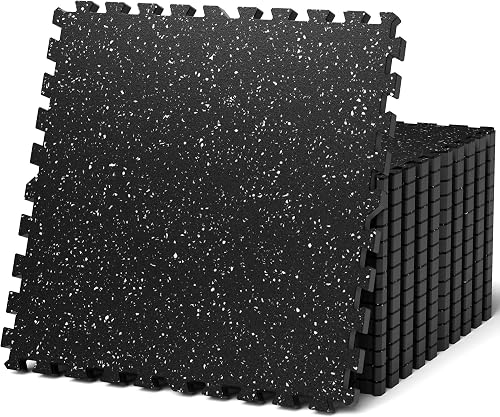 Best for extra cushioning under free weights
AIRHOP 0.79in Thick 48 Sq Ft Exercise
9.5/10 our score
See it on Amazon
- 4
 Check it
BesWin Large Exercise Mat 8' x 4'
Best for one large open workout area - 5
 Check it
SUPERJARE 1" Extra-Thick Rubber Top Exercise Mat
Best for heavy drops and high-impact lifting - 6
 Check it
PRAISUN 0.56" Rubber Top Gym Flooring
Best for flexible full-body training - 7
 Check it
GrytFit Interlocking Rubber Floor Tiles
Best for firm solid-rubber support - 8
 Check it
BASELAYER Performance Series Interlocking Floor Tiles
Best for firm modular flooring - 9
 Check it
VivaLuz 96 Sq Ft Rubber Top Gym
Best for broad light-duty coverage
Which gym weights flooring is best for your setup?
SUPERJARE is the strongest all-around choice because its 12 tiles cover 48 square feet and combine an EPDM rubber top with a high-density EVA base. That gives a home gym a useful balance of grip, cushioning and modular coverage.
AIRHOP's 24-square-foot set suits smaller spaces, while its 0.79-inch version adds more thickness without changing the 48-square-foot layout. The 1-inch SUPERJARE is the better fit for more forceful drops.
A single large mat can be easier to lay out than puzzle tiles. The BesWin 8 x 4-foot mat creates one continuous training area, while the solid-rubber GrytFit tiles give a firmer surface under racks and free weights.
How we chose the best gym weights flooring
We compared the stated thickness, coverage, materials, tile count and workout uses for each option. We also looked at how each design fits common home gym needs, including rack support, barbell work, free weights, noise control and room-size limits.
That meant separating a cushioned training surface from a firmer platform for heavy equipment. A mat can protect the floor and soften contact, while solid rubber or dense TPE can give a rack a more stable base.
Our score weighs specs, features and buyer feedback against what you're shopping for. It doesn't mean every floor will feel the same, because concrete, hardwood, carpet and the weight of your equipment change the result.
We also paid attention to practical limits that specs do not always show. Tile size affects setup time, borders affect the finish, and thickness affects door clearance and the height difference at the edge of the lifting area.
For a deeper look at impact and movement, read how gym flooring and equipment handling affect noise and stability.
Use those limits alongside the picks below, rather than relying on thickness alone. The right choice is the one that matches your floor, your equipment and the way you train.
| Product | Best for | Coverage | Thickness | Material | Our score |
|---|---|---|---|---|---|
| SUPERJARE 0.56'' Thick 48 Sq Ft Rubber | balanced home gym coverage | 48 sq ft | 0.56 in | EVA and rubber | 9.7 |
| AIRHOP 0.56in Thick 24 Sq Ft Exercise | smaller lifting zones | 24 sq ft | 0.56 in | 9.6 | |
| AIRHOP 0.79in Thick 48 Sq Ft Exercise | extra cushioning under free weights | 48 sq ft | 0.79 in | 9.5 | |
| BesWin Large Exercise Mat 8' x 4' | one large open workout area | 6 mm | PVC | 9.1 | |
| SUPERJARE 1" Extra-Thick Rubber Top Exercise Mat | heavy drops and high-impact lifting | 48 sq ft | 1 in | 9.0 | |
| PRAISUN 0.56" Rubber Top Gym Flooring | flexible full-body training | 48 sq ft | 0.56 in | 8.8 | |
| GrytFit Interlocking Rubber Floor Tiles | firm solid-rubber support | About 14 sq ft | 0.5 in | Rubber | 8.7 |
| BASELAYER Performance Series Interlocking Floor Tiles | firm modular flooring | 30 sq ft | 0.5 in | TPE | 8.4 |
| VivaLuz 96 Sq Ft Rubber Top Gym | broad light-duty coverage | 96 sq ft | 0.4 in | 8.2 |
The best gym weights flooring picks
SUPERJARE 0.56'' Thick 48 Sq Ft Rubber: Best for balanced home gym coverage
- 0.56 in thick
- 48 sq ft
- 12 interlocking 24 x 24 in tiles
- EVA foam base with EPDM rubber top
A 12-tile, 48-square-foot layout combines a high-density EVA base with an EPDM rubber top. It suits general weight training where you want grip, cushioning and flexible coverage.
Pros
- 48 sq ft coverage
- Interlocking tiles
- Rubber top with EVA cushioning
Cons
- Not as thick as the 1-inch option
- Tile layout needs careful assembly
SUPERJARE's 0.56-inch flooring is the best starting point for a typical home gym. The set includes 12 interlocking 24 x 24-inch tiles, covering 48 square feet.
Its high-density EVA foam base adds cushioning, while the EPDM rubber top supplies the contact surface for lifting. That combination suits a room with a bench, dumbbells, kettlebells and moderate barbell work.
The interlocking edges make it easier to build a square or rectangle, and the detachable borders can give the outside a finished edge. Measure around doors, racks and storage before assembling the full layout.
This is a strong choice when you want more impact protection than a thin exercise mat but don't need the extra height of a 1-inch floor. It also makes sense when the lifting zone needs to serve several types of exercise.
Care is simple, with wiping using a damp cloth as the stated method. For a garage or spare room, this balance of grip, cushioning and coverage is easier to live with than a thinner mat.
AIRHOP 0.56in Thick 24 Sq Ft Exercise: Best for smaller lifting zones
- 0.56 in thick
- 24 sq ft
- 6 interlocking 24 x 24 in tiles
- Rubber top with high-density EVA foam
Six 24 x 24-inch tiles cover 24 square feet, giving a compact lifting area for a bench, dumbbells or a small home gym corner.
Pros
- Compact 24 sq ft layout
- Rubber and EVA dual-layer build
- Interlocking design
Cons
- Less coverage than larger sets
- Not the thickest option here
AIRHOP's 0.56-inch set is made for a smaller training footprint. 6 tiles cover 24 square feet, so it can fit under a bench, around dumbbells or in one corner of a multipurpose room.
The rubber top and high-density EVA foam bottom combine grip with cushioning. The interlocking design helps keep the tiles together during workouts, and the set can be expanded with additional matching flooring if your layout changes.
This option is easier to plan when you don't want to cover an entire room. It is also a sensible choice for a compact free-weight area where the barbell does not need a full platform.
The trade-off is simple: you get half the stated coverage of the larger 48-square-foot sets. Measure the bar path, bench position and space around your feet before choosing a compact layout.
If you train in a basement or garage corner, the smaller area can keep the space tidy and reduce clutter. Wipe with a damp cloth after use, and lift the tiles occasionally to check for dust underneath.
AIRHOP 0.79in Thick 48 Sq Ft Exercise: Best for extra cushioning under free weights
- 0.79 in thick
- 48 sq ft
- 12 interlocking 24 x 24 in tiles
- Rubber top with high-density EVA foam
This 48-square-foot set adds thickness over the 0.56-inch options while keeping the same modular tile format. It fits lifters who want more cushioning around free-weight work.
Pros
- Thicker 0.79 in construction
- 48 sq ft coverage
- Interlocking tiles
Cons
- Less firm than solid rubber flooring
- More floor height to account for
The AIRHOP 0.79-inch set is the best thicker option when you want extra cushioning across a full 48-square-foot area. Its 12 interlocking 24 x 24-inch tiles keep the layout modular.
The rubber top sits over a high-density EVA foam layer. That design can help soften vibration and floor contact during free-weight work, while the textured surface gives you a defined place to stand.
The added thickness is useful around a bench or lifting station, but it also raises the surface more than 0.56-inch flooring. Check door swings, rack feet and transitions to uncovered floor before installation.
Choose this set when cushioning is a higher priority than the firmest possible base. If you want a dense surface with no foam core, compare it with the GrytFit solid-rubber tiles.
For daily use, the modular format helps if you need to move a bench or store plates along one edge. Wipe with a damp cloth, and avoid dragging heavy equipment across the rubber top.
BesWin Large Exercise Mat 8' x 4': Best for one large open workout area
- 8 x 4 ft size
- 6 mm thickness
- High-density PVC
- Double-sided anti-slip surface
The single 8 x 4-foot mat creates a broad continuous surface without puzzle seams. Its size suits weightlifting, jump rope, stretching and other open-floor training.
Pros
- Large continuous footprint
- Use with or without shoes
- High-density PVC
Cons
- Single-piece storage needs planning
- Thinner than the thickest tile options
The BesWin mat suits a home gym that needs one broad surface instead of multiple puzzle seams. It measures 8 x 4 feet and is 6 mm thick, giving you room for weightlifting, jump rope, stretching and floor exercises.
Its high-density PVC construction has an anti-slip surface on both sides. The large footprint can make it easier to place a bench and free weights without arranging many separate tiles.
The mat is thinner than the 0.79-inch and 1-inch options here, so it is better for general training and floor protection than repeated heavy drops. Its single-piece format also needs a storage plan if you move it between workouts.
Pick it when a wide open area matters most. For a rack that stays in one place, modular tiles may be easier to fit around the equipment and replace if one section becomes damaged.
The stated care method is hand washing, so avoid soaking it or leaving moisture trapped below. Roll or fold it only as the material allows, and keep it flat before each session.
SUPERJARE 1" Extra-Thick Rubber Top Exercise Mat: Best for heavy drops and high-impact lifting
- 1 in thick
- 48 sq ft
- 12 interlocking 24 x 24 in tiles
- EVA foam base with EPDM rubber top
The 1-inch build gives loaded-barbell areas more cushioning than thinner mats. Twelve interlocking tiles cover 48 square feet for a rack, bench and free-weight zone.
Pros
- Thickest cushioned tile option
- 48 sq ft coverage
- Rubber top with EVA base
Cons
- Raises the training surface more
- Foam-based construction is less firm than solid rubber
SUPERJARE's 1-inch flooring is the thickest cushioned tile option in this roundup. Its 12 interlocking 24 x 24-inch tiles cover 48 square feet, creating a substantial zone for heavy strength training.
The high-density EVA base and EPDM rubber top are designed for impact absorption, traction and floor protection. That makes this option a strong fit for loaded barbells, high-impact movements and equipment that stays in one area.
The extra inch of material can change how your rack, bench and plates sit relative to the surrounding floor. Check transitions and clearance before installation, especially if your rack has fixed-height feet or attachments.
Choose this flooring when cushioning and impact control matter more than a solid-rubber feel. For a firmer support surface, the GrytFit and BASELAYER options use dense rubber-like materials without an EVA foam base.
In a garage, the thickness can make a concrete floor feel more forgiving underfoot during long sessions. Plan the layout first, then assemble the borders so the edge looks neat from the doorway.
PRAISUN 0.56" Rubber Top Gym Flooring: Best for flexible full-body training
- 0.56 in thick
- 48 sq ft
- 12 interlocking 24 x 24 in tiles
- EVA foam core with EPDM rubber surface
This 12-tile set covers 48 square feet and combines a rubber surface with an EVA foam core. It suits a mixed space used for weights, benches, kettlebells and general exercise.
Pros
- 48 sq ft coverage
- Interlocking layout
- Rubber and EVA dual-layer construction
Cons
- 0.56 in thickness offers less drop cushioning than 1 in
- Foam core is not a solid rubber base
PRAISUN gives you a 48-square-foot layout with 12 interlocking 24 x 24-inch tiles. Its 0.56-inch thickness matches the thinner dual-layer options, with an EVA foam core under an EPDM rubber surface.
The design fits a mixed home gym used for weights, benches, kettlebells and general exercise. Detachable borders can help form a cleaner outer edge when the tiles are assembled as a rectangle.
This flooring makes sense when you want broad coverage and a cushioned feel without moving to a 0.79-inch or 1-inch mat. It is less suited to buyers who want the dense, firm response of solid rubber.
Plan the layout around the equipment that stays on the floor. Leave enough room to step around plates and avoid placing seams directly where a rack foot or bench leg will sit if you can arrange the tiles differently.
The stated care method is hand washing, so check the material before using excess water. For yoga, HIIT and lifting in the same space, the rubber surface gives a practical middle ground.
GrytFit Interlocking Rubber Floor Tiles: Best for firm solid-rubber support
- 100% rubber
- 0.5 in thick
- 4-pack
- About 14 sq ft coverage
These 0.5-inch tiles use solid rubber from edge to edge, with no foam core. The 4-pack covers about 14 square feet, making it useful under a rack or focused lifting station.
Pros
- Solid rubber construction
- Firm support under equipment
- Interlocking design
Cons
- Smallest stated coverage
- More packs may be needed for a full room
GrytFit is the firm-surface choice for racks and focused lifting stations. Each tile is 0.5 inch thick, and the 4-pack covers about 14 square feet.
The tiles use 100% rubber with no foam core or fillers. That construction gives you a denser surface under a rack, free weights or power cage than the foam-backed options in this roundup.
The smaller pack is useful when you only need to cover a rack footprint or a narrow lifting lane. A full room will need several packs, so calculate the total area before you start.
Choose GrytFit when firmness and solid rubber matter more than maximum coverage per pack. Its interlocking layout can also make it easier to expand the lifting zone in stages.
Because the surface is firm, it suits equipment that should not sink or shift during setup. The stated care method is hand washing, and the tiles are made for indoor or outdoor training zones.
BASELAYER Performance Series Interlocking Floor Tiles: Best for firm modular flooring
- 0.5 in thick
- 30 sq ft
- 12 19 x 19 in tiles
- TPE material
The Performance Series uses 12 TPE tiles to cover 30 square feet. Its firmer surface suits heavy weights and high-impact training where stable footing matters.
Pros
- Firm TPE surface
- 30 sq ft coverage
- Cord channels under tiles
Cons
- Edges and corners sold separately
- Smaller tiles mean more seams
BASELAYER's Performance Series uses 12 TPE tiles measuring 19 x 19 inches, with each tile 0.5 inch thick. Together, they cover 30 square feet.
The TPE material is rubber-like and designed for a firm, cushioned surface under heavy weights and high-impact training. Cord channels under the tiles can help keep electrical cords out of walking paths.
The smaller tile size creates more seams than a large 24 x 24-inch layout. That may help with fitting around a room, but it also means more edges to align during setup.
Edges and corners are sold separately. Include those pieces in your layout plan if you want a finished perimeter around the 30-square-foot area.
This series suits a home gym where stability matters and you want a firmer feel than foam-backed flooring. Wipe with a damp cloth, and mix tile types only if you have a clear plan for each zone.
VivaLuz 96 Sq Ft Rubber Top Gym: Best for broad light-duty coverage
- 0.4 in thick
- 96 sq ft
- 24 interlocking 24 x 24 in tiles
- High-density EVA material
Twenty-four 24 x 24-inch tiles cover 96 square feet, giving you the most area in this group. The 0.4-inch thickness fits broad spaces for light weightlifting, cardio and floor protection.
Pros
- Largest coverage
- 24 interlocking tiles
- Useful for broad workout areas
Cons
- Thinnest option here
- Better suited to lighter impacts than heavy drops
VivaLuz is the broad-coverage pick, with 24 interlocking 24 x 24-inch tiles covering 96 square feet. The 0.4-inch thickness is the lowest in this group, so its main advantage is area rather than heavy-impact cushioning.
The EVA construction and rubber-top design fit light weightlifting, cardio, stretching and general floor protection. A large room can be covered without combining several smaller sets.
Use it on a hard surface where the tiles can stay interlocked. The product information recommends hard floors rather than high-pile carpet for heavy equipment, which is a useful setup limit to keep in mind.
Choose VivaLuz when you need to cover a broad workout room and your training does not involve frequent heavy drops. For concentrated barbell work, a thicker or solid-rubber option is the safer match.
The detachable borders help create a finished rectangle, and the tiles can be rearranged as your room changes. Wipe with a damp cloth, and air the mats after unboxing for a fresher workout space.
What thickness should gym weights flooring be?
For general lifting, 0.5 to 0.56 inches is a practical starting point. It gives you a defined surface without adding as much height as the 0.79-inch and 1-inch options.
The 0.79-inch AIRHOP and 1-inch SUPERJARE make more sense when you want extra cushioning around high-impact work. More thickness does not automatically create a firmer rack base, because the material layers matter too.
A solid 0.5-inch rubber tile can feel more stable under a rack than a foam-backed mat of similar thickness. If you are unsure how thickness changes daily use, read what gym mat thickness changes.
Rubber tiles or one large mat for weights?
Interlocking tiles are easier to expand, replace and fit around a rack. A single mat has fewer seams and can be faster to position, but it needs more storage space if you move it after each session.
Choose tiles for a permanent lifting zone or a room with several equipment layouts. Choose the BesWin mat when one 8 x 4-foot surface matches your training area and you want a continuous piece.
Tiles also help when you want to protect only the area under a rack, bench or free-weight zone. You can add tiles in stages, remove a damaged section, or shift the layout without replacing the whole floor.
A single mat can suit a smaller room where you roll it out for stretching, cardio and light weights. Its lack of seams can make movement feel uninterrupted, especially for jump rope or floor exercises.
The best choice also depends on the floor below. Concrete and hardwood need different care from carpet, and high-pile carpet may prevent puzzle tiles from staying flat.
Height matters more than many buyers expect. Thicker tiles can change the level of your rack, bench and plates, so check doors, storage and walkways before you commit.
Storage is another practical difference. Tiles stack or separate in sections, while a large single mat needs room to roll, fold or lean when it is not in use.
If your equipment stays in place, tiles usually give a neater result. If you train in different spots, a single mat may be simpler to move and store.
Think about replacement as well. One worn tile can be swapped, while damage to a single large mat may affect the whole surface.
For most weight training, modular tiles offer more control over coverage and layout. A large mat is best when one open area fits your routine without extra seams.
How do you set up flooring under a rack?
Start with a clean, dry, level surface and measure the full equipment footprint. Include the rack, bench, plates, bar path and at least enough standing space to lift without stepping off the protected area.
Assemble interlocking tiles tightly, then check the seams after placing equipment. Keep the outside edges clear of door swings, and use transition pieces or borders where the flooring meets the uncovered floor.
Measure twice before cutting or locking tiles into place. A few missed inches can leave a rack foot on bare concrete or force a bench leg onto a seam.
Place the heaviest equipment first, then test how the area feels underfoot. Stand in your lifting position and check that plates, collars and storage do not sit on an exposed edge.
Check the height change at the doorway and around storage. Even a half inch of flooring can affect a door swing, a low shelf or the lower fixings on a rack.
A platform can help define the rack area, but it adds height. If wood is part of your plan, compare the material and layout guidance in what wood should you use for a weightlifting platform.
Leave a small gap where the flooring meets walls if the tiles need room to settle. This also makes it easier to lift and inspect the edges during cleaning.
Work from one corner and keep rows aligned as you go. Pause after each row to press the locks together and make sure the rectangle stays square.
Once equipment is in place, step around the full area with a loaded bar in mind. You want room to load plates, move the bench and walk back without crossing onto an unprotected floor.
If tiles shift during the first sessions, check the floor below for dust, moisture or unevenness. Remove the equipment, clean the surface and reassemble the affected section.
For a permanent setup, borders can give the edge a cleaner look and reduce trips at the boundary. They also help hide the puzzle profile where the flooring meets the rest of the room.
Do not drag a loaded rack into position across the tiles. Lift or use supports where possible, then set the equipment down slowly on the finished surface.
Take a final look at seams under each foot and leg. Tight joints protect the floor better and help the whole lifting zone feel stable from the first workout.
How should you clean and care for gym flooring?
Use the care method that fits the material. Several picks here specify wiping with a damp cloth, while the GrytFit and PRAISUN products specify hand washing, so avoid soaking tiles or trapping moisture underneath them.
Let sweat and cleaning moisture dry before returning heavy equipment to the surface. Lift and inspect movable mats occasionally so dust does not collect beneath the edges.
Avoid dragging a loaded rack or bench across the flooring. Lift equipment when possible, keep plates from striking exposed edges, and use drop pads when your training includes repeated barbell contact.
Clean small spills promptly rather than letting moisture sit in the seams. A damp cloth is enough for routine use, and excess water can make the floor below harder to dry.
Check the edges and corners after heavy sessions. If a tile edge curls or a seam opens, press it back into place before dust collects underneath.
Store loose mats flat or rolled as the material allows, away from direct heat where possible. This helps the surface stay level when you lay it out again.
Sweep or vacuum the surrounding floor before lifting tiles for a deeper clean. Dirt trapped below can scratch hardwood or make concrete look dusty over time.
Do not use harsh chemicals unless the product care instructions allow them. Mild cleaning protects the rubber top and keeps the surface from feeling slick.
Rotate or rearrange movable tiles if one area takes most of the impact. This can spread wear and keep the most used section from feeling uneven.
Inspect the flooring before you train, especially around rack feet and bench legs. Early attention to a loose edge is easier than repairing a larger gap later.
Final verdict on the best gym weights flooring
The SUPERJARE 0.56-inch, 48-square-foot set is the best gym weights flooring for most home gyms because it balances coverage, cushioning and a rubber top.
Pick AIRHOP's 24-square-foot set for a compact zone, the 0.79-inch AIRHOP or 1-inch SUPERJARE for more cushioning, and GrytFit for a firm solid-rubber base. Choose VivaLuz when broad coverage matters more than heavy-impact protection.
For a single open surface, the BesWin mat avoids puzzle seams and suits general training over a wide area. For a firmer modular floor with cord channels, the BASELAYER Performance Series is the more specialized choice.
Measure your rack, bench and lifting space before you order. The best pick is the one that fits your floor, protects the area where impact happens and still feels stable under your equipment.
Our top 3 picks at a glance
-
1
Best for balanced home gym coverage
SUPERJARE 0.56'' Thick 48 Sq Ft Rubber
9.7/10 our score
See it on Amazon -
2
Best for smaller lifting zones
AIRHOP 0.56in Thick 24 Sq Ft Exercise
9.6/10 our score
See it on Amazon -
3
Best for extra cushioning under free weights
AIRHOP 0.79in Thick 48 Sq Ft Exercise
9.5/10 our score
See it on Amazon
Frequently asked questions
What is the best thickness for gym weights flooring?
For general weight training, 0.5 to 0.56 inches gives a useful balance of cushioning, grip and floor coverage. Choose 0.79 to 1 inch when heavier drops and impact are part of your routine.
Solid 0.5-inch rubber can feel firmer under racks than foam-backed flooring.
Is rubber or foam better for gym weights flooring?
Rubber is usually the better choice for racks, barbells and repeated equipment loading because it gives a firm, durable surface. Foam-backed rubber adds cushioning and can reduce vibration, but it may feel softer under heavy equipment.
Compare the material and thickness with your lifting style.
How much gym flooring do I need for weights?
Measure the whole training zone, then add room for the rack, bench, plates and your stance. The SUPERJARE and AIRHOP 48-square-foot sets suit a defined lifting area, while the VivaLuz 96-square-foot set covers a broader room.
Use our gym flooring measurement guide before ordering.
Can gym flooring reduce noise from weights?
It can reduce some impact noise and vibration, but it cannot make dropped weights silent. Foam-backed rubber adds cushioning, while thicker mats can soften contact with the floor.
For repeated drops, pair suitable flooring with best weight drop pads and controlled lifting technique.
Should you use a platform under a power rack?
A platform can create a firmer, more defined lifting surface and help organize the rack area. Flooring still protects the surrounding floor from plates and equipment.
If you build one, review the guide to weightlifting platform wood and check the finished height around your rack.


