How to Choose Squat Rack Home Gym Alternatives
The best squat rack home gym alternative depends on your available space and the lifts you want to perform. Choose a weight bench for supported pressing and accessory work, a suspension trainer for compact bodyweight training, or a rack-style bench when you need limited bar support without a full rack.
On this page (9 sections)
- What should a squat rack alternative do?
- Which squat rack alternative fits your training style?
- Can a weight bench replace a squat rack?
- Is a suspension trainer a good squat rack alternative?
- Is a foldable bench better for a small room?
- What is the safest way to train legs without a squat rack?
- How much space do alternatives to a squat rack need?
- How do you keep a compact gym safe without a rack?
- Which squat rack home gym alternative should you choose?
The best squat rack home gym alternative depends on the lifts you want to do, the room you have and the level of barbell support you need. A weight bench can cover pressing and accessory work, a suspension trainer can replace many bodyweight movements, and a compact bench with bar supports can provide some rack-like use without a full cage.
A squat rack is built around bar placement, adjustable supports and safety clearance. Most alternatives do not provide all three, so choose one to solve a specific training problem rather than expecting one compact item to copy a rack.
If you are still deciding between training at home and joining a facility, compare the equipment, space and routine in our home gym vs gym membership guide.
What should a squat rack alternative do?
A good squat rack alternative should match your main training goal without asking you to perform unsupported barbell lifts. Start by naming the exercises you want to keep, then choose equipment that supports those movements safely.
For example, a bench can support dumbbell presses, seated exercises and bodyweight work. It cannot replace the adjustable bar supports and safety arms of a full squat rack unless it is specifically designed with those parts.
A suspension trainer takes a different approach. It uses your body weight and adjustable strap positions for movements such as rows, presses, split squats and core exercises.
It does not hold a barbell, and it needs an appropriate anchor.
Use these questions before you buy:
- Do you need to place a barbell at shoulder height?
- Can you switch to dumbbells, bodyweight or resistance training?
- Is the equipment stored between workouts?
- How much room do you have for movement around it?
- Can you keep doors, exits and walkways open?
- Will another person use the equipment?
Your answer helps separate a true rack substitute from a useful training alternative. A product can solve your space problem while still being the wrong choice for heavy barbell squats.
Which squat rack alternative fits your training style?
Choose a bench for supported strength work, a suspension trainer for compact full-body training, or a bench with bar supports when you need a limited barbell setup. The right choice depends on the movement pattern you want to train most often.
| Main need | Best alternative type | What it can cover | What it cannot replace |
|---|---|---|---|
| Dumbbell pressing and seated work | Adjustable weight bench | Presses, rows, seated movements and core work | A full barbell safety system |
| Portable full-body training | Suspension trainer | Bodyweight pulling, pressing, split squats and core work | Barbell loading and fixed support |
| Bench pressing with limited bar support | Olympic-style workout bench | Supported pressing and some lower-body accessories | The adjustability and open clearance of a rack |
| Leg training in a small room | Bench plus dumbbells or bodyweight work | Split squats, step-ups, lunges and supported exercises | Heavy barbell back squats from a rack |
The most important distinction is support versus load placement. A bench gives you a stable surface.
A suspension trainer gives you adjustable body position. A rack gives you a controlled starting and ending point for a barbell.
For more equipment ideas across training areas, see our guide to best home gym equipment.
Can a weight bench replace a squat rack?
A weight bench can replace some of the exercises you planned around a rack, but it is not a complete substitute for a squat rack. It is most useful when your routine centers on dumbbells, bench-supported work, seated movements and bodyweight exercises.
The Marcy Olympic Workout Bench for Home Gym includes an adjustable seat and back pad, a preacher curl pad, a dual-function leg developer, weight plate storage posts and Olympic sleeves. Its listed dimensions are 47 in deep by 80 in wide by 61 in high, so measure the full area before placing it in a small room.
The Marcy bench has 4 back pad positions for flat, incline, decline and upright training. Its seat and back pad use a sliding track, which helps you set a consistent position for exercises performed from the bench.
Its dual-function leg developer gives you another way to include lower-body work. The weight plate storage posts and Olympic sleeves also keep two weight plates with the unit, although the weight set is not included.
The listed maximum weight capacity is 600 lb, and the listed item weight is 103 lb. Those numbers describe the bench's stated limits and weight, not a recommendation to load every movement to the maximum.
This choice suits a buyer who wants one large station for several strength exercises. It is less suitable if the room must stay open, because the listed width and depth create a much larger footprint than a foldable bench or suspension trainer.
When should you choose a bench instead of a rack?
Choose a bench when dumbbells, bodyweight work and supported pressing cover most of your plan. It can also make sense when you need a stable seat or back pad for shoulder, chest, arm and core exercises.
A bench does not give you the same open bar path as a squat rack. Avoid treating its supports as a universal answer for squats, overhead lifts or any exercise that requires a safe bar release unless the equipment is made for that movement.
Plan your storage before assembly. A large bench can become difficult to use if plates, dumbbells or other items block the adjustment points.
If leg training is your priority, compare movement choices in our guide to best home gym equipment for legs. You may find that split squats, lunges and supported leg work meet your needs without a rack.
Is a suspension trainer a good squat rack alternative?
A suspension trainer is a strong choice when you want full-body training in very little stored space. It replaces many rack-based accessory movements with bodyweight resistance, but it does not replace barbell support or heavy external loading.
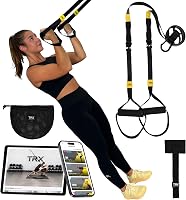
The TRX GO Suspension Trainer uses a mesh nylon strap and foam handles. It is listed at 0.68 kg, has a maximum weight recommendation of 350 lb and includes the suspension training strap, indoor and outdoor anchors and a mesh carry bag.
TRX GO is self-powered and manually operated, so it does not need a power source. The system has 1 resistance level, which means you change difficulty through body position, angle and leverage rather than selecting a weight stack.
The TRX Training Club app is described with 500 or more on-demand workouts covering weight training, cardio, cross-training, sport training, resistance, mobility and prehab and rehab training. The product information also describes a free trial for the app.
This option suits apartment rooms, shared spaces and buyers who need to store equipment after each session. It also works well when you want to train without keeping plates, bars and a large frame in the room.
An anchor is part of the training setup, so choose a location that can support the way you intend to use it. Check the anchor position, strap path and body clearance before starting a movement.
Which exercises can you do without a rack?
You can train many of the same broad movement patterns with split squats, suspension rows, suspension presses, hip hinges, lunges and core movements. These exercises can train your legs, back, chest, shoulders and trunk without placing a barbell on your back.
A suspension trainer also makes it easy to change difficulty by moving your feet or changing your body angle. That flexibility can help when more than one person uses the same home gym.
The trade-off is that bodyweight resistance does not give you a simple plate-loading system. If your goal is to track heavy barbell progression, a suspension trainer is better viewed as a separate training method.
It can also support a mixed setup. Use it for warm-ups, accessory work and travel, then use dumbbells or a bench for movements that need a stable surface.
Is a foldable bench better for a small room?
A foldable bench is better for a small room when you need a stable training surface but cannot leave equipment assembled. It gives you more support than a suspension trainer, while taking less permanent floor space than a large Olympic-style bench.
The FLYBIRD WB5 Weight Bench has a listed 800 lb maximum weight capacity and weighs 28.5 lb. It has a 90° to -30° adjustment range, a 30 in extended backrest and a foldable design that reduces its footprint by 80%, with a listed folded width of 9.06 in.
The bench uses 144 adjustable positions for full-body training. Its spring-lock adjustment changes the seat and backrest, while an adjustable leveling footpad helps with minor height changes on uneven floors.
Its listed dimensions are 46 in deep by 13 in wide by 48.5 in high. Those are the assembled dimensions, so also measure the storage location and the area needed to unfold the bench.
The product information describes an ASTM-certified steel frame, a dual-triangle structure and a double-locking mechanism. It also describes an extended backrest and seat pad for supported upper-body work.
This bench suits dumbbell presses, seated exercises and controlled bodyweight movements. It does not include a barbell rack, so it should not be chosen as a direct replacement for a full squat rack.
How should you use a bench without a rack?
Use a bench for exercises where the bench itself provides the support you need. Dumbbell presses, seated shoulder work, supported rows and bodyweight movements can all fit this approach.
Set the seat and backrest before you lift. Confirm that the adjustment points are locked, the bench is level and the floor is clear around your feet.
Keep the bench's working area open even when it folds for storage. Folding the equipment reduces storage space, but it does not remove the clearance needed during a workout.
A lighter bench can be easier to move between rooms. The trade-off is that a movable setup requires a fresh stability check each time you unfold it.
What is the safest way to train legs without a squat rack?
The safest choice is to use exercises that do not require you to lift a heavy barbell into position. Split squats, lunges, step-ups, goblet squats and suspension-training leg movements can train the legs with equipment that is easier to set down.
Start with a load you can control through the full movement. Keep your feet clear of stored plates, furniture and loose straps.
A bench can support step-ups or provide a target for controlled movements, but its height and stability must suit the exercise. A suspension trainer can add balance support during split-squat variations, but the anchor and straps must be set correctly first.
Do not place a barbell across your back and improvise a way to lift it without suitable supports. The main benefit of a rack is controlled bar placement and a safer way to end a set.
If your goal includes heavier leg work, compare the space and safety needs with a commercial gym. A home setup may be the better fit for short, regular sessions, while a gym may provide equipment that would occupy too much space at home.
How much space do alternatives to a squat rack need?
Measure the equipment, your exercise clearance, storage position and access route. The largest mistake is measuring only the empty floor where the item will stand.
For a bench, measure:
- The assembled length, width and height
- The space needed to lie down, sit and move dumbbells
- The storage location when folded
- The path used to carry the bench into the room
- Nearby doors, cabinets and other equipment
For a suspension trainer, measure:
- The anchor location
- The strap path
- The reach of your arms and legs
- The space behind and beside your body
- The storage place for the strap and carry bag
For a large Olympic-style bench, measure the full footprint before ordering. The Marcy bench's listed 80 in width and 47 in depth need more than a narrow strip of floor because you must also move around the station.
Use our guide to How Do You Measure a Room for Home Gym Equipment? before you mark out the layout. Tape the equipment outline on the floor and test the path from the doorway to the training position.
How do you keep a compact gym safe without a rack?
Keep walkways and exits clear, loads controlled and each item used only for its intended movement. A compact room becomes safer when equipment has a defined place and you do not need to step over weights to reach the door.
Store plates, dumbbells and benches where they cannot roll or tip into the exercise area. Keep straps off the floor when they are not in use.
Check the floor before placing a bench. A small height difference can affect stability, so use the bench's leveling feature where available and recheck it after moving the unit.
Do not let a compact layout force you into poor technique. Leave enough room to step back, lower a dumbbell and finish a movement without hitting furniture.
Read How Do You Keep Exits Clear in a Compact Home Gym? for a room-by-room clearance check. An exit should remain usable even when the equipment is assembled and ready for a workout.
Which squat rack home gym alternative should you choose?
Choose the Marcy Olympic Workout Bench if you want a larger station with adjustable bench positions, a preacher curl pad, a leg developer and plate storage. Its footprint makes it a better fit for a dedicated room than a space that must change function each day.
Choose the TRX GO Suspension Trainer if storage space is the main concern and you are comfortable training with bodyweight resistance. It offers portable, full-body movement options, but it does not support barbell work.
Choose the FLYBIRD WB5 Weight Bench if you want a foldable bench for dumbbell and supported exercises. Its adjustment range and compact folded width suit small rooms, but it remains a bench rather than a squat rack.
The decision rule is simple: pick a rack-style bench for supported strength stations, pick a foldable bench for adjustable dumbbell work, and pick a suspension trainer for the smallest full-body setup. For readers comparing equipment around different users and routines, our best home gym equipment for women guide offers another way to match gear to training needs.
A squat rack home gym alternative works best when you define the exercises you will actually perform. If heavy barbell squats and barbell safety are non-negotiable, save space for a proper rack.
If your plan centers on dumbbells, bodyweight training and compact storage, one of these alternatives may cover more of your routine with less room.
Frequently asked questions
What is the best squat rack alternative for a small home gym?
A foldable weight bench or suspension trainer is usually the easiest squat rack alternative for a small home gym. A bench supports dumbbell and bodyweight exercises, while a suspension trainer stores in very little space.
Choose based on whether you need a stable platform or a portable training system.
Can you squat without a squat rack?
You can train your legs without a squat rack by using split squats, step-ups, lunges, goblet squats and suspension-training movements. A rack is still useful for safely setting a barbell on your shoulders, so do not treat a bench or bodyweight system as a direct replacement for heavy barbell squats.
Is a weight bench safer than a squat rack?
A weight bench is not automatically safer than a squat rack. It supports exercises performed on the bench, but it does not provide the same bar placement or safety system as a properly adjusted rack.
Match the exercise to the equipment, keep the load controlled and avoid unsupported barbell lifts.
What should I use instead of a squat rack for bench press?
Use a bench designed with suitable bar supports only when its instructions and structure match the exercise. Otherwise, use dumbbells or resistance bands with a stable bench.
Never balance a barbell in an improvised position or lift alone without a safe way to place the bar.
How much space do squat rack alternatives need?
Measure the equipment footprint, your working area and the path used to carry weights before choosing. A foldable bench needs storage and exercise clearance, while a suspension trainer needs a suitable anchor and room for your body to move.
Keep doors and exits clear in every layout.