What Are Typical Squat Rack Dimensions?
Squat rack dimensions vary by style, but many power cages are about 80–90 in tall, 45–50 in wide, and 45–65 in deep. Check the full outside footprint and leave room for the bar, plates, and movement.
On this page (7 sections)
- What are typical squat rack dimensions?
- Which measurements matter when comparing racks?
- How much space should you leave around the rack?
- How do you measure a room for a squat rack?
- How does flooring change the usable height?
- Can a smaller setup work in a tight room?
- Which squat rack dimensions should you choose?
Squat rack dimensions vary by style, but many power cages are about 80–90 in tall, 45–50 in wide, and 45–65 in deep. Check the full outside footprint and leave room for the bar, plates, and movement.
A rack that fits on paper can still crowd a home gym. Measure the floor, ceiling, and working space around the equipment before you compare models.
What are typical squat rack dimensions?
A full power cage is often roughly 80–90 in tall, 45–50 in wide, and 45–65 in deep. These are broad planning ranges, not a universal standard, and an attached pulley or storage peg can change the footprint.
Squat stands may be shorter or narrower because they use separate uprights and a smaller base. Half racks sit between stands and cages in layout, while some have extended feet or storage that needs more depth.
Use outside dimensions when checking whether the frame fits. Inside width describes the space between the uprights and helps you assess bar fit, but it doesn't show how much floor the rack occupies.
A home gym rack can also be taller than expected once you account for ceiling lights or a sloped roof. For details on the vertical measurement, see how tall a squat rack is.
Which measurements matter when comparing racks?
Check height, outside width, outside depth, and the space needed for the bar. Those measurements tell you whether the rack fits in the room and leaves enough working clearance.
How does rack height affect fit?
Rack height is measured from the floor to the highest part of the frame or attachment. Compare that number with the lowest ceiling point directly above the rack, including beams, pipes, and lights.
If you're using thick mats, add their height to the rack's total installed height. The available space above the rack may also matter when you perform pull-ups or raise attachments.
What does rack width tell you?
Rack width generally means the distance across the frame's outer edges. Check the measurement description carefully, since the distance between uprights is a separate dimension.
The bar and plates extend beyond the frame. Include their full width when choosing where to place the rack, especially if it will sit near a wall or another piece of equipment.
For a closer look at hole spacing and upright size, read what rack upright dimensions mean. Those measurements help you compare fit and attachment compatibility, but they don't replace the outside footprint.
How should you read rack depth?
Depth is the distance from the front of the rack to the back of its base. A pulley, plate storage, or angled support may extend beyond that measurement.
Leave additional room in front for loading the bar and stepping into place. If you plan to use a bench inside the rack, check the space needed to move it in and out.
How much space should you leave around the rack?
Plan for the rack's footprint plus room to load plates and move around it. The amount depends on your bar, exercise setup, and nearby walls or equipment.
A bar needs clear space on both ends to slide plates on and off. Measure from the end of the loaded bar to the nearest obstruction, and check how much space a loaded barbell needs on each side of a rack.
Also leave a clear approach to the rack and enough room to walk around its base where your workouts require it. Don't count a doorway or narrow aisle as usable space if equipment blocks it during exercise.
Its outside dimensions include the pulley system, and its attachments and storage pegs can affect how you arrange the surrounding space. Measure the frame's intended position and confirm that the attached parts won't overlap a walkway or wall.
How do you measure a room for a squat rack?
Measure the usable floor area and ceiling height at the rack's planned position. Include doors, windows, outlets, and any obstruction that could affect access or movement.
Start with the floor: mark the rack's outside width and depth with painter's tape. Add the bar's length and plate-loading clearance, then check whether you can reach the rack from the direction you plan to use it.
Measure the ceiling at several points if the room has a slope, beam, or low light fixture. A tape measure held at the rack's center may miss a low spot above one end.
Our guide on measuring a room for home gym equipment walks through mapping the footprint and checking access. Use the same approach for mats and nearby equipment, not just the rack.
How does flooring change the usable height?
Flooring raises the rack from the room's original floor and reduces overhead clearance by the same amount. Measure from the top of the installed floor covering, not the bare subfloor.
A thick platform or rubber mat can also make the rack sit higher relative to a ceiling beam. Check the final height after you decide on flooring, and include any floor protection beneath the rack's full base.
For more detail, see how gym flooring reduces usable rack height. This matters most in rooms with low ceilings or a rack that nearly reaches an overhead obstruction.
Can a smaller setup work in a tight room?
A squat stand or wall-mounted setup may take less floor space than a full cage, depending on its base and mounting needs. Compare the full footprint and the clearance for the bar before choosing a compact style.
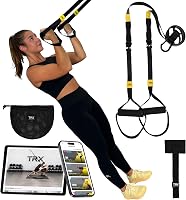
A suspension trainer can support bodyweight exercise without a fixed rack footprint, provided you have a suitable anchor point and clear space to move. The TRX GO includes indoor and outdoor anchors, a suspension strap, foam handles, and a mesh carry bag.
A cable attachment can also add exercise options to a rack you already own. The Mikolo Fitness LAT and Lift Pulley System includes 70 in and 90 in cables and can connect to a power cage or pull-up bar.
These options don't replace a rack for barbell squats. Use them to plan a small training area around the equipment that suits your available space.
Which squat rack dimensions should you choose?
Choose a rack only after its outside height, width, and depth fit the measured room with useful clearance left for the bar and your movement. Pick a full cage if you need its enclosed training space and can fit its larger footprint; consider stands if floor space is tighter.
If ceiling height is close, include flooring and overhead obstructions before deciding. If width is tight, measure the full bar and plate clearance, then map the layout with tape so you can see where the equipment will sit.
Frequently asked questions
What are standard squat rack dimensions?
There is no single standard size. Many full power cages fall near 80–90 in tall, 45–50 in wide, and 45–65 in deep, while squat stands and half racks can take less floor space.
Compare the maker's outside measurements and account for attachments, bar sleeves, plates, and room to move.
How much room do you need around a squat rack?
Leave enough open space to load the bar, step into position, and move safely around the rack. The exact clearance depends on your bar length, plate size, rack style, and room layout, so measure the usable floor area instead of relying only on the rack footprint.
How tall should a home squat rack be?
Choose a rack that fits beneath the lowest ceiling obstruction while leaving room to stand and handle the bar. Measure from the finished floor, including mats, to lights, beams, or sloped ceilings above the rack.
A rack's listed height alone won't account for flooring.
Is rack width the same as bar width?
No. Rack width usually describes the frame's outside measurement, while a bar extends beyond the uprights and plates add more width.
Check whether the rack measurement is inside or outside, then compare it with your bar and the clear space on both sides.