How Tall Is a Squat Rack?
Most squat racks stand about 70 to 90 in tall, though models vary. Measure from the finished floor to the lowest ceiling obstruction, then leave enough room to assemble the rack and use its highest attachments.
On this page (7 sections)
Most squat racks stand about 70 to 90 in tall, but the exact height depends on the style and model. Measure from the finished floor to the lowest ceiling obstruction, then check the rack's assembled height and installation instructions.
A rack that fits under the ceiling on paper may still be hard to assemble if there isn't room to lift or secure the top crossmember. For a room with beams, lights, or pipes, measure the lowest point where the rack will sit.
How tall is a squat rack by type?
Many squat racks are roughly 70 to 90 in tall, with shorter squat stands and taller full cages outside that common range. The maker's dimensions for the assembled rack are the number to use when planning a fit.
A squat stand may have two separate uprights and no connecting top crossmember. A half rack or power rack has more framing, and may include a pull-up bar or other top-mounted parts.
The ULTRA FUEGO Power Cage is 82.7 in tall and measures 63 in deep by 47 in wide. Its pull-up bar is part of the cage, so use the overall height when comparing it with your ceiling.
Compare the planned footprint and overall height with other squat rack dimensions before choosing a location. Height alone doesn't show whether you have room to walk around the rack or load a bar.
How much ceiling clearance should you leave?
Leave enough clearance for the rack's highest point, overhead attachments, and the assembly steps in its manual. There isn't one extra-clearance number that works for every model and room.
A helpful first check is to subtract the rack's assembled height from the distance to the lowest obstruction. If your ceiling is 96 in and your rack is 82.7 in tall, the difference is 13.3 in before accounting for anything else.
That remaining space may be needed to raise a crossmember during assembly or to fit an attachment. Follow the maker's assembly steps, and don't assume a rack can be built upright just because it fits once assembled.
Account for lights, sprinklers, beams, pipes, and garage door hardware. If a door track runs above or beside the rack, read how a garage door track affects power-rack placement before settling on a spot.
What should you measure before buying?
Measure the floor-to-ceiling height at the exact rack location, then measure the lowest obstacle above that area. Check more than one point, since basement ceilings and garage framing can vary.
Use this quick checklist:
- Measure from the finished floor to the ceiling.
- Check for beams, pipes, lights, and tracks.
- Note any raised flooring or mats under the rack.
- Compare the available height with the rack's full assembled dimensions.
- Read the manual for space needed during assembly and use.
Floor coverings can raise the rack and reduce the space above it. See how gym flooring reduces usable rack height when planning a platform or thick rubber mats.
Measure the full rack footprint as well as its height. A barbell needs space beyond the uprights, and how much space a loaded barbell needs on each side of a rack helps with that layout check.
Can you use a rack in a low-ceiling room?
Yes, if the rack fits below every obstruction and you can assemble and use it as intended. A low ceiling may limit the rack style or prevent use of a pull-up bar and other overhead features.
Measure the lowest available height, not the room's advertised ceiling height. A duct or beam over the rack can make an otherwise suitable model too tall for that position.
For tight rooms, a folding option may reduce how much floor space the rack occupies when it's not in use. Read what a folding wall-mounted rack is and check both its height and wall-mounting requirements.
Don't modify the frame or remove a structural part to make it fit. Use only the configuration the manufacturer supports.
Does the rack's pull-up bar need extra room?
The pull-up bar's top edge counts as part of the rack's height. Also consider your headroom during a pull-up, since the bar can fit while the movement feels cramped below a low ceiling.
Check the rack dimensions and any instructions about overhead use. A bar that sits just below a ceiling may leave too little room to grip or move comfortably.
Do attachments change how tall the rack is?
Some attachments add height above the rack frame, so include them in your measurement if you plan to use them. Check whether the maker's stated overall height includes each attachment.
Pull-up bars and storage add-ons can sit at the top of a frame. A cable system can also have a high pulley or strap path, depending on how it attaches.
The Mikolo Fitness LAT and Lift Pulley System can connect to a power cage, pull-up bar, beam, or another place where its hanging strap can be installed. It includes 70 in and 90 in cables, so choose an attachment point and cable path that suit the room.
A cable attachment doesn't replace a rack's height check. Review how power racks and their safety systems work to understand the main rack parts and how they fit into a training setup.
What if the rack won't fit?
Choose a shorter rack or a different location if the frame and required clearance exceed the available height. Don't rely on removing parts unless the manufacturer says the rack supports that setup.
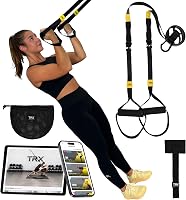
A separate suspension trainer can offer bodyweight exercise without a tall rack frame. TRX GO includes a suspension training strap, indoor and outdoor anchors, foam handles, and a mesh carry bag; use an anchor only where its instructions permit.
If the rack does fit but its position is awkward, reconsider the layout before assembly. A weight storage option such as a best weight plate tree can keep plates off the rack, but it also needs its own floor space.
How tall should your squat rack be?
Pick a rack that fits under the lowest ceiling obstruction with room for assembly and planned attachments. See home gym equipment for low ceilings for compact options.
If height is tight, compare shorter rack styles or move the setup to a clearer part of the room.
For the ULTRA FUEGO cage, allow for its 82.7 in assembled height, then check the ceiling and any overhead obstacles at the exact spot. For any other rack, use its own assembled dimensions and manual rather than assuming all models share a standard height.
Frequently asked questions
How tall is a standard squat rack?
There isn't one standard height. Many squat racks are about 70 to 90 in tall, while compact and full-height models can fall outside that range.
Check the rack's assembled height and measure to the lowest ceiling obstruction, including beams, lights, and door tracks.
How much ceiling clearance does a squat rack need?
Allow enough room for the rack's full assembled height, any overhead attachments, and the assembly steps in its manual. A few extra inches can make installation easier, but the needed margin depends on how the rack is assembled and what hangs above it.
Can a squat rack fit in an 8-foot basement?
It can, if its actual height and installation needs fit below the lowest point of the ceiling. An 8 ft ceiling is 96 in, but pipes, beams, lights, and flooring can reduce usable height.
Compare those measurements with the rack before moving it in.
Does a pull-up bar add to squat rack height?
A pull-up bar may be built into the rack's listed height or may attach above its uprights, so check the assembled dimensions and manual. If you plan to use overhead attachments, measure the height to their highest point and leave room for safe use.