Free Weights: The Complete Buying Guide
The best free weights depend on your exercises, space and progression needs. Start with adjustable dumbbells or a kettlebell for compact training, then add a barbell, plates and storage as your strength plan grows.
On this page (12 sections)
- Which free weights should you buy first?
- What are the main types of free weights?
- What size kettlebell should you buy?
- What size barbell do you need?
- How should you choose weight plates?
- Can a pulley system replace free weights?
- Which accessories make free weights easier to use?
- How should you store free weights?
- How do you protect the floor and control noise?
- How should you build a free weights plan?
- What should you check before buying free weights?
- Final kettlebell and free weights buying rules
The best free weights depend on your exercises, space and progression needs. Start with adjustable dumbbells or a kettlebell for compact training, then add a barbell, plates and storage as your strength plan grows.
Free weights include dumbbells, barbells, kettlebells, weight plates and loadable handles. Each type changes how you hold the load and how much room an exercise needs.
They let you train one side at a time and lift through natural paths. That can help with balance, coordination and finding a comfortable position for presses, rows and carries.
Adjustable resistance matters as your strength changes over time. You can add repetitions first, then add load in small steps when the current weight becomes manageable.
A useful home gym does not need every type of weight. Buying too much at once often leads to clutter and equipment that rarely gets used.
Choose equipment around the movements you will repeat each week. A short list of core exercises makes the right first purchase much clearer.
Then solve storage and floor protection before adding more load. Weight that rolls, tips or blocks a walkway quickly becomes annoying and unsafe.
Think about who will use the equipment and where. A single user in a spare room has different needs from a shared space with limited floor area.
Compact adjustable sets suit small rooms and general strength plans. Fixed weights may suit users who prefer fast setup and do not need many different loads.
A barbell and plates suit heavier compound lifting when you have clearance. They also need loading space, rack space and a safe place for the plates between sessions.
Free weights reward planning because the right tool stays out and ready. The wrong tool stays boxed up, even if it looked versatile in a product listing.
Your first choice should support consistent use, not cover every possible exercise. You can add a second format later once you know which movements you enjoy most.
Which free weights should you buy first?
Start with the weight that covers your most important exercises without creating a storage problem. Adjustable dumbbells are a flexible first choice, while a kettlebell works well for swings, carries, squats and compact full-body sessions.
Adjustable dumbbells suit presses, rows, curls, lunges and split squats in the same set. They are usually a good fit when you want variety without filling the room with fixed pairs.
A kettlebell suits users who want full-body conditioning with one compact tool. Its shape makes swings, carries and goblet squats feel natural, but you need clear space around the swing path.
A barbell makes more sense when your plan is built around heavy squats, deadlifts, bench presses and rows. Plates then become the main progression system, so you also need a safe place to load and store them.
Barbells reward users who train the same compound lifts week after week. They need more loading clearance than dumbbells and usually need a rack or a reliable way to support the bar.
Plates add flexibility, but they also add pieces to track and store. Small plates help with gradual progress, while larger plates reduce the number of pieces for heavier work.
Use this simple match:
| Main goal | First free weight to consider | Why |
|---|---|---|
| General strength in a small room | Adjustable dumbbells | One set can cover presses, rows, curls and lunges |
| Full-body conditioning | Kettlebell | The shape suits swings, carries, cleans and squats |
| Heavy compound lifting | Barbell and plates | The bar supports many two-handed strength movements |
| Cable-style pulling | Pulley system | A cable path can add pulldowns, curls and rows |
| One-sided training | Dumbbells or a single kettlebell | You can train each arm or leg separately |
Our best home gym lifting equipment guide can help you build a wider setup after choosing your first weight.
What are the main types of free weights?
The main types are dumbbells, barbells, kettlebells and weight plates. Each one changes how you hold the load, how much space the exercise needs and how easily you can increase resistance.
Dumbbells
Dumbbells are short-handled weights designed for one hand. Fixed dumbbells are quick to use, but adjustable dumbbells take less storage space when you need several loads.
Dumbbells work well for presses, rows, lateral raises, curls, split squats and carries. They also expose left-to-right differences because each arm must control its own weight.
The PROIRON set includes two handles, four 0.5 kg plates, four 1.25 kg plates, four 2.5 kg plates, 4 collars and an extended bar. Its handles have knurled grips, 22 mm diameters and 143 mm grip sections.
The set weighs 20 kg and can be loaded from 4 kg to 33 kg, including bar weight, when using the connection tube.
Its rubber O-ring design is intended to reduce looseness, and the materials are described as free of phthalate and lead. The important trade-off is that plate changes take more time than selecting a fixed dumbbell, but the connection tube gives the set a barbell option.
For more compact options, compare best adjustable dumbbells for home gym and best heavy adjustable dumbbells.
This set contains two 3 lb handles, four 2.5 lb plates, four 5 lb plates and four 0.5 lb collars, for 38 lb total. The alloy steel handles use a 1 in diameter, and threaded collars secure the plates during setup.
Its black case has a carry handle, which helps when you need to move the set between rooms. The trade-off is that the set is limited to its included dumbbell format, while a convertible system may offer more exercise arrangements.
If you want to compare handle-only systems, see best loadable dumbbell handles and best dumbbells to buy.
Barbells
A barbell lets both hands share one load along a longer steel bar. It is useful for squats, deadlifts, presses, rows, hip hinges and other compound exercises.
A barbell needs more clearance than dumbbells. You need room to load the sleeves, move around the bar and place the bar safely on a rack or platform.
Start by comparing the best barbell for home gym options. If you want a complete package, see the best home barbell set guide.
The best Olympic weight bar and weights guide is useful when you want a bar and plates designed as a matching system. Olympic bars and plates use a larger sleeve opening than standard plates, so confirm that the bar and plates share the same fit.
A barbell's length affects both storage and use. Measure your rack width, lifting area and the space needed to load plates from each side before ordering.
Kettlebells
A kettlebell has a weight body and a fixed handle above it. Its offset shape changes the leverage compared with a dumbbell and makes it useful for swings, cleans, goblet squats, carries and rotational movements.
A kettlebell can be a strong choice for a small home gym because one weight can support many full-body exercises. You still need enough open space to swing safely and keep the handle path clear.
The BowFlex unit offers settings of 8, 12, 20, 25, 35 and 40 lb. It has a composite body, a plastic handle with a 28 mm diameter and an adjustable range described as 3.5–18 kg.
The full unit weighs 40 lb.
Its main advantage is fast load changes without storing six separate kettlebells. The trade-off is that its adjustable body differs from a traditional single-piece kettlebell, so check your preferred exercises and the available handle clearance before choosing.
For other options, compare best kettlebells for home gym and best adjustable kettlebell for home gym.
Read adjustable dumbbells or kettlebells if you are deciding between the two compact formats.
What size kettlebell should you buy?
Choose a kettlebell by movement, not by a single universal beginner number. The right size lets you control the handle, keep a stable torso and complete the planned repetitions without turning the exercise into a rushed swing.
Use a lighter kettlebell for learning cleans, presses, get-ups and other movements where the load travels close to your body. A heavier kettlebell may suit swings, deadlifts and goblet squats when your technique is already consistent.
Adjustable kettlebells are useful when one person needs several loads or when the room cannot hold a full rack of fixed bells. Fixed kettlebells are simpler to pick up and put down, but each new load takes more floor space.
Your hand also needs room inside the handle. A narrow opening can make a two-handed movement feel crowded, while a large handle may change how comfortably you hold the bell during longer sets.
What size barbell do you need?
Choose a barbell that fits your rack, exercise plan and room. The common full-length Olympic barbell is about 7.2 ft and 20 kg, but the exact measurements vary by model and purpose.
A shorter bar can fit a small training area, but it may offer less sleeve length and a narrower grip position. A longer bar can work well in a rack setup, though it needs more clearance from walls, furniture and other equipment.
Before buying, check:
- Bar length and shaft diameter
- Empty bar weight
- Sleeve diameter and usable sleeve length
- Knurl pattern and center knurl
- Rack compatibility
- Maximum load rating
- Required lifting and storage clearance
If you are comparing bar types, start with different types of barbells and what size barbell do i need. For Olympic-bar questions, see what size is an olympic barbell.
An EZ curl bar changes the wrist angle for curls and extensions. Our best EZ curl bar guide covers that more specialized option.
A hex trap bar places your body inside the bar during many deadlift variations. Read what is a hex trap bar if you want a different pulling setup.
A safety squat bar adds shoulder and upper-back padding and uses handles that change how you hold the bar. See what is a safety squat bar before adding one to a rack.
How should you choose weight plates?
Choose plates by fit, diameter, material and the way you train. The plate hole must match the bar sleeve, and the outside diameter affects how high the bar sits from the floor.
Iron plates are often compact and useful for rack-based lifting. Bumper plates are thicker and designed for more controlled floor contact, but they can use more sleeve space at the same total load.
A bumper plate weight tree can keep compatible plates organized between sessions.
For a broad comparison, see best weight plates for home gym. If you expect repeated drops as part of appropriate Olympic-lifting practice, compare best bumper plates for home gym.
A complete set can simplify matching the bar and plates. The best barbell and bumper plate set guide is a useful starting point for package decisions.
Add plates in increments that fit your progression. Small plates help you make gradual increases, while large plates reduce the number of pieces needed for heavier loads.
Keep the plates flat and dry. Inspect the holes, edges and surfaces before loading them, and replace damaged plates or collars that no longer secure the load.
Can a pulley system replace free weights?
A pulley system can add cable exercises, but it does not replace dumbbells, kettlebells or a barbell for every movement. It is most useful when you want adjustable resistance through pulldowns, curls, rows, fly movements and triceps work.
It includes 70 in and 90 in sheathed cables, a straight bar, a triceps rope and a loading pin with a barbell clamp. The system supports pull-down and lift-up modes, and the clamp can fit standard or Olympic weight plates.
Its maximum load is 280 lb.
The pulley has a silent design and alloy steel components. The cable sections are detachable, and the compact packaging can help with transport.
The main trade-off is that your anchor point must be secure and high enough for the exercise path.
Follow the attachment instructions and keep the cable clear of sharp edges. Do not treat a stated maximum load as a reason to exceed the capacity of your anchor, plate setup or surrounding structure.
Which accessories make free weights easier to use?
Accessories should solve a clear problem: comfort, storage, exercise choice or setup speed. They should not crowd the room or add load beyond what your rack, floor and bar can safely handle.
An Olympic barbell attachment can expand cable or rack exercises when it matches your equipment. Compare the best Olympic barbell attachment options by connection type and exercise use.
A barbell pad can make hip thrusts or other supported movements more comfortable. The best barbell pad set guide can help if you want padding for a specific exercise.
An adjustable dumbbell and bench combination works well when you need pressing, rowing and seated exercises in one compact area. See adjustable dumbbells and bench set for setup considerations.
Some adjustable dumbbells convert into a barbell. Compare best adjustable dumbbells to barbell if you want one system to cover both hand-held and two-handed lifts.
An adjustable dumbbell and kettlebell system can reduce the number of separate pieces in a small room. The best adjustable dumbbell and kettlebell set guide covers that mixed format.
How should you store free weights?
Store weights where they cannot roll, tip or block your walking path. Put frequently used dumbbells at a reachable height, keep plates close to the bar-loading area and secure long bars against a wall or rack.
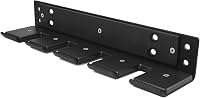
A plate tree keeps round plates upright and separated. See the best weight plate tree guide before choosing one, and check its footprint against the loaded plate collection you plan to keep.
A dumbbell rack helps prevent loose weights from spreading across the floor. Compare the best dumbbell storage rack options by shelf width, load capacity and room height.
Barbells need a stable vertical or horizontal storage point. The best barbell storage rack guide can help you choose a location that keeps the bar accessible without placing it in a doorway.
Measure the loaded storage footprint, not only the empty rack. Plates and handles may extend beyond the frame, and a barbell may need extra side clearance for removal.
How do you protect the floor and control noise?
Use a stable, level surface and add floor protection suited to your weight and exercises. Dumbbell set-downs, kettlebell swings and barbell work can all create noise or impact, especially on hard floors.
Rubber flooring can reduce contact noise and help protect the surface, but it does not make an unsafe drop safe. Keep the lifting area clear, use controlled repetitions and follow the equipment's intended use.
Choose floor protection based on how you actually train. Light dumbbell work may need less coverage than repeated barbell deadlifts or kettlebell swings on the same spot.
Noise also travels through walls and floors. Place the rack away from shared walls when possible, avoid dropping weights and use collars to reduce plate movement.
Collars matter more than many people expect during a set. A loose plate can shift, rattle and change the balance of the weight in your hands.
Leave enough clearance around the lifting area for the full path of the weight. A kettlebell swing needs more forward space than a curl, and a barbell needs side clearance for loading.
Check the room from every angle, not only from where you stand to start. Furniture, door swings and walkways can all limit a movement once the weight is moving.
Set weights down under control, even between heavy sets. Controlled set-downs protect the floor, reduce noise and keep the next repetition safer and more consistent.
Keep the training area tidy before each session. Loose plates, bands and accessories near your feet can turn a normal exercise into a trip or a fall.
Inspect rubber flooring and mats for curling edges and worn spots. A mat that slides or bunches can affect footing during presses, rows and carries.
Think about neighbours and other people in the home as well as the floor. Lower impact, slower set-downs and thoughtful placement usually make a bigger difference than extra padding alone.
How should you build a free weights plan?
Build around movement patterns before adding more equipment. A basic plan may include a squat or lunge, hinge, push, pull, carry and trunk movement.
Use adjustable dumbbells for presses, rows and split-leg work. Add a kettlebell for swings and carries, then choose a barbell and plates when you are ready for heavier two-handed lifts.
Progress by adding repetitions, improving control or increasing load in small steps. Do not increase weight if the new load changes your range, balance or technique.
Keep a simple record of the exercise, load, repetitions and how the movement felt. This helps you decide whether you need more weight, smaller plates or a different tool.
The best free weights are the ones you can set up quickly and use safely. Equipment that stays boxed up because it is hard to store will not support a consistent routine.
What should you check before buying free weights?
Check the full system, not only the weight number. Confirm the handle size, plate fit, total load range, storage footprint, floor needs and the clearance required for every planned exercise.
Handle size affects comfort and control during longer sets. A grip that feels crowded or too wide can change how steadily you hold the weight.
Plate fit is just as important as the stated load. The hole size must suit the bar or handle sleeve, and collars must hold the plates securely during use.
For adjustable equipment, check how load changes work and where the loose plates or adjustment parts go between sets. Faster changes can help circuit workouts, while threaded collars and separate plates may suit slower strength sessions.
Think about the time you will spend changing weight during a normal workout. Adjustable dumbbells with separate plates are simple and durable, but they require more steps than a dial or pin system.
Also check whether you need one load or many loads in the same session. A format that is efficient for strength work may feel slow for circuits with frequent changes.
For barbells, confirm rack width and sleeve space. For kettlebells, confirm the handle shape and the swing area.
Rack width determines whether the bar can be supported safely at the height you need. Sleeve space determines how much plate weight you can load before the plates reach the end.
For kettlebells, handle shape affects two-handed and one-handed movements in different ways. You also need enough open space for swings, cleans and carries without hitting furniture.
For pulley systems, confirm the anchor point and plate compatibility. A strong cable still depends on a secure, high enough anchor and a clear path for the movement.
Read the exact model details before ordering. Measurements, included pieces and weight ranges can differ between versions with similar names.
Check what is included and what is not. Handles, plates, collars, cables and attachments may be sold separately, and missing pieces can leave the setup incomplete.
Store the loose parts in a planned place, not on the floor beside you. A consistent place for plates and collars keeps setup faster and reduces the chance of losing small pieces.
Final kettlebell and free weights buying rules
Choose adjustable dumbbells when you want broad exercise coverage in a small footprint. Choose a kettlebell when swings, carries and full-body movements are central to your plan.
Choose a barbell and plates when your program depends on heavy compound lifts and you have room for a rack. Add a pulley system when you want cable movements and have a secure anchor.
Your first free weights should match the workouts you will actually repeat. Once the core setup works, add storage, accessories and new load ranges only when they solve a specific training need.
For a compact starting point, compare best adjustable dumbbells for home gym with best kettlebells for home gym, then choose the format that fits your space and exercise plan.
Frequently asked questions
What free weights should a beginner buy first?
Start with one adjustable dumbbell set or one adjustable kettlebell if you need compact equipment. Choose a barbell and plates first when your plan centers on squats, deadlifts, presses and rows.
Your exercise list, available floor space and safe storage matter more than buying every weight at once.
What size kettlebell should I buy?
Choose a kettlebell that lets you perform the planned movement with controlled form and full range. A lighter weight suits technique work and higher-repetition exercises, while a heavier weight may suit strong lower-body movements.
Adjustable kettlebells can cover several loads when storage space is limited.
What size barbell do I need?
Choose the barbell length and weight that fit your rack, lifting style and available clearance. A standard Olympic barbell is commonly 7.2 ft and 20 kg, but check the exact bar before buying.
A shorter bar can suit a small room, while a full-length bar gives more sleeve and grip space.
Are kettlebells better than dumbbells?
Kettlebells and dumbbells solve different training needs. Kettlebells suit swings, carries, cleans and whole-body movements, while dumbbells make many presses, rows and single-arm exercises easy to load.
Pick the tool that matches your main exercises, or use an adjustable set to cover more patterns.
Do I need bumper plates at home?
You need bumper plates when your training includes controlled Olympic-lifting drops or repeated floor contact, and your floor setup supports that use. Iron plates can be more compact for many strength exercises.
Check plate diameter, bar sleeve fit, floor protection and noise before choosing.